Kyle · Hays County
Septic System Installation in Kyle, TX
A new septic system in the Kyle area begins with checking whether sewer is available. If it is, connecting may be required. If not, a soil evaluation guides the design. Clay may call for a larger or specialized field, and rocky ground on the west side may call for aerobic treatment. Hays County requires a permit and inspections. We explain the options and the upkeep each one needs before you choose.
Septic System Installation for Kyle homes
Most new homes in Kyle connect to city sewer, so a new septic system is a rural-edge project: a house on acreage west along FM 150, a tract off a county road east of the interstate, or a replacement for a failed older system. Before anything else, ask the City of Kyle whether sewer can reach the parcel and ask Hays County Development Services whether the land can support an on-site system. Those two answers set your path. A realistic budget helps. Septic installation costs vary widely with system type, soil, access and design. Conventional systems cost less than aerobic systems with spray or drip, and rock or clay conditions can change the price. We do not quote a general price here because no two lots are alike. A site evaluation and written design give you real numbers to compare.
If septic is the route, a licensed designer evaluates soil, slope, flood exposure and distances to wells, creeks and property lines. In Blackland clay, a conventional trench field often will not pass, so aerobic treatment with spray or drip distribution is common. The design goes to the county, which reviews it under TCEQ rules in 30 TAC Chapter 285, and inspects the work during construction. Do not cover anything until the inspector has seen it. Think about the long view as well. An aerobic system has maintenance contracts and electricity costs, while a conventional system has fewer parts but needs good soil. Over twenty years, the totals can be closer than the installation prices suggest. Your designer should walk through both. Ask about expected lifespan, parts availability and who services each type locally.
Aerobic systems add ongoing duties. The permit packet includes a maintenance affidavit and a two-year initial maintenance contract, and the owner must keep service going afterward. We walk new owners through those duties before the system goes live. The goal is that when the house is finished, the septic system is documented, working and understood, rather than a mystery buried in the yard. Finally, keep the paperwork. The county's approval, the as-built drawing and the maintenance contract all belong in a folder you can hand to the next owner. In a market as active as Kyle's edge, properties sell often, and a buyer who sees a clean record is more comfortable. A system without papers can cost you in negotiation.
What to know in Kyle
Choosing a lot with eyes open
Before buying land near Kyle, check the soil, flood maps and sewer plans. A cheap lot that cannot pass a soil evaluation is not cheap. A professional evaluation before closing is inexpensive insurance. Ask whether the design includes space for a replacement field. Many jurisdictions expect it, and planning ahead is cheaper than retrofitting.
Clay and construction season
Wet clay slows excavation and risks compaction of the field area. Scheduling the dig for a drier period helps. Mud also affects delivery of tanks and equipment on unpaved roads. If you plan a pool or barn, show the designer. Those structures can end up over the field if no one checks.
Sizing for the house you plan
The permit is based on bedrooms and expected use. If you plan a guest house, home business or extra bedrooms, say so up front. Changing a permitted system later is slower and costs more. Check the setback distance from Plum Creek tributaries and any drainage ditch. Floodplain placement is a serious problem.
Signs you may need septic system installation
- Repeated backups continue even after pumping and repair
- You are converting a cabin, barn or shop into living space
- You are building a new home or cabin where no sewer line is available
- Your existing system is too small for added bedrooms or a guest house
How septic system installation works
After the equipment is in, the county inspects the system before it is covered or approved for use. Inspectors check tank placement, pipe work, the field and, for advanced systems, controls and alarms. Once the system passes, you can cover and landscape, and the paperwork is filed. Plan for the first year to be a learning period. Learn where your tank lids are, what the alarm sounds like, which breaker feeds the aerator, and who holds your maintenance contract. Keep your permit, plan and inspection records in one folder, because buyers, lenders and inspectors will ask for them later. A well designed and carefully installed system can serve a household for many years. Treat the system as part of the home, with its own schedule, rather than something you can forget about.
A new septic system is one of the largest decisions you will make on a rural property, and it starts before anyone brings in a backhoe. In Texas, on-site sewage facilities (OSSFs) are regulated under 30 TAC Chapter 285, which is administered by TCEQ. Day to day, though, your local permitting authority makes the call. Most of Hays County is handled by Hays County Development Services. Unincorporated Travis County has its own program, the City of Austin handles septic inside its jurisdiction, and Blanco and Burnet counties have their own arrangements. Septic installation in Dripping Springs therefore begins with finding out who will review your plans, because their rules shape the whole project. Asking that question first saves weeks of rework, and it keeps your budget honest from the start.
What to expect on a Kyle visit
- 01
Confirm the permitting authority
We begin by confirming which agency reviews septic permits for your address, since that differs between Hays County, Travis County, the City of Austin and neighboring counties. Then we discuss your plans for the home, including bedroom count, future additions, outbuildings and where a well or pool may go, because those choices affect system size and placement.
- 02
Site and soil evaluation
A TCEQ licensed site evaluator or professional engineer examines the lot, digs soil profile holes, records depth to rock and restrictive layers, and maps slopes, drainage and setbacks. We help you prepare the property so the evaluation goes smoothly, including marking the well, property corners and any features that limit where the system can go.
- 03
Design and plan approval
A designer selects a system type that fits the evaluation, sizes it for the home and prepares the drawings. We review the plan with you in plain language so you know what is being built and why. The application goes to the permitting authority, and we respond to any questions or corrections that come back.
- 04
Excavation and tank setting
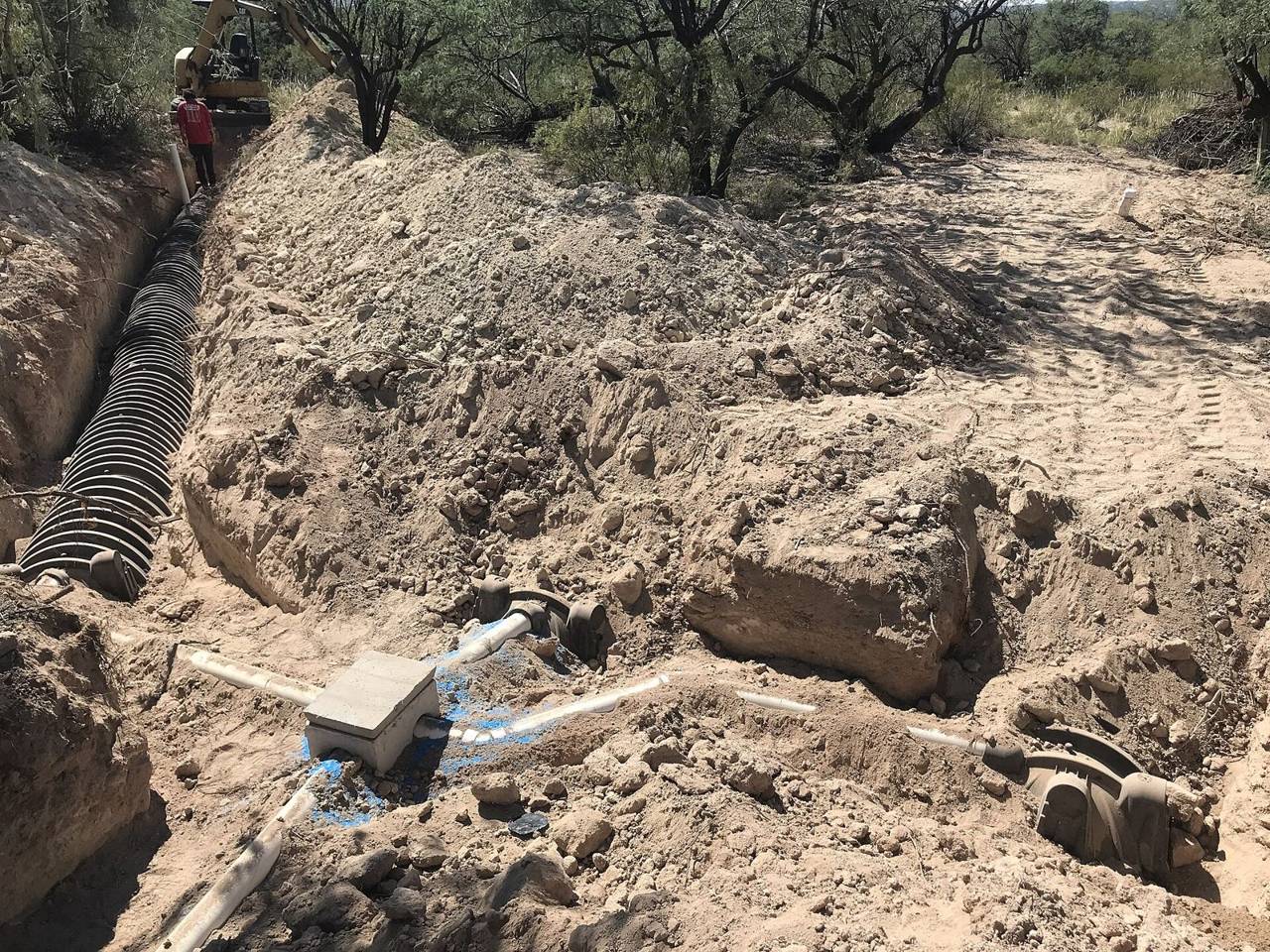
After approval, we stake the layout and excavate. Tanks are set on a prepared base, leveled and checked for watertight joints. Hill Country rock can slow this stage, so we plan access and equipment ahead of time. We protect trees, wells and utilities where we can and keep you updated as the work moves along.
- 05
Field, controls and connections
Next we build the disposal area as drawn, whether that is trenches, spray heads, drip lines, a dosing system or a mound. For aerobic and pumped systems, we install pumps, aerators, alarms and electrical connections. We then connect the home to the tank, check slopes and flow, and test the equipment before anything is covered.
- 06
Inspection, startup and handoff
The permitting authority inspects the installation, and we address anything it flags. Once approved, we backfill and finish grading. We walk you through lids, alarms, maintenance duties and your required contract, then leave you with the paperwork you need to keep on file. We also explain who to call if an alarm goes off or something seems wrong.
Our approach in Kyle
- We locate and open your tank, aerobic unit and dispersal area, including buried lids common on older Kyle properties
- We explain what we find in plain language, with photos where they help
- Repairs and installs are planned around Hays County permitting requirements
- You get written options before any repair work begins
- Aerobic visits are recorded for your maintenance contract
Septic conditions around Kyle
Knowing which category your address falls into is the most useful thing a Kyle homeowner can do. Check your utility bill for a sewer charge. If you have one, you are connected. If you do not, you most likely have a tank somewhere in the yard. Properties along FM 150 outside the city, on county roads and in unincorporated pockets near Kyle generally rely on septic or aerobic treatment. Be careful with annexation, too. A property that was rural a few years ago may now be inside city limits, though that does not automatically mean sewer service has reached it. If a line becomes available, the city may require or encourage connection, so ask. Until then, an existing septic system still needs regular pumping and care, and neglect on a small lot can affect neighbors quickly.
Septic System Installation questions from Kyle homeowners
Can I build on septic inside Kyle city limits?
Inside the city, sewer connection is generally expected where service is available. Rules for exceptions are set by the City of Kyle, not by us. Ask the city about your specific address before purchasing land or starting design. Confirm that your installer is licensed, and ask for references you can verify. Never rely on a handshake agreement for a permitted system.
What does a septic permit require in Hays County?
The county lists a site plan, location map, floor plan, tax account summary and, for aerobic systems, a maintenance affidavit with a two-year initial maintenance contract. Applications go through administrative and technical review. Check Development Services for the current packet and fees. Schedule the county inspection before backfilling. Covered work may need to be uncovered.
How long will installation take?
Design, review and inspection often take longer than digging. Weather, soil and county workload affect the schedule. Plan the septic early in your build timeline, and ask Development Services for current review times. We help coordinate with your builder. Ask what happens if the soil conditions differ from the evaluation. A written change-order process protects both sides.
How much does a new septic system cost?
Costs vary widely. As a general market range, simple conventional designs can cost several thousand dollars, while aerobic and mound systems often cost well into five figures once evaluation, design, permit fees and rock excavation are included. These are broad ranges, not our pricing. The site evaluation and design are what produce a reliable number. Plan for a cushion in your budget, since rock and access can change the final figure on hard lots.
What maintenance does a new system need?
All systems need regular pumping and attention to water use. Aerobic systems also need a maintenance contract with a TCEQ licensed provider, and Hays County requires an initial two-year contract for new aerobic systems. Keep records of every visit, know where your lids and alarm are, and call early if something sounds or smells wrong. Consistent care in the first years also helps you catch small problems before they become costly ones.
Can I connect to city sewer instead?
Sometimes. If a sewer main runs close to your property and the utility allows a connection, it may be an option, but extensions can be costly or unavailable on rural roads. Areas near Buda, Kyle and San Marcos are often served by sewer, while much of the outlying Hill Country is not. Ask the utility before planning a septic system. We suggest checking with the utility early, since extension costs can change the whole decision.
More about septic system installation → · All septic services in Kyle →
Need septic system installation in Kyle?
Call or send a request. We will ask a few questions about your system and the property, then schedule a visit.