Buda · Hays County
Septic Inspections in Buda, TX
Inspections are useful when buying acreage near Buda, where the line between sewer and septic is not always obvious. We confirm what type of system the property has, open the tank, check the baffles and pumps, and look at the field for signs of pooling that suggest clay trouble. If a property is in a sewer area but still has an old tank, we flag it. A written report helps you decide on repairs, price or a connection to city service.
Septic Inspections for Buda homes
Buda has grown quickly, and homebuyers sometimes assume everything is on city sewer. That assumption fails at the edges. A house on two acres off RR 967, a farmhouse east of the interstate or a rural lot off FM 2001 may have its own tank and field, and a septic inspection tells you what you are really buying. The first thing we establish is whether the property is on septic at all. Timing matters in a fast market. Buda real estate can move quickly, and a buyer under a short option period needs the septic review done early. We suggest requesting the inspection right after the contract is signed so there is time to dig lids, pump the tank if needed and obtain county records. Rushing the check at the end can leave questions open when the deadline arrives.
If it is, we read the paper trail first. Hays County Development Services may hold a permit, a design drawing and any maintenance contracts. We compare these to what the property shows. Then we open the lids, measure sludge and scum, check the baffles and the tank walls, and look at the field or spray area. On aerobic systems, we test the alarm, blower and floats. We also note the age of the system and what that means for the years ahead. We also explain what a clean result means. A passing system today is not a promise for next year. Age, soil, water use and maintenance history all shape what is ahead. A ten-year-old aerobic system with steady service records is a better bet than a three-year-old one with no paperwork. We give you our reading of each, in everyday language, and let you weigh it.
A Buda-area inspection often turns up one more item: a possible sewer connection. The city has extended service into parts of its ETJ, so a nearby line could change the long-term picture for your property. We cannot decide that for you, but we can flag it and suggest you ask the City of Buda. A good report helps you weigh the cost of keeping septic against connecting. If you are selling instead, an inspection before listing lets you handle a cracked lid or a clogged filter on your own schedule. It also gives buyers confidence. In an area where some listings assume sewer, being clear about septic status, system type and maintenance history avoids confusion later and keeps the deal on track.
What to know in Buda
Confirming septic or sewer
Never assume. Look for a sewer bill, a city cleanout or a permit on file. A seller's disclosure may not be complete. We help sort it out before you commit to a purchase. Ask the seller for any pump-out receipts, the permit and maintenance contracts. Missing paperwork is itself useful information.
Older tanks near development
Tanks installed before a neighborhood grew around them may sit near newer wells, fences or pools. Distances matter under TCEQ rules, and later construction can make a legal system a tight fit. If the tank is ancient and the city line is near, put the cost of connecting into your calculation before agreeing on a price.
Flood-prone ground
Parts of the Onion Creek corridor flood. A field that is regularly under water cannot treat anything. We note topography and recent weather so you understand risk, though we do not map floodplains. Check FEMA maps for that. Weather affects what we see. After a dry week, a weak field may look fine. After rain, it may show trouble. We record conditions in the report.
Signs you may need septic inspections
- An aerobic system with an expired or missing maintenance contract
- An older system, or a home that sat empty for a long time
- Flooding or heavy rain has recently soaked the property
- You are buying, selling or refinancing a home on septic
How septic inspections works
On the day of the inspection, expect to spend a couple of hours on the property. The inspector locates and opens the tank, checks the liquid level, looks for signs of backup and examines the baffles and the filter. Depending on the scope, the tank may be pumped so the inside walls can be seen. The inspector may run water to see how the drain field or spray area responds, and may use dye to trace a leak. For an aerobic system, the inspector tests the alarm, runs the pump and checks the water for odor and clarity. Photos and notes go into a written report that you can share with your agent. We suggest that buyers and agents be present, because seeing the inside of a tank makes the report easier to understand.
A good report is easy to read. It lists what was checked, what was found and what the inspector recommends. Items might be marked as working, worn, needing repair or needing further evaluation. A system that works but is old may get a note about its remaining life. A system with a failed drain field or a broken tank will say so plainly. Use the report to negotiate repairs, plan a budget or decide whether to walk away. If something is unclear, ask questions. We are happy to explain the findings and to point you to the right permitting office for the next steps in your county. You will also leave knowing how to care for the system, which is worth as much as the findings.
What to expect on a Buda visit
- 01
Gather records and paperwork
We ask for any permit, as-built drawing, maintenance reports and pumping history you can share. If you do not have them, the county may. These records show the tank size, system type and any past problems, which helps us focus the inspection where it counts. Even partial records help. We note gaps.
- 02
Locate and open the tank
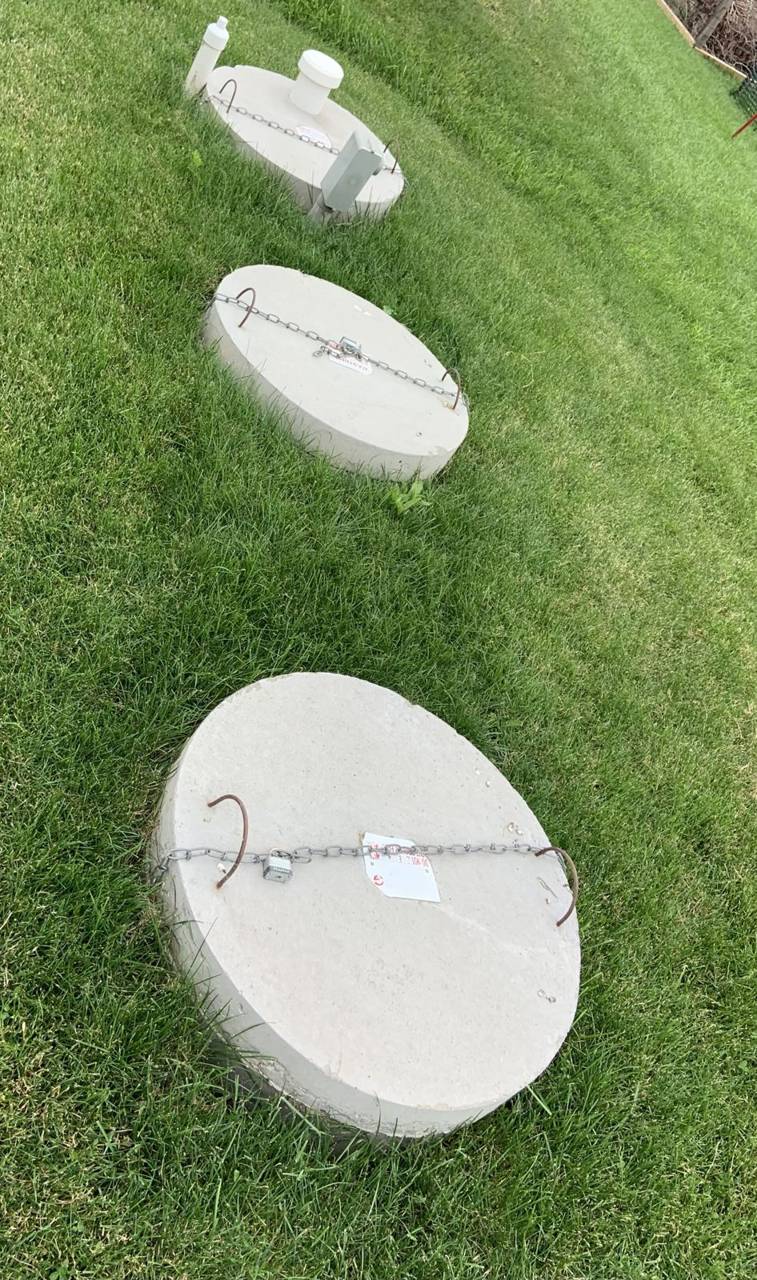
We find the tank lids, dig them out if needed and open them safely. We check the liquid level against the outlet, note any odors and look for signs of backup. Buried, damaged or unsafe lids are noted in the report so nothing is missed. Safety comes first at every open lid.
- 03
Inspect inside the tank
We check the inlet and outlet pipes, the baffles or tees and the effluent filter. We measure sludge and scum layers where possible. If a full view is needed, the tank may be pumped so we can inspect the walls and floor for cracks and leaks. We photograph what we find.
- 04
Test the field or spray area
We look at the drain field or the aerobic spray or drip area. We check for wet spots, odors, surfacing water and unusual grass growth. We may run water through the system to see how it responds and whether any line is leaking or blocked. Weather and recent use are noted.
- 05
Check aerobic components if present
For aerobic systems we test the alarm, the air pump, the control panel and the disinfection unit. We review maintenance reports and the tag on the system. Missing reports or an expired contract are noted so you know what to fix before closing. We list what to fix first. Findings go in the report.
- 06
Deliver a written report
You get a clear report with photos, findings and recommendations. We walk through it with you and answer questions. If repairs or further steps are needed, we explain the options. The report is for your use, and your lender or agent decides how to use it. Plan time to read it.
Our approach in Buda
- We locate and open your tank, aerobic unit and dispersal area, including buried lids common on older Buda properties
- We explain what we find in plain language, with photos where they help
- Repairs and installs are planned around Hays County permitting requirements
- You get written options before any repair work begins
- Aerobic visits are recorded for your maintenance contract
Septic conditions around Buda
Buda has grown fast, but not every part of it grew the same way. Dense neighborhoods and new subdivisions closer to I-35 were built with sewer service, while larger rural tracts, older subdivisions and acreage on the edges were built around septic. Driving the back roads outside town, you find horse properties, small farms, and custom homes with long driveways. Those lots often have a conventional tank and field if the soil allows, or an aerobic system if it does not. Clay lots frequently need drain fields that are longer or placed carefully to work. Because the area keeps changing, a house that once sat in the country may now be next to a new development while still running an older septic system. Knowing which side of that line you are on is the first step.
Septic Inspections questions from Buda homeowners
Can an inspection tell me if my Buda property is on septic?
Yes. We look for tanks, lids, cleanouts and field lines, and review county records. If the city serves the address, there will be a sewer lateral instead. If records are missing or unclear, we tell you, and suggest confirming with Hays County or the City of Buda. Ask whether the report will include photos and measurements. Written findings are more useful at the negotiating table than a verbal summary.
What should I do with the inspection report?
Use it to plan. Small items, like a lid or a filter, can be fixed quickly. Larger findings may support asking the seller for repairs or a price change. Keep the report with your closing papers so a later buyer can see the history. If you are buying within the city limits and the house is on sewer, an inspection is not needed, but a sewer line scope might be.
Is a pump-out part of the inspection?
Often it is, because seeing inside an empty tank reveals cracks and baffle damage that a full tank hides. We discuss it with you and the seller in advance. If the tank was pumped recently, we may be able to evaluate it without another pump-out. Keep your report. The next buyer will ask for it, and county staff may find it useful if questions arise.
Should the tank be pumped during the inspection?
Pumping gives the clearest view. Without it, the inspector can only see the liquid and the top of the tank. With the tank empty, the inspector can check baffles, walls, the inlet and outlet, and signs of cracks or leaks. For a home sale, pumping is often a good idea, and it is easy to schedule together. If you do not pump, the report should say which parts could not be seen.
How often should I have my septic system inspected?
Many experts suggest every few years for a conventional system, along with pumping. Aerobic systems get regular checks through their maintenance contract. You should also inspect before buying a home, after major flooding or if you see warning signs. Check with your county for any local rules that set a different schedule. Keep each report, so you can track changes in the system over time.
What if the inspection finds a problem?
The report will explain what is wrong and what your options are. Small issues, such as a cracked lid or a clogged filter, are often cheap to fix. Bigger problems, such as a failed field, may need a permit and repair or replacement. Buyers can use the report to ask for repairs or a change in price. Ask for estimates on any recommended repairs so you can compare the costs.
More about septic inspections → · All septic services in Buda →
Need septic inspections in Buda?
Call or send a request. We will ask a few questions about your system and the property, then schedule a visit.