Henly · Hays County
Emergency Septic Service in Henly, TX
Septic emergencies in Henly can feel isolated because help is not around the corner. If sewage is backing into the house or surfacing in the yard, stop using water, keep people and animals away and call a professional right away. Rural wells make fast action more important. We assess whether the cause is a full tank, a blocked line, a failed pump or a saturated field, and work to contain the problem before planning a lasting repair.
Emergency Septic Service for Henly homes
A septic emergency out on the Henly stretch of US-290 is more stressful than one in town, because the nearest alternative is not a sewer line. It is a full tank, a houseful of people and a toilet that will not flush. The usual triggers are a backup into the house, sewage surfacing in the yard, a failed pump with an alarm blaring, or a tank lid cracked by a vehicle. Keep our number and your permit paperwork where you can find them in a stressful moment. It speeds up diagnosis when we know the tank size, system type and last service date.
Your first steps matter. Stop using water. That means no laundry, no dishwasher, no showers. Every gallon you add has nowhere to go. If sewage is in the house, keep people and pets away, and do not run a drain cleaner or chemical through a septic system. If the alarm is sounding on an aerobic unit, check the breaker first, since a tripped breaker is a common and easy cause. Then call. If your system is an aerobic unit, note what the alarm light and panel look like when all is normal. Knowing that makes it easier to describe the problem over the phone.
When we arrive, we find the cause before fixing it. A clogged outlet filter, a saturated field after heavy rain, a failed pump and a full tank each need a different response. Sometimes the right emergency step is just pumping so you can get through the night, with a repair planned afterward. We tell you which parts are urgent and which can wait, so you are not pressured into a bigger job than the problem calls for. Afterward, we recommend a follow-up. An emergency fix gets you through the night, but the root cause, such as an overdue pump-out or a worn float, should be handled so it does not repeat.
What to know in Henly
Flooding and low-water crossings
Heavy rain in the Hill Country can fill creeks fast, and some rural roads become impassable. If a crossing is flooded, access may be delayed. A flooded drain field also cannot take water, so limit use until the ground drains. If your driveway crosses a creek or low spot, tell us about road conditions so we can plan access.
Protecting your well
Most Henly homes use well water. Sewage surfacing near the wellhead is a health concern, and well water should be tested before drinking it afterward. Keep children and pets off wet areas. Wash hands after contact with any wastewater and keep pets away from wet areas until they are dry and treated.
Temporary measures
Until the system is fixed, reduce water use sharply. Some households stay elsewhere for a night. Portable options exist for longer repairs. We help you plan so it is not a scramble. Document damage with photos in case of an insurance claim or county question.
Signs you may need emergency septic service
- Strong sewage odor inside the house or around the tank
- Every drain in the house running slowly or gurgling
- A pump or aerator that has gone silent or will not run
- Standing water over the tank or field after dry weather
How emergency septic service works
On arrival, we confirm what is actually happening before doing anything else. We locate and open the tank, check the liquid level and look at inlet and outlet baffles, filters, pumps, floats and controls. If the tank is full of solids, pumping may relieve the problem right away. If the line to the tank is blocked, clearing it may restore flow. If the problem is a failed part, such as a pump, float switch, aerator, timer or control panel, we explain what failed and what the repair involves. Some jobs can be stabilized the same day, while others need parts or a larger repair, and we will tell you which kind you have. Honest triage matters, because not every emergency needs a major repair.
Texas rules recognize that some failures cannot wait for paperwork. Under 30 TAC 285.35, certain emergency repairs can be made without a permit when they address an immediate and serious health hazard and do not change the system's planning materials or how it functions. The person making the repair must notify the permitting authority in writing within 72 hours after starting the work, describing the methods and materials used, and the authority may inspect the repair. Bigger changes, such as a replacement field or a new tank design, generally need a permit. Because local programs can be stricter than state minimums, confirm what applies in your county, whether that is Hays, Travis, Blanco or Burnet. When in doubt about whether your repair qualifies, ask the county before you assume it does.
What to expect on a Henly visit
- 01
Triage by phone
When you call, we ask what is happening, where the sewage is showing up, whether an alarm is sounding and what the system looks like. We give you safe steps to take while you wait, such as cutting back water use and keeping people away from contaminated areas. Please ask us about availability when you call, since we do not want to promise a timeframe we cannot confirm.
- 02
Make the scene safe
On site, we first look for hazards. We check for standing wastewater, electrical risks near wet equipment, and open or damaged lids. If needed, we advise shutting off power to a pump or aerator, limiting water use or keeping people out of an area. Safety comes before diagnosis, and we will not rush past a hazard.
- 03
Find the cause
We open the tank and trace the problem from the house to the disposal area. That means checking the main line, inlet and outlet, liquid level, filter, pump or aerator, float switches, control panel and the field itself. We separate what is causing the problem from what is only a symptom, so the repair is aimed at the right place.
- 04
Relieve and stabilize
Depending on the cause, we may pump the tank, clear a blocked line, reset or replace a failed control, or repair a leak. The goal is to get wastewater moving again in a safe way. If a full repair is not possible the same day, we explain how to use the system carefully until it is.
- 05
Document and notify
We record what we found and what was done, including methods and materials, because emergency repairs may require written notice to the permitting authority within 72 hours of starting work. We tell you whether the repair is likely to fall under that rule or whether it needs a permit, and we help you with the notice.
- 06
Plan the follow up
Once things are stable, we talk through what caused the failure and what comes next, from a pumping schedule to repairs of a worn drain field. We outline the options plainly and leave the decisions to you. Our aim is to turn a stressful day into a clear plan. We can also help you plan routine care.
Our approach in Henly
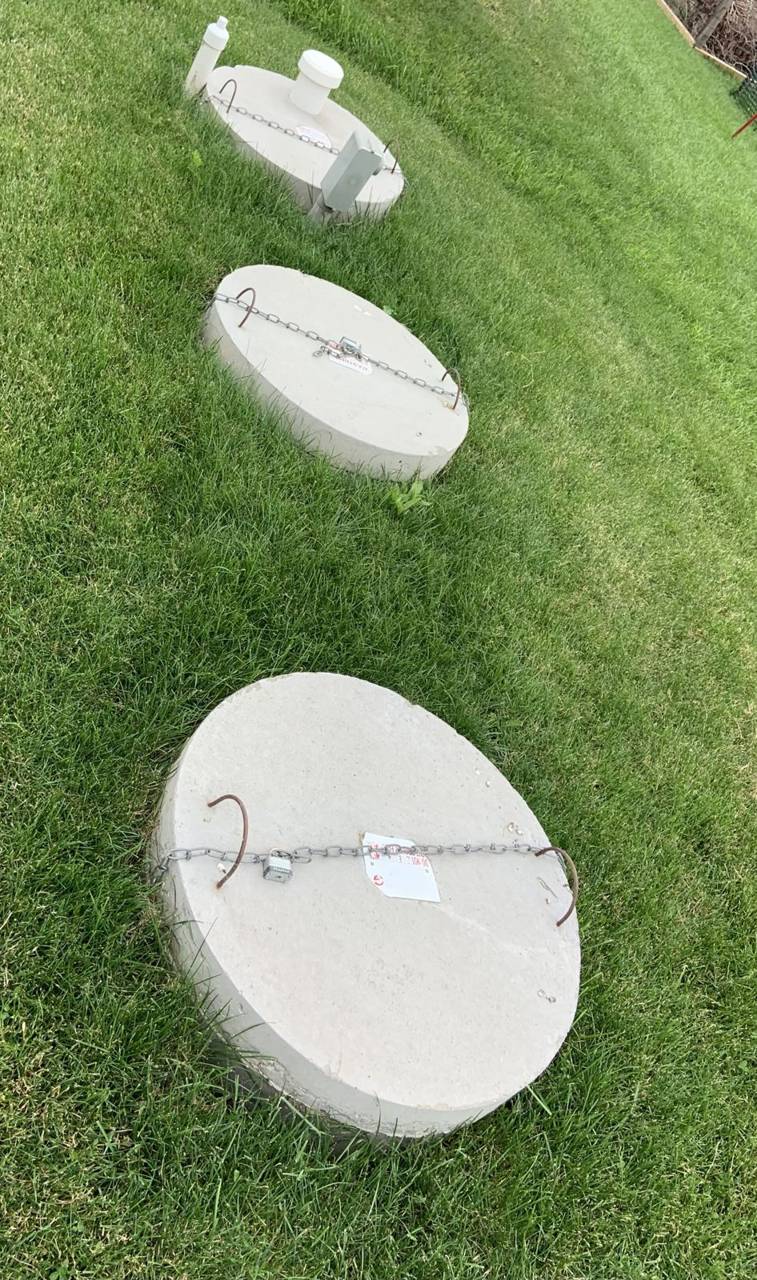
- We locate and open your tank, aerobic unit and dispersal area, including buried lids common on older Henly properties
- We explain what we find in plain language, with photos where they help
- Repairs and installs are planned around Hays County permitting requirements
- You get written options before any repair work begins
- Aerobic visits are recorded for your maintenance contract
Septic conditions around Henly
Weather out here is wide open. Summer drought bakes the ground, cracks clay and dries spray fields, while a single big storm can drop several inches of rain onto thin soil that has no place to hold it. After a storm, low spots in a field can stay wet for days. Wind and lightning are real concerns for aerobic systems, since a power surge can damage the control panel or air pump, and a power outage stops treatment until the electricity is restored. Livestock and ranch vehicles add risk, because heavy loads on a field compress soil and crush shallow lines. Roots from cedar and oak will find their way into pipes if allowed. A seasonal walk around the field, lids and panel catches most problems early. Long gravel drives also need planning for service: a heavy pump truck needs firm ground and room to turn, so scheduling after a dry stretch helps. Flag your tank lids ahead of time, and tell us if you are unsure where the tank is.
Emergency Septic Service questions from Henly homeowners
What counts as a septic emergency?
Sewage in the house, sewage pooling in the yard, a constant alarm on an aerobic system and all drains backing up together all count. A slow drain does not usually need same-day attention, but it should not be ignored. If in doubt, stop water use and call. Cleaning supplies from a store will not solve a septic emergency, and some can make things worse.
Should I use a chemical cleaner to clear a backup?
No. Harsh chemicals can kill the bacteria that break down waste and may damage pipes and tanks. They rarely solve a septic backup because the problem is usually a full tank, a blocked outlet or a stressed field. A professional diagnosis is safer. Do not open the tank lid yourself. Gases inside are dangerous.
How soon can someone reach a Henly property?
Travel time from the Dripping Springs area depends on conditions and scheduling, and we do not promise specific response times. Call, describe the situation and we will tell you what we can do. Meanwhile, stop water use and keep people away from any sewage. After the emergency, schedule an inspection so you understand what happened and how to prevent it.
Why is my aerobic system alarm going off?
Common causes include a high water level, a failed or stuck float, a tripped breaker, a failed aerator or pump, or a clogged filter. Some alarms are triggered by heavy rain or a power outage. Silence the alarm if the panel allows, cut back water use and call for service. Do not ignore it, because the alarm exists to warn you.
Can heavy rain cause a septic emergency?
Yes. Saturated soil cannot absorb treated wastewater, especially in the thin soils common in the Hill Country. Backups, soggy fields and alarms can follow a big storm. Limiting water use until the ground drains helps. If problems continue after the soil dries, the system likely has a deeper issue that needs a closer look. Rain-related problems often ease as the soil dries, but repeated trouble points to a deeper cause.
Should I pump my tank when it backs up?
Pumping often relieves a backup caused by a full tank, but it does not fix a broken baffle, a blocked field or a failed pump. If the tank is full of solids, pumping is a sensible first step. Afterward, the cause must still be found, or the problem will return, sometimes within days. A follow up inspection helps confirm the real cause and prevent a repeat.
More about emergency septic service → · All septic services in Henly →
Need emergency septic service in Henly?
Call or send a request. We will ask a few questions about your system and the property, then schedule a visit.