Buda · Hays County
Emergency Septic Service in Buda, TX
A backup or overflow near Buda often shows up after heavy rain, when saturated clay cannot take any more water. If sewage is entering the house or surfacing in the yard, stop using water, keep people and pets away, and call a professional. Do not pump water from a flooded field yourself. We work out whether the cause is a full tank, a blocked line, a failed pump or flooded soil, and stabilize the problem first.
Emergency Septic Service for Buda homes
Septic emergencies in the Buda area tend to hit when a property was assumed to be on city sewer, or when a tank has been ignored for years. Sewage backing up through a floor drain, a toilet that will not flush or a yard that suddenly smells all point to a stressed system. If you are on city sewer, call the city's utility line, since the problem may be in a public main. If you have a tank, call us. It helps to know your system before trouble starts. Find out whether you have a conventional tank, an aerobic unit or something else, where the tank sits and who last serviced it. Write that on a card near your breaker panel. In an emergency, a few facts shared quickly let us arrive with the right equipment instead of discovering the setup on site.
Take the first steps right away. Stop running water. Do not use drain chemicals. Keep children and pets away from any wastewater. If you have an aerobic system, check the breaker and silence the alarm. Then describe what you see. Whether sewage is in the house, the yard or only at a single drain tells us where to start and how urgent the situation is. Different symptoms call for different responses. Water backing up at the lowest drain, usually a tub or floor drain, means the main line or tank is blocked or full. A gurgling toilet and slow showers across the house point the same way. Wet, smelly ground over the field suggests the field is overloaded. An alarm with normal drains points to a pump or float issue. Describing what you see helps us decide how to proceed.
Clay soil makes yard emergencies more visible near Buda. After a storm, saturated ground cannot accept more water, and a field that was fine in July may surface sewage in March. Often, the fix is to pump the tank and rest the field. Sometimes a pump or float has failed. We deal with the immediate problem first, then explain what led to it and what to do so it does not return. Do not wait to see if a problem fixes itself. Septic systems rarely recover without help, and each day of use makes backup more likely. Sewage in the house carries health risks and can ruin flooring and drywall. Stop water use early, call, and let us stabilize the system. Then we can plan the permanent repair on a schedule that makes sense for you.
What to know in Buda
Is it your line or the city's?
If you are on sewer, a backup could come from the city main. A quick check with neighbors or the city utilities line can tell you. If you are on septic, the problem is on your property. If you rent your home, contact your landlord as well. Lease terms often assign responsibility for septic failures.
Storm-related surfacing
Heavy rain on saturated clay can push effluent up through the field. Limiting water use during and after storms eases the load while the ground drains. Avoid walking on wet areas. Sewage damage can affect insurance. Take photos and keep receipts. Ask your insurer what applies.
After-hours reality
We do not promise specific arrival times. Call, describe the problem and we will tell you honestly what we can do. Meanwhile, take the steps that limit damage. If you have a well, avoid drinking from it until the situation is under control and the water is tested.
Signs you may need emergency septic service
- Every drain in the house running slowly or gurgling
- A pump or aerator that has gone silent or will not run
- Standing water over the tank or field after dry weather
- Sewage backing up into tubs, showers or floor drains
How emergency septic service works
Texas rules recognize that some failures cannot wait for paperwork. Under 30 TAC 285.35, certain emergency repairs can be made without a permit when they address an immediate and serious health hazard and do not change the system's planning materials or how it functions. The person making the repair must notify the permitting authority in writing within 72 hours after starting the work, describing the methods and materials used, and the authority may inspect the repair. Bigger changes, such as a replacement field or a new tank design, generally need a permit. Because local programs can be stricter than state minimums, confirm what applies in your county, whether that is Hays, Travis, Blanco or Burnet. When in doubt about whether your repair qualifies, ask the county before you assume it does.
An emergency repair often fixes the symptom, and a follow up fixes the cause. After the immediate hazard is controlled, ask what led to it. A tank that was overdue for pumping, a broken baffle, roots in a line, a failed pump or a worn drain field each call for a different plan. Aerobic owners should check that the maintenance contract is current, since a provider can often spot warning signs early. Keep the paperwork for any emergency repair, including the notice to the county, because future buyers and inspectors may ask for it. Once the system is stable, we help you set up a pumping and inspection routine that makes the next emergency much less likely. That habit is the best protection against another late night call.
What to expect on a Buda visit
- 01
Triage by phone
When you call, we ask what is happening, where the sewage is showing up, whether an alarm is sounding and what the system looks like. We give you safe steps to take while you wait, such as cutting back water use and keeping people away from contaminated areas. Please ask us about availability when you call, since we do not want to promise a timeframe we cannot confirm.
- 02
Make the scene safe
On site, we first look for hazards. We check for standing wastewater, electrical risks near wet equipment, and open or damaged lids. If needed, we advise shutting off power to a pump or aerator, limiting water use or keeping people out of an area. Safety comes before diagnosis, and we will not rush past a hazard.
- 03
Find the cause
We open the tank and trace the problem from the house to the disposal area. That means checking the main line, inlet and outlet, liquid level, filter, pump or aerator, float switches, control panel and the field itself. We separate what is causing the problem from what is only a symptom, so the repair is aimed at the right place.
- 04
Relieve and stabilize
Depending on the cause, we may pump the tank, clear a blocked line, reset or replace a failed control, or repair a leak. The goal is to get wastewater moving again in a safe way. If a full repair is not possible the same day, we explain how to use the system carefully until it is.
- 05
Document and notify
We record what we found and what was done, including methods and materials, because emergency repairs may require written notice to the permitting authority within 72 hours of starting work. We tell you whether the repair is likely to fall under that rule or whether it needs a permit, and we help you with the notice.
- 06
Plan the follow up
Once things are stable, we talk through what caused the failure and what comes next, from a pumping schedule to repairs of a worn drain field. We outline the options plainly and leave the decisions to you. Our aim is to turn a stressful day into a clear plan. We can also help you plan routine care.
Our approach in Buda
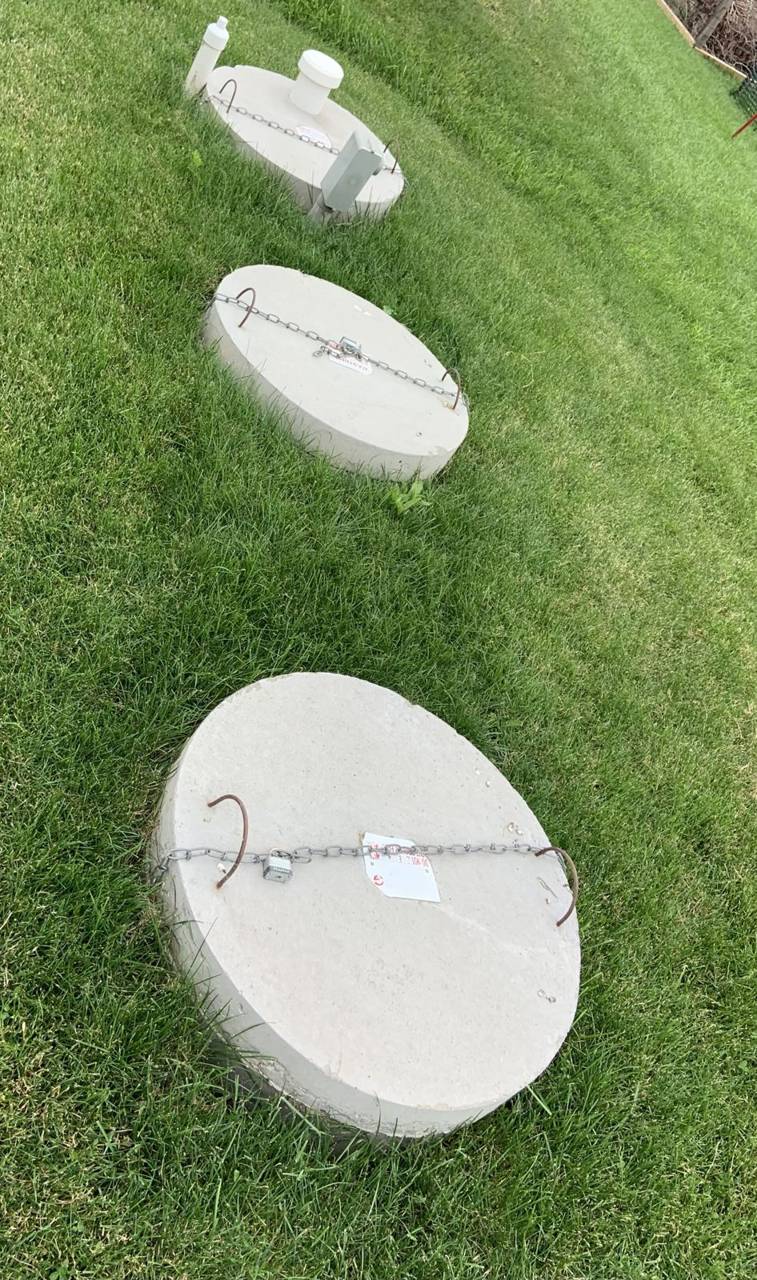
- We locate and open your tank, aerobic unit and dispersal area, including buried lids common on older Buda properties
- We explain what we find in plain language, with photos where they help
- Repairs and installs are planned around Hays County permitting requirements
- You get written options before any repair work begins
- Aerobic visits are recorded for your maintenance contract
Septic conditions around Buda
Buda has grown fast, but not every part of it grew the same way. Dense neighborhoods and new subdivisions closer to I-35 were built with sewer service, while larger rural tracts, older subdivisions and acreage on the edges were built around septic. Driving the back roads outside town, you find horse properties, small farms, and custom homes with long driveways. Those lots often have a conventional tank and field if the soil allows, or an aerobic system if it does not. Clay lots frequently need drain fields that are longer or placed carefully to work. Because the area keeps changing, a house that once sat in the country may now be next to a new development while still running an older septic system. Knowing which side of that line you are on is the first step.
Emergency Septic Service questions from Buda homeowners
Who do I call if sewage backs up in Buda?
If your home is on city sewer, call the City of Buda utilities first, since the main may be blocked. If you have a septic tank, call a septic company. A plumber can clear household lines, but a tank or field problem needs septic expertise. If the backup is in only one bathroom, the cause may be a local clog that a plumber can clear. Septic professionals can also advise.
What should I do right now?
Stop all water use, including laundry and dishwashers. Keep people and pets away from sewage. Avoid chemical cleaners. If it is an aerobic system, check the breaker. Take photos for your records, then call. Wash your hands after any contact. Do not run the washing machine as a test. It can push more wastewater into a stressed system.
Will pumping solve the problem?
Sometimes. If the tank is full, pumping gives immediate relief. If the cause is a failed field or a broken line, the problem returns. We pump to stabilize the situation, then investigate so you do not pay for repeated pump-outs without a fix. Ask what to do until help arrives. We can give specific steps over the phone.
Can heavy rain cause a septic emergency?
Yes. Saturated soil cannot absorb treated wastewater, especially in the thin soils common in the Hill Country. Backups, soggy fields and alarms can follow a big storm. Limiting water use until the ground drains helps. If problems continue after the soil dries, the system likely has a deeper issue that needs a closer look. Rain-related problems often ease as the soil dries, but repeated trouble points to a deeper cause.
Should I pump my tank when it backs up?
Pumping often relieves a backup caused by a full tank, but it does not fix a broken baffle, a blocked field or a failed pump. If the tank is full of solids, pumping is a sensible first step. Afterward, the cause must still be found, or the problem will return, sometimes within days. A follow up inspection helps confirm the real cause and prevent a repeat.
How much does emergency septic service cost?
It depends on the cause, the time of day, the tank size and the parts involved. As a general market range, pumping commonly runs a few hundred dollars, and repairs can climb from there. After hours calls may carry extra charges. Ask what applies and what the work will include before you agree to start. Ask whether the quote covers disposal, parts and any required county notice.
More about emergency septic service → · All septic services in Buda →
Need emergency septic service in Buda?
Call or send a request. We will ask a few questions about your system and the property, then schedule a visit.