Spicewood · Travis and Burnet Counties
Drain Field Repair & Replacement in Spicewood, TX
Thin soil makes drain fields in Spicewood easy to overload, and a failure may show up as wet ground, odor or sewage surfacing. Repair choices depend on the lot and may include fixing lines, adding area or changing to advanced treatment with drip or spray dispersal. The correct county or LCRA reviews replacements, and we help you navigate that process. Early action often saves the field you already have.
Drain Field Repair & Replacement for Spicewood homes
The drain field is where Spicewood's tough ground matters most. Soil here can be only a few inches deep before hitting rock, and in some spots clay holds water longer than a field wants. Wastewater needs time and soil depth to clean itself, so shallow, rocky sites push fields to fail sooner when anything goes wrong upstream. The age of a field matters. A field of twenty or thirty years old may simply be worn out, even if the owner did everything right. Biological mats form where effluent meets soil, and over time they slow absorption. Gentle options such as resting a zone or reducing flow can help, but older fields often need a rebuild eventually. A quick walk of the field with us often shows the pattern right away.
Signs include sewage-smelling wet patches, unusually lush grass lines, slow drains and backups during heavy water use. We trace the cause first. Hidden leaks, a tilted distribution box, root-clogged lines or a tank that has gone too long between pumpings all choke a field. If the soil has sealed over with a dense biological mat, resting the field helps only if the root cause is also fixed. A useful test is a dye or flow check. We introduce dye or run measured water through the system and watch where it appears. A plume surfacing near the field confirms failure. Combined with a tank inspection, it tells us whether solids reached the field and whether the tank or the soil is the main concern.
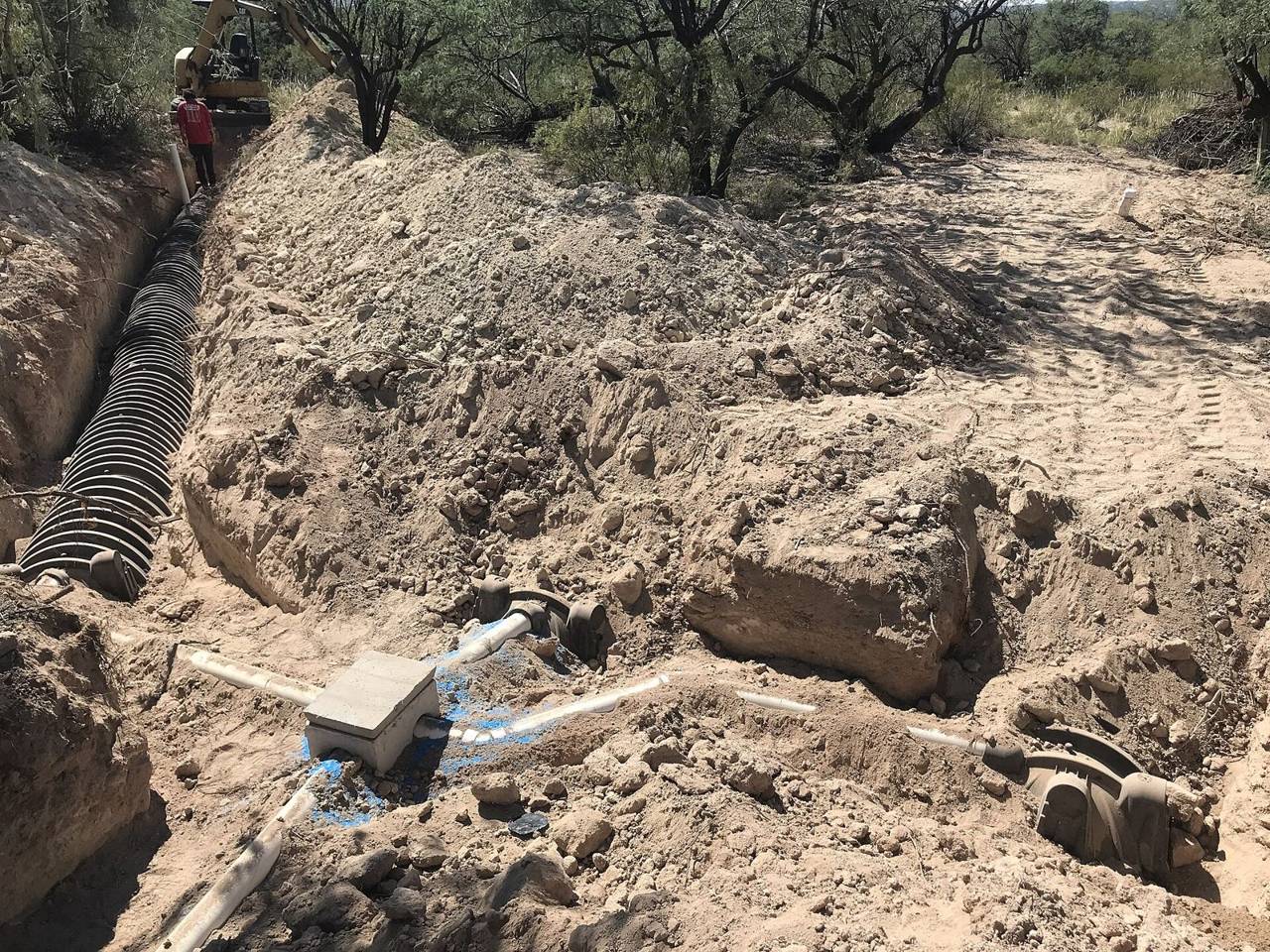
When a field must be rebuilt, design is key. A site evaluation maps soil depth, slope and distance to wells, the lake, creeks and property lines. On Spicewood lots that often leads to drip dispersal, mounded or raised beds, or an aerobic unit ahead of spray irrigation. Permit review in Travis County or Burnet County takes time, and Burnet requires a 911 address and building permit before the septic permit, so start early. Replacement must follow the rules for the county, and designs get reviewed. Expect questions on soil, slope, distances and the number of bedrooms. Having a complete site evaluation and a clear plan shortens review. Our role is to help you understand each step, not to push a larger system than your lot needs.
What to know in Spicewood
Setbacks from the lake and creeks
Lots near Lake Travis, the Pedernales River or a drainage creek must keep set distances from water. On a narrow lot those buffers can consume most of the buildable area. Ask the permitting office whether any extra lake-area requirements apply to your parcel. If your lot has little flat ground, the designer may need to split the field into zones across the slope. That adds length of line but spreads the load evenly.
Slopes and erosion
Hillside fields need careful design so effluent does not run along the surface or undermine soil. Erosion from heavy rain can expose lines. We look at drainage above and below the field and suggest simple grading and plantings that protect it. Plan around trees. A mature oak near the field will send roots toward it, and removing a tree is sometimes part of the fix. Talk with your designer about root barriers.
Cost and phasing
Field replacement ranges widely from several thousand dollars into five figures, depending on design and rock. Phasing is sometimes possible, such as pumping and resting first while the permit is processed. Ask for written options with permits, excavation and restoration priced separately. Ask whether a temporary plan is possible, such as regular pumping while the permit is processed. It is not a cure, but it can protect the home during the wait.
Signs you may need drain field repair & replacement
- Unusually bright green, fast-growing grass over the field
- Standing water or effluent surfacing near spray heads or trenches
- Alarm sounding on a pump or aerobic system repeatedly
- Gurgling pipes after laundry or long showers
How drain field repair & replacement works
In most cases, replacing a drain field is not a simple swap. Texas on-site sewage rules, found in 30 TAC Chapter 285, expect the work to match site conditions, and a new or substantially changed disposal area is generally handled through the local authorized agent. In most of Hays County that is Hays County Development Services. Travis County, the City of Austin, Blanco County and Burnet County each have their own arrangements. The usual steps involve a site and soil evaluation by a qualified professional, a designed plan, a permit, installation and an inspection. Small repairs may be treated differently from replacements, so always check with the county before digging. Asking early saves time, because the county can tell you exactly what paperwork your project needs.
A drain field lasts longer when it is treated well. Spread laundry across the week, fix leaking toilets, keep vehicles and heavy equipment off the field, and plant only grass over it. Keep roof drains and pool backwash away from the disposal area. Have the tank pumped on schedule and keep any aerobic system under its required maintenance contract. These habits matter more in the Hill Country than in deeper soils, because there is less ground to absorb mistakes. If you notice wet spots, odors or slow drains, call early. A repair caught at the first sign is almost always smaller, cheaper and less disruptive than a full replacement. A little attention each month is far easier than a yard torn up for new trenches.
What to expect on a Spicewood visit
- 01
Talk through the history
We start by asking what you have noticed and when. We want to know about wet spots, odors, slow drains, recent heavy rain, extra guests, new appliances and the last time the tank was pumped. Any permit records, system drawings or maintenance reports you have help a great deal. This conversation often points to the cause before we ever pick up a probe or a shovel.
- 02
Check the tank and equipment
Next we open the tank and look at water level, baffles, filters, pumps, alarms and any aerator. Problems here often show up in the field as symptoms. If the tank is full or the effluent is carrying solids, we explain that clearly. Pumping may be needed before any real diagnosis of the field can be made, and we will tell you so.
- 03
Evaluate the disposal area
We walk the field and look for standing water, soft ground, odors, uneven grass and damaged parts. Depending on the system, we check the distribution box, trench lines, spray heads, drip lines, filters and valves. We also note slopes, drainage paths, trees and anything built over the area. The goal is to decide whether the field is failing, stressed or simply broken.
- 04
Explain the options in writing
You receive a plain explanation of what we found, what caused it and what your choices are, from minor repair to full replacement. We describe what each option involves, what it is likely to cost in general terms and how long you can expect it to last. If a permit or soil evaluation is needed, we say so up front.
- 05
Handle permits and design
For replacements or major changes, a licensed professional prepares the site evaluation and plan, and the application goes to the local permitting authority. We keep you informed about each step. For smaller repairs, we confirm with the county whether a permit is required before work begins, because rules and local practice can differ.
- 06
Complete the work and verify
We repair or replace the field to the approved plan, restore the area as well as the site allows, and schedule any required inspection. Afterward, we show you what changed and what to watch. You get care tips for the new field so it has the best chance of lasting.
Our approach in Spicewood
- We locate and open your tank, aerobic unit and dispersal area, including buried lids common on older Spicewood properties
- We explain what we find in plain language, with photos where they help
- Repairs and installs are planned around Travis and Burnet Counties permitting requirements
- You get written options before any repair work begins
- Aerobic visits are recorded for your maintenance contract
Septic conditions around Spicewood
Burnet County Development Services handles septic permitting on its side of the line, and the county ties the process to a 911 address and a building permit, so those steps usually come first for new construction. On the Travis County side, Transportation and Natural Resources acts as the permit authority for unincorporated land under TCEQ's 30 TAC Chapter 285. The LCRA adds another layer near the water. It has regulated septic systems for decades within a zone around Lake Travis, so lakeside lots may fall under its program, and the Burnet County site links to an LCRA jurisdiction map. Texas also requires aerobic systems to be covered by a maintenance contract with a licensed provider. Before you start a repair, replacement or new install, confirm the correct office for your parcel. Phone the permit office early, because a short call can save an application from being sent to the wrong place.
Drain Field Repair & Replacement questions from Spicewood homeowners
How do I know whether my drain field is failing or just wet from rain?
After heavy rain, some dampness is normal. If the area stays soggy in dry weather, smells like sewage or drains inside the house slow at the same time, the field is likely struggling. A dye test or tank check can help confirm the source. A dye or flow test helps confirm. If you see color at the surface or hear gurgling in the house after a test, the field is unlikely to be only wet from rain.
Can I plant trees or build a patio over my drain field?
Avoid both. Roots seek moisture and invade lines, and hard surfaces block oxygen and add weight. Grass is the best cover. Keep sheds, pools and driveways away, and ask the county about setbacks before building anything near the field. Grass is best. Light foot traffic is fine, but keep vehicles off, and talk to your landscaper about irrigation lines and fertilizer near the field.
Which office approves a drain field replacement in Spicewood?
It depends on the address. Properties in Travis County go through Travis County Transportation and Natural Resources, and those in Burnet County go through Burnet County Development Services. Confirm your county before design work starts, because forms and steps differ. Call before you design. Offices vary on forms, fees and review times, and a quick call can save weeks and wasted design costs.
How long should a drain field last?
There is no single number. With good care, a field can last for decades, but results vary with soil, design, household water use and maintenance. Pumping the tank on schedule, spreading out water use and protecting the field from vehicles and roots make the biggest difference. Systems on thin Hill Country soil have less margin for mistakes. Age alone is not a reliable guide, so the condition of the field matters more than the calendar.
Do I need a permit to replace a drain field?
In most cases, yes. Replacing or substantially changing a disposal area is usually handled through the local permitting authority, which in much of Hays County is Hays County Development Services. A site evaluation and designed plan are normally part of the process. Small repairs may be treated differently, so check with the county before work starts. The county can confirm what applies to your address, and we can help you gather the information it asks for.
What does drain field replacement cost?
Costs vary widely. Minor repairs can run from several hundred to a few thousand dollars, while full replacement commonly reaches five figures, especially when soil is rocky or an advanced system is required. Design, evaluation and permit fees are extra. These are general market ranges, not a quote, and your site decides the real number. Your actual cost depends on the diagnosis, so treat any number before an inspection with caution.
More about drain field repair & replacement → · All septic services in Spicewood →
Need drain field repair & replacement in Spicewood?
Call or send a request. We will ask a few questions about your system and the property, then schedule a visit.