Southwest Austin · Travis County
Drain Field Repair & Replacement in Southwest Austin, TX
Fractured limestone and thin soil make drain fields in Southwest Austin tricky. When one fails, effluent can surface or travel downslope. Fixes may include repairing broken lines, adding capacity or moving to an advanced treatment design. Austin Water or the county reviews replacements, and some sites near the aquifer need nitrogen-reducing treatment. We help you sort out which path applies. Early action often saves the field you already have.
Drain Field Repair & Replacement for Southwest Austin homes
The drain field is the part of a septic system that does the final cleanup, and in Southwest Austin it faces a hard job. Soils are often shallow over limestone, with clay pockets and caliche in between, so wastewater has less depth to filter through. When a field fails, you may see soggy ground, a sewage smell, bright green strips of grass or slow drains inside the house. Water use is the first thing to test. We look at the toilets, the water meter and the washer to check for hidden leaks, because a running toilet can drown a field. We also check the tank outlet filter and the distribution box, since a tilted box sends all the flow to one trench while others sit unused.
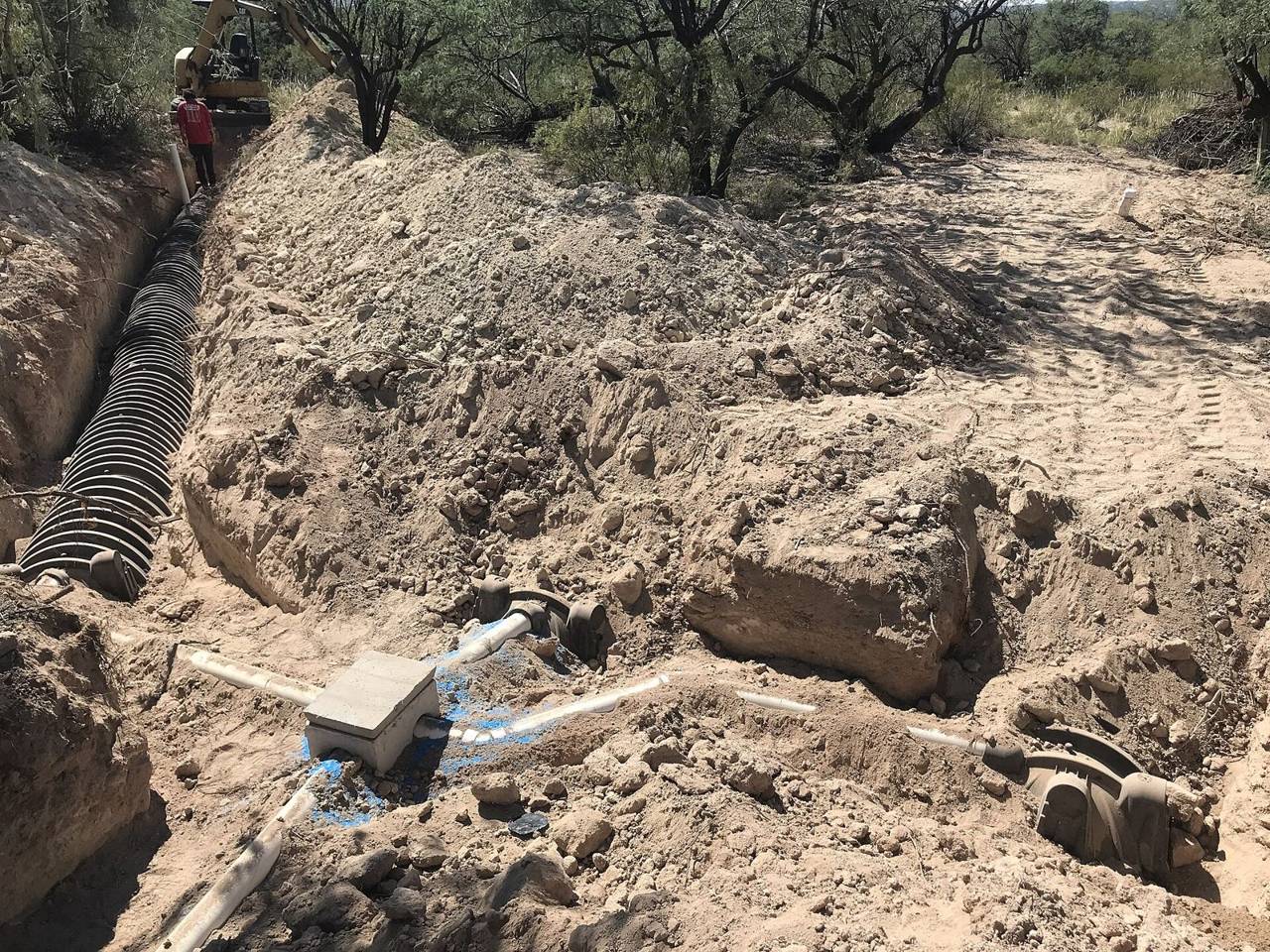
Repair depends on why the field failed. A field overloaded by a leaking toilet can recover once the leak is fixed and the soil rests. A field choked by solids from a neglected tank is harder to save. Broken distribution boxes, crushed lines and roots in the trenches can be repaired in sections. When the soil itself has sealed over, replacement is the realistic answer. When replacement is needed, the design process comes first. A professional evaluates the soil, the slope and the setbacks, then proposes a layout. For a Southwest Austin lot, that can mean drip lines laid shallow under a lawn, a pressure-dosed field that spreads effluent evenly, or an aerobic unit that treats water before it goes underground.
Replacement in Southwest Austin is rarely a simple swap. Inside the Barton Springs zone and the surrounding watershed, the City of Austin and Travis County apply tighter rules to protect the aquifer, and designs often move toward drip irrigation, raised beds or other engineered layouts that work with thin soil. A site evaluation and a permit come first, which means the design has to fit your specific lot. The old field does not always have to be removed. Sometimes it is abandoned according to the rules, and a new area is built nearby. Cost swings widely with design, rock and field size, and general figures for replacements run from several thousand dollars to well into five figures. A written scope and permit estimate give you a better picture.
What to know in Southwest Austin
Thin soil and design options
Where there are only a few inches of soil over rock, a standard trench field may not be allowed. Drip emitters, mound-style beds or aerobic treatment ahead of the field are common alternatives, each with its own space needs and upkeep. Resting a field is one recovery option. By switching to a second zone or cutting water use sharply for several weeks, the biological mat in a stressed field sometimes breaks down enough to restore flow.
Setbacks around creeks and slopes
Drain fields must keep set distances from creeks, wells, property lines and steep drops. Southwest Austin lots near Barton Creek tributaries can lose a lot of usable area to those buffers, so measurements matter early in planning. Consider the long view. A new field in poor soil may fail again if the root cause is not addressed. Reducing water use, pumping on schedule and keeping roots in check all raise the odds that a replacement lasts.
Protecting the field you keep
Keep cars, sheds and irrigation trenching off the field. Spread water use across the week rather than doing every load of laundry on Saturday. Direct roof and driveway runoff away from the area so rain does not saturate the soil. Your plans for the property count too. A pool, a deck or a guesthouse can claim space that the field or its reserve area needs.
Signs you may need drain field repair & replacement
- Toilets and drains that run slowly or back up into the house
- Unusually bright green, fast-growing grass over the field
- Standing water or effluent surfacing near spray heads or trenches
- Alarm sounding on a pump or aerobic system repeatedly
How drain field repair & replacement works
Repair options depend on what we find. Sometimes the answer is simple: fixing a broken pipe, replacing a cracked distribution box, clearing a blocked line, or replacing sprinkler heads and drip components. Other times a field can rest. Diverting flow to a second section, if the design has one, gives the first section time to recover. When a field is truly worn out, replacement is the honest answer. That may mean new trenches, a larger bed, or a switch to a different type of system. We explain the options in order from least to most invasive, with the tradeoffs of each, so you can make the call with a clear picture. Whatever you choose, we want you to understand why, not just agree to a price.
In most cases, replacing a drain field is not a simple swap. Texas on-site sewage rules, found in 30 TAC Chapter 285, expect the work to match site conditions, and a new or substantially changed disposal area is generally handled through the local authorized agent. In most of Hays County that is Hays County Development Services. Travis County, the City of Austin, Blanco County and Burnet County each have their own arrangements. The usual steps involve a site and soil evaluation by a qualified professional, a designed plan, a permit, installation and an inspection. Small repairs may be treated differently from replacements, so always check with the county before digging. Asking early saves time, because the county can tell you exactly what paperwork your project needs.
What to expect on a Southwest Austin visit
- 01
Talk through the history
We start by asking what you have noticed and when. We want to know about wet spots, odors, slow drains, recent heavy rain, extra guests, new appliances and the last time the tank was pumped. Any permit records, system drawings or maintenance reports you have help a great deal. This conversation often points to the cause before we ever pick up a probe or a shovel.
- 02
Check the tank and equipment
Next we open the tank and look at water level, baffles, filters, pumps, alarms and any aerator. Problems here often show up in the field as symptoms. If the tank is full or the effluent is carrying solids, we explain that clearly. Pumping may be needed before any real diagnosis of the field can be made, and we will tell you so.
- 03
Evaluate the disposal area
We walk the field and look for standing water, soft ground, odors, uneven grass and damaged parts. Depending on the system, we check the distribution box, trench lines, spray heads, drip lines, filters and valves. We also note slopes, drainage paths, trees and anything built over the area. The goal is to decide whether the field is failing, stressed or simply broken.
- 04
Explain the options in writing
You receive a plain explanation of what we found, what caused it and what your choices are, from minor repair to full replacement. We describe what each option involves, what it is likely to cost in general terms and how long you can expect it to last. If a permit or soil evaluation is needed, we say so up front.
- 05
Handle permits and design
For replacements or major changes, a licensed professional prepares the site evaluation and plan, and the application goes to the local permitting authority. We keep you informed about each step. For smaller repairs, we confirm with the county whether a permit is required before work begins, because rules and local practice can differ.
- 06
Complete the work and verify
We repair or replace the field to the approved plan, restore the area as well as the site allows, and schedule any required inspection. Afterward, we show you what changed and what to watch. You get care tips for the new field so it has the best chance of lasting.
Our approach in Southwest Austin
- We locate and open your tank, aerobic unit and dispersal area, including buried lids common on older Southwest Austin properties
- We explain what we find in plain language, with photos where they help
- Repairs and installs are planned around Travis County permitting requirements
- You get written options before any repair work begins
- Aerobic visits are recorded for your maintenance contract
Septic conditions around Southwest Austin
How do you confirm your wastewater status? Austin Water maintains an interactive map of OSSF jurisdiction that also shows whether a parcel sits on the Edwards Aquifer Recharge Zone or in the Barton Springs segment. Check it along with your utility bill. A wastewater line item means you are likely on city sewer. Water-only bills, or a private well, usually point to septic. Older permits are often available from the city. The distinction matters when you buy a home. An older Southwest Austin lot with mature trees may have a tank placed decades ago, with records that are incomplete. An inspection helps you learn the tank location, the system type and the field condition, and it identifies whether the home would be a candidate to connect to the city sewer if a line becomes available nearby.
Drain Field Repair & Replacement questions from Southwest Austin homeowners
Can a failed drain field be repaired, or must it be replaced?
It depends on the cause. Broken lines, a bad distribution box or roots can often be repaired in part. If the soil has clogged with a dense biological mat or has stayed saturated for good, repair will not last, and a new or redesigned field is the better route. A site evaluation tells you which situation you are in. Ask for both options priced side by side.
Do I need a permit to replace a drain field in Southwest Austin?
Almost always. Replacing a field is a major repair that generally needs a site evaluation and approval from the permitting authority, which is the City of Austin for properties inside its jurisdiction or Travis County for unincorporated areas. Confirm which office applies to your address before paying for design work, since the two have different forms. We are happy to help you gather what the application needs.
What are early signs that my field is struggling?
Look for wet or spongy ground, odors near the field, unusually lush grass over the trenches and slow drains indoors. After heavy rain, some saturation is normal on thin Hill Country soil. If the area stays soggy in dry weather, or water backs up during laundry day, it is time for an evaluation. Early action usually keeps the repair smaller.
Can a drain field be repaired, or does it always need replacement?
Many problems can be repaired. Broken pipes, cracked boxes, clogged lines, damaged sprinkler heads and blocked drip filters are common fixes. A field with severely sealed soil or collapsed lines may need replacement. We look at the cause first, then explain whether repair is realistic or whether replacement is the better long-term choice for your property. Our job is to give you a straight answer, even when the answer is a modest repair.
How long should a drain field last?
There is no single number. With good care, a field can last for decades, but results vary with soil, design, household water use and maintenance. Pumping the tank on schedule, spreading out water use and protecting the field from vehicles and roots make the biggest difference. Systems on thin Hill Country soil have less margin for mistakes. Age alone is not a reliable guide, so the condition of the field matters more than the calendar.
Do I need a permit to replace a drain field?
In most cases, yes. Replacing or substantially changing a disposal area is usually handled through the local permitting authority, which in much of Hays County is Hays County Development Services. A site evaluation and designed plan are normally part of the process. Small repairs may be treated differently, so check with the county before work starts. The county can confirm what applies to your address, and we can help you gather the information it asks for.
More about drain field repair & replacement → · All septic services in Southwest Austin →
Need drain field repair & replacement in Southwest Austin?
Call or send a request. We will ask a few questions about your system and the property, then schedule a visit.