San Marcos · Hays County
Drain Field Repair & Replacement in San Marcos, TX
Drain field problems near San Marcos tend to come from two opposite causes: clay that drains too slowly and thin rocky soil that does not filter enough. Standing water, soggy ground and sewage odor over the field are the usual signs. Depending on the lot, the fix might be a repair, a new field design, or a different treatment approach. County review is required for replacement, and we help you understand the steps involved.
Drain Field Repair & Replacement for San Marcos homes
The drain field is the part of a septic system that does the final cleanup, and in San Marcos it faces two very different kinds of ground. East of I-35, heavy clay soaks up water slowly, so a field can saturate fast and stay wet. West and north toward RR 12 and RR 32, the soil is thin over limestone, which leaves little depth for filtering. Drain field repair and replacement in San Marcos has to start with the ground, not just the pipes. Before recommending anything, we ask about the history. Has the tank been pumped on schedule? Did the household grow? Were there heavy rains or a leak? The story often points to the cause and may show whether the field can recover if conditions change.
Signs of trouble include soggy spots or standing water above the field, bright green strips of grass, sewage odor, slow drains, and backups after rain. A field fails for several reasons. Solids from a neglected tank can clog soil. Too much water use can overwhelm it. Compaction from vehicles can crush pipe, and roots can invade. Sometimes the soil has simply reached the end of its capacity after decades of use. A failed field cannot be fixed by pumping alone, although pumping the tank is often part of the plan. Resting a field is one option that sounds strange but works in some designs. When a system has two or more zones, diverting flow to a rested zone lets the soil dry and bacteria rebuild. Clay recovers slowly, so patience matters here more than in sandy ground.
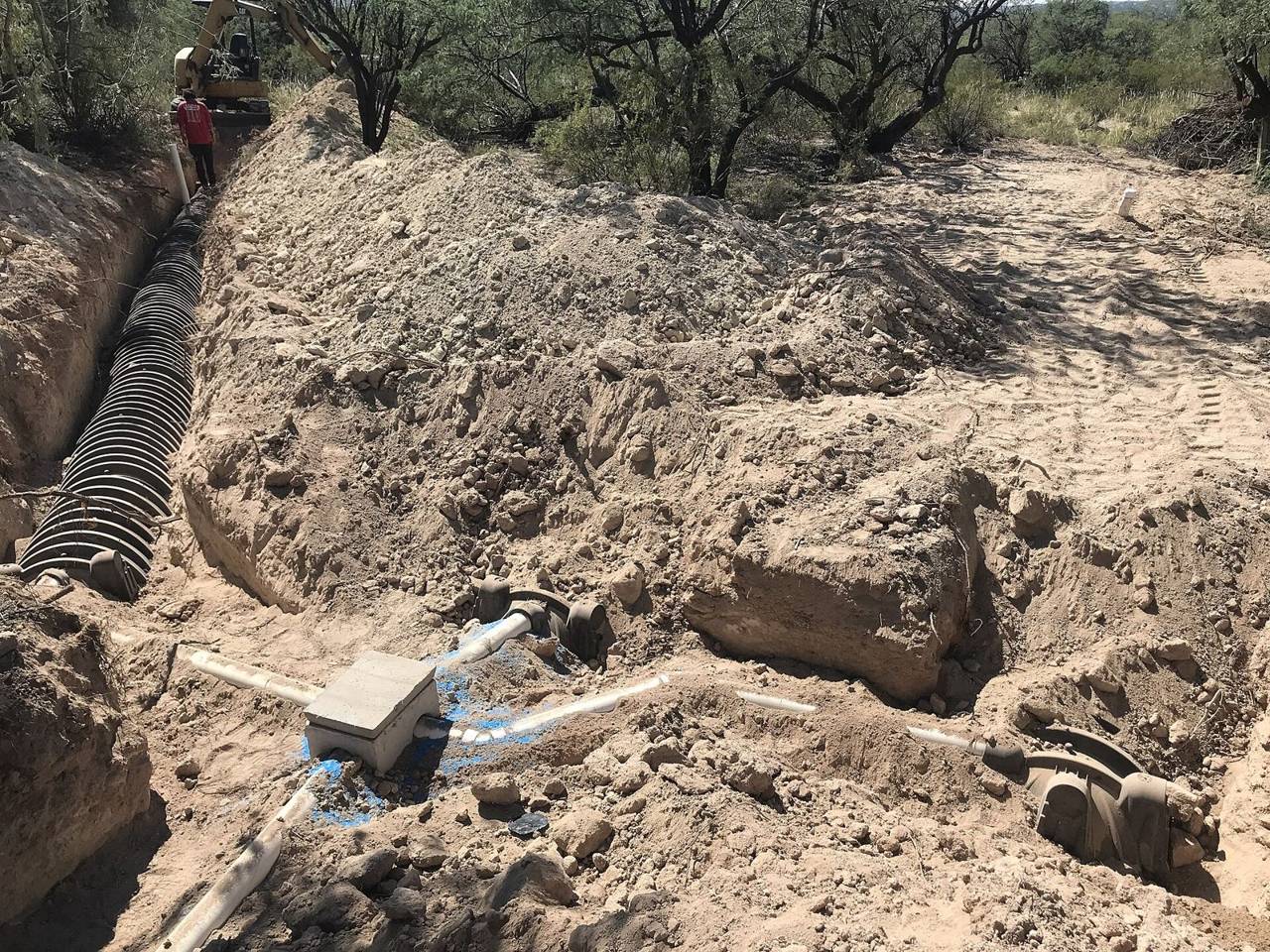
Repair options depend on what the evaluation shows. A clogged section may be cleared or replaced, and resting part of the field can help. If the soil is the problem, a site evaluator may recommend a different design, such as a pressure-dosed field, drip distribution, or an aerobic system with spray. In Hays County, a new or replaced field generally needs a permit and a soil evaluation, so plan time for design and review before digging begins. Where a full replacement is needed, a new field must go in unused soil with approved separation from the old one. On smaller acreage that can be a challenge, and it is one reason owners should protect the reserve area from sheds, pools, and driveways.
What to know in San Marcos
Soil evaluation comes first
A licensed site evaluator looks at soil texture, depth to rock, and signs of saturation. In San Marcos the answer can change within one property, with rock in one corner and clay in another. The evaluation decides which designs are even allowed. Photographs of the surface during wet spells help the evaluator, so take pictures of any pooling.
Protect the field from heavy loads
Driving or parking over a field compacts soil and crushes pipe. On acreage near San Marcos, fence or mark the area so mowers, trailers, and livestock stay off. Divert roof and driveway runoff away from it. Grass roots and shallow shrubs are fine on a field, but avoid deep-rooted trees nearby.
Aquifer and creek setbacks
Parts of the area sit over or near the Edwards Aquifer recharge zone, and creeks like Purgatory Creek and the Blanco River carry setback rules. Setbacks limit where a field can go. The county and TCEQ rules decide the exact distances, so verify before planning. Keep copies of the original design if you have them. They show where the field and reserve area were planned.
Signs you may need drain field repair & replacement
- Gurgling pipes after laundry or long showers
- Soggy, spongy or squishy ground over the field, even in dry weather
- Sewage odors in the yard, near the tank or near the spray area
- Toilets and drains that run slowly or back up into the house
How drain field repair & replacement works
The drain field is the last stop for wastewater on a septic property. It is also called the leach field, the absorption field or the disposal area. The tank only separates solids from liquid. What leaves the tank still carries bacteria, nutrients and organic matter, and the field is where soil, air and living organisms finish the job. In a conventional system, that means perforated pipes set in gravel trenches. In many Hill Country yards it means something different, such as spray heads, drip lines or a bed fed by a pump. Drain field repair near Dripping Springs can involve any of these, because each type fails in its own way and each needs its own fix. Knowing which kind you have is the first step toward an honest answer about what it needs.
Drain fields rarely fail overnight. Most of them decline slowly while the homeowner sees nothing at all. A sticky layer of biological material, sometimes called a biomat, forms where effluent meets soil. A little of it is healthy and helps treat the water. Too much of it, caused by solids escaping a neglected tank, constant overloading or soil that was marginal from the start, seals the soil and slows absorption. Roots, crushed pipes, broken sprinkler heads and clogged drip emitters cause other failures. Because the causes differ, we start with diagnosis instead of a sales pitch for a new field. A cheap fix is only cheap if it solves the right problem. Learning the cause also tells you how long a repair is likely to hold.
What to expect on a San Marcos visit
- 01
Talk through the history
We start by asking what you have noticed and when. We want to know about wet spots, odors, slow drains, recent heavy rain, extra guests, new appliances and the last time the tank was pumped. Any permit records, system drawings or maintenance reports you have help a great deal. This conversation often points to the cause before we ever pick up a probe or a shovel.
- 02
Check the tank and equipment
Next we open the tank and look at water level, baffles, filters, pumps, alarms and any aerator. Problems here often show up in the field as symptoms. If the tank is full or the effluent is carrying solids, we explain that clearly. Pumping may be needed before any real diagnosis of the field can be made, and we will tell you so.
- 03
Evaluate the disposal area
We walk the field and look for standing water, soft ground, odors, uneven grass and damaged parts. Depending on the system, we check the distribution box, trench lines, spray heads, drip lines, filters and valves. We also note slopes, drainage paths, trees and anything built over the area. The goal is to decide whether the field is failing, stressed or simply broken.
- 04
Explain the options in writing
You receive a plain explanation of what we found, what caused it and what your choices are, from minor repair to full replacement. We describe what each option involves, what it is likely to cost in general terms and how long you can expect it to last. If a permit or soil evaluation is needed, we say so up front.
- 05
Handle permits and design
For replacements or major changes, a licensed professional prepares the site evaluation and plan, and the application goes to the local permitting authority. We keep you informed about each step. For smaller repairs, we confirm with the county whether a permit is required before work begins, because rules and local practice can differ.
- 06
Complete the work and verify
We repair or replace the field to the approved plan, restore the area as well as the site allows, and schedule any required inspection. Afterward, we show you what changed and what to watch. You get care tips for the new field so it has the best chance of lasting.
Our approach in San Marcos
- We locate and open your tank, aerobic unit and dispersal area, including buried lids common on older San Marcos properties
- We explain what we find in plain language, with photos where they help
- Repairs and installs are planned around Hays County permitting requirements
- You get written options before any repair work begins
- Aerobic visits are recorded for your maintenance contract
Septic conditions around San Marcos
Septic permitting for unincorporated land around San Marcos is handled by Hays County Development Services, the local authorized agent working under TCEQ rules in 30 TAC Chapter 285. The county currently runs its permit applications through an online portal, and new aerobic systems require an initial two-year maintenance contract with a licensed provider. Homes inside the San Marcos city limits that are not on sewer should check with the city and the county to confirm who reviews their paperwork. Much of the land west of I-35 lies over the Edwards Aquifer recharge zone, which adds Edwards Aquifer Authority rules on top of county requirements. Hays County has recently debated large developments over the recharge zone partly because of the number of septic systems and wells they would need. If your property is near the escarpment, ask the county early whether any extra review applies before you plan a repair or replacement.
Drain Field Repair & Replacement questions from San Marcos homeowners
Can a failed drain field be repaired, or must it be replaced?
Sometimes a section can be repaired, especially if the cause is a broken pipe, a crushed line, or a distribution problem. If the soil has stopped absorbing, replacement or a different design is more likely. A soil evaluation and an inspection of the lines will show which path makes sense for your lot. A mound or raised bed is sometimes used when soil is too shallow, though it adds cost and needs space.
How long should a drain field last near San Marcos?
A well-cared-for field can last for decades, but there is no fixed number. Tank pumping, water habits, soil, and use all matter. Clay soils tend to stress fields sooner, and thin rocky soils offer little buffer. Regular inspection helps you catch decline early, before a full replacement is needed. Plan for temporary water restrictions during repair, since the field cannot take full flow while it is being worked.
Do I need a permit to replace a drain field in Hays County?
In unincorporated Hays County, replacing a field generally requires a permit through Hays County Development Services, and applications are submitted online. A soil evaluation and a design are usually part of the package. Inside a city, ask the city. When in doubt, call before any digging, because unpermitted work can cause trouble at resale. Check that your contractor is licensed for the work and ask them to confirm the permit status in writing.
Why did my drain field fail so soon?
Early failure usually traces to one of a few causes: a tank that was not pumped, too much water use for the field size, soil that was marginal for the design, compaction from vehicles, root damage or poor installation. Finding the cause matters, because a replacement built the same way can fail the same way. Water use habits in the home are worth reviewing as part of any replacement plan.
Will a new field fix problems with my aerobic system?
Only if the field is the problem. Aerobic units depend on working aerators, pumps, filters and timers, and the spray or drip field depends on them in turn. If the unit is not treating the water properly, a new field may fail too. We check the full system and your maintenance contract records first. That is why a full inspection comes before any decision about spending money on the field.
How do I know if my drain field has failed?
The most common signs are soggy ground, sewage odors, standing water, slow drains and backups inside the house. Unusually lush grass over one area is another clue. These signs can also come from a full tank, a failed pump or a plumbing blockage, so a proper inspection is the only way to know. Call us before you assume the worst. If you notice any of these signs, avoid heavy water use until someone has looked at the system.
More about drain field repair & replacement → · All septic services in San Marcos →
Need drain field repair & replacement in San Marcos?
Call or send a request. We will ask a few questions about your system and the property, then schedule a visit.