Driftwood · Hays County
Drain Field Repair & Replacement in Driftwood, TX
Drain fields in Driftwood fail for local reasons, including thin soil over rock on the ridges, saturated ground near Onion Creek and compaction from vehicles and livestock. Repair can be as simple as clearing blocked lines or as involved as moving the field to a better spot on your acreage. Larger lots do give you room to choose a new location. Replacement normally needs a site evaluation and county permit, and costs vary widely with rock, access and the design chosen.
Drain Field Repair & Replacement for Driftwood homes
Drain field repair in Driftwood begins with understanding why the soil stopped accepting water. Local ground is often a thin layer of dark topsoil over broken limestone, or a stiff clay with rock pockets. Trenches dug in that mix can only absorb so much. When effluent fills the trench faster than the soil can take it, the biomat thickens, the water rises, and sewage appears at the surface or backs up in the house. A failing field can look like a healthy lawn for months before it gives way, which is why early signs matter. If your property has a seasonal stock pond or a spring, mention it. Water that rises and falls underground changes how a field behaves and how deep it can safely sit.
We evaluate the field in several ways. We probe the trenches, look at the distribution box, check the level of the liquid in the tank and look for wet areas or unusually green growth. If the field is conventional, we may be able to rest part of it, clean out lines or add a new trench to share the load. If the field is a drip or spray system, we inspect filters, zones and emitters, and we flush the lines if clogging is the cause. We also ask how many people really live in the house. Weekend guests, a workshop sink or an irrigation tie-in can all send more water to the field than the original design assumed.
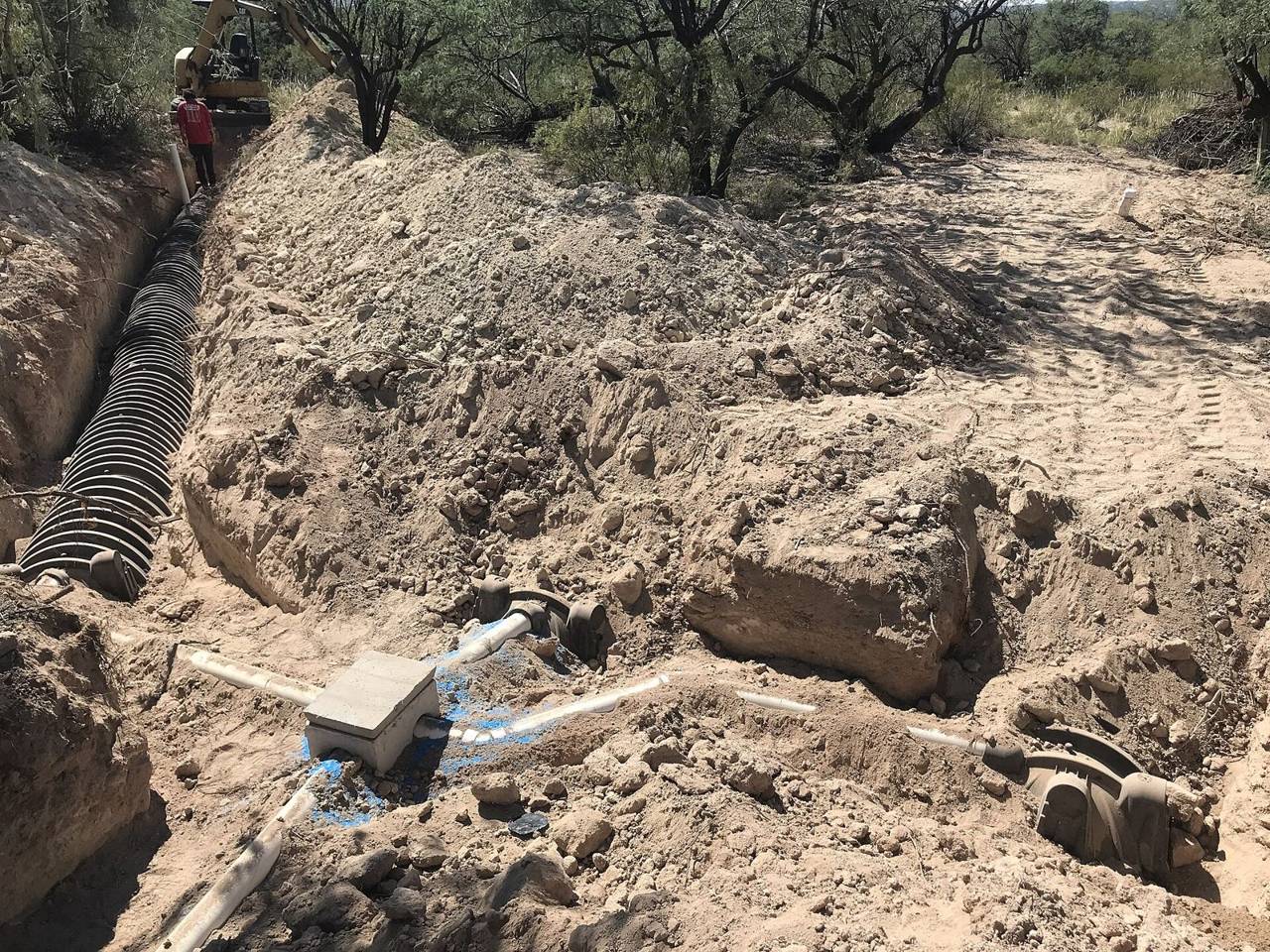
Replacement on a Driftwood lot depends on how much usable land is available. Acreage helps, but slopes, creek banks, wells and tree stands limit the placement. A designer may suggest a larger conventional field, a raised bed, a drip dispersal field, or an aerobic unit with irrigation. Hays County must review and approve the plan before work begins. We help you understand each path and build a schedule so the house is not without a working system longer than necessary. Whatever the answer, you will have it in writing, with the county steps spelled out, so the work proceeds in the right order. Ask whether the repair design leaves room to add capacity later, since a modest margin now is the cheapest insurance against another failure.
What to know in Driftwood
Slopes and runoff
Hillsides are common around Driftwood, and a field on a slope must be designed so effluent does not break out downhill. Rainfall running across the field can also overload it. Diversion swales above the field protect it and are often a cheap addition. Keep a copy of the soil report.
Setbacks from wells and creeks
A new field must meet distance rules from wells, property lines and waterways. On acreage there is often room, but a well near the best soil can limit your choices. We map those constraints before a designer lays out the new field. Timing matters before planting.
Resting and rotating fields
Some systems have more than one field zone or can be modified to alternate. Switching zones gives overworked soil time to recover. It is not a cure for every failure, but it can add years when the soil is basically healthy. Ask us about flagging the field.
Signs you may need drain field repair & replacement
- Sewage odors in the yard, near the tank or near the spray area
- Toilets and drains that run slowly or back up into the house
- Unusually bright green, fast-growing grass over the field
- Standing water or effluent surfacing near spray heads or trenches
How drain field repair & replacement works
Drain fields rarely fail overnight. Most of them decline slowly while the homeowner sees nothing at all. A sticky layer of biological material, sometimes called a biomat, forms where effluent meets soil. A little of it is healthy and helps treat the water. Too much of it, caused by solids escaping a neglected tank, constant overloading or soil that was marginal from the start, seals the soil and slows absorption. Roots, crushed pipes, broken sprinkler heads and clogged drip emitters cause other failures. Because the causes differ, we start with diagnosis instead of a sales pitch for a new field. A cheap fix is only cheap if it solves the right problem. Learning the cause also tells you how long a repair is likely to hold.
Many problems that look like a dead drain field turn out to be something upstream. A tank that has not been pumped in years can send a flood of solids to the field and clog it. A broken outlet baffle, a failed effluent filter, a stuck pump float or an aerobic unit that is not treating properly can do the same. That is why we check the tank, the pump or aerator, the distribution box and the field together. If the real fault is a part that can be replaced, you may avoid digging up the yard. If the field itself has failed, you will at least know the cause, which helps keep the replacement from failing the same way. That full-system view is the best protection against paying for the same repair twice.
What to expect on a Driftwood visit
- 01
Talk through the history
We start by asking what you have noticed and when. We want to know about wet spots, odors, slow drains, recent heavy rain, extra guests, new appliances and the last time the tank was pumped. Any permit records, system drawings or maintenance reports you have help a great deal. This conversation often points to the cause before we ever pick up a probe or a shovel.
- 02
Check the tank and equipment
Next we open the tank and look at water level, baffles, filters, pumps, alarms and any aerator. Problems here often show up in the field as symptoms. If the tank is full or the effluent is carrying solids, we explain that clearly. Pumping may be needed before any real diagnosis of the field can be made, and we will tell you so.
- 03
Evaluate the disposal area
We walk the field and look for standing water, soft ground, odors, uneven grass and damaged parts. Depending on the system, we check the distribution box, trench lines, spray heads, drip lines, filters and valves. We also note slopes, drainage paths, trees and anything built over the area. The goal is to decide whether the field is failing, stressed or simply broken.
- 04
Explain the options in writing
You receive a plain explanation of what we found, what caused it and what your choices are, from minor repair to full replacement. We describe what each option involves, what it is likely to cost in general terms and how long you can expect it to last. If a permit or soil evaluation is needed, we say so up front.
- 05
Handle permits and design
For replacements or major changes, a licensed professional prepares the site evaluation and plan, and the application goes to the local permitting authority. We keep you informed about each step. For smaller repairs, we confirm with the county whether a permit is required before work begins, because rules and local practice can differ.
- 06
Complete the work and verify
We repair or replace the field to the approved plan, restore the area as well as the site allows, and schedule any required inspection. Afterward, we show you what changed and what to watch. You get care tips for the new field so it has the best chance of lasting.
Our approach in Driftwood
- We locate and open your tank, aerobic unit and dispersal area, including buried lids common on older Driftwood properties
- We explain what we find in plain language, with photos where they help
- Repairs and installs are planned around Hays County permitting requirements
- You get written options before any repair work begins
- Aerobic visits are recorded for your maintenance contract
Septic conditions around Driftwood
Driftwood is largely unincorporated, and centralized sewer lines are generally not available to the rural tracts that surround FM 150 and FM 1826. Property listings in the area regularly note that sewer is not available, which means septic or aerobic treatment is the plan for nearly every home. That is a simple answer compared with many nearby towns, but it comes with responsibility. There is no city crew to call when a system acts up, and a neglected tank can foul your yard, your well or a neighbor's. A few developments may be served by a shared or utility-operated system, so confirm with the seller or your homeowner's association if you are not sure. As a practical rule, if you do not pay a monthly sewer bill, you own a septic system and the upkeep that goes with it.
Drain Field Repair & Replacement questions from Driftwood homeowners
Can I repair my drain field myself?
Minor steps like fixing leaks and cutting water use are yours to take. Repairing or replacing the field itself usually involves permits and licensed professionals, and Hays County Development Services will tell you what applies. Digging without a design can make things worse, especially in rocky soil. Document wet spots with photos.
Why did my field fail when the house is only a few years old?
Causes include an undersized design, soil conditions that were worse than expected, a leaky fixture, heavy water use or surface water flowing across the field. A newer system that fails early deserves a careful review of the design and permit. We can help you document what you see. Ask a designer early.
How much land do I need for a new field?
It depends on the soil and the system type. Conventional fields need the most room. Drip and spray dispersal can use less area. A soil evaluation and a designed layout will show the real number. Keeping space free of structures, pools and large trees gives you more options later. Soil testing sets the real size.
Can a drain field be repaired, or does it always need replacement?
Many problems can be repaired. Broken pipes, cracked boxes, clogged lines, damaged sprinkler heads and blocked drip filters are common fixes. A field with severely sealed soil or collapsed lines may need replacement. We look at the cause first, then explain whether repair is realistic or whether replacement is the better long-term choice for your property. Our job is to give you a straight answer, even when the answer is a modest repair.
How long should a drain field last?
There is no single number. With good care, a field can last for decades, but results vary with soil, design, household water use and maintenance. Pumping the tank on schedule, spreading out water use and protecting the field from vehicles and roots make the biggest difference. Systems on thin Hill Country soil have less margin for mistakes. Age alone is not a reliable guide, so the condition of the field matters more than the calendar.
Do I need a permit to replace a drain field?
In most cases, yes. Replacing or substantially changing a disposal area is usually handled through the local permitting authority, which in much of Hays County is Hays County Development Services. A site evaluation and designed plan are normally part of the process. Small repairs may be treated differently, so check with the county before work starts. The county can confirm what applies to your address, and we can help you gather the information it asks for.
More about drain field repair & replacement → · All septic services in Driftwood →
Need drain field repair & replacement in Driftwood?
Call or send a request. We will ask a few questions about your system and the property, then schedule a visit.