Buda · Hays County
Drain Field Repair & Replacement in Buda, TX
Drain fields in clay areas of Buda tend to fail slowly, as soil that absorbs poorly gets overloaded and effluent starts to surface. On the rocky west side, fields fail because there is simply not enough soil. Repairs can include clearing lines, resting the field, adjusting water use or adding capacity. Replacement requires a site evaluation and county permit. Costs vary widely with soil, size and design, and full replacements often run in the thousands.
Drain Field Repair & Replacement for Buda homes
In and around Buda, drain field trouble often follows one of two stories. East of I-35, Blackland clay drains slowly, so a field there works close to its limit even when new. West toward the hills, soil is shallow over limestone, so there is little depth to treat water. Either way, a field that was marginal at the start fails sooner when the tank is neglected or the household grows. Diagnosis separates a field that is overloaded from one that is truly failed. A field sitting in wet clay after a rainy month can look terrible and then recover once the ground dries. A field that stays wet for weeks in dry weather probably cannot take more water. We look at the history, the season and what the household has been doing so that you do not replace a field that only needed a break.
We begin by asking when the problem began and what else changed. A new bathroom, a leaking toilet, a wet year or a skipped pump-out can each explain a soggy field. We probe the soil, check the distribution box, look at the tank outlet for solids and watch how water behaves. If the field is wet because the tank is full, pumping and resting the field may help. If the soil itself is clogged, repair will not cure it. Several fixes can extend a field's life. Cutting water use, repairing leaking fixtures, pumping the tank, installing an effluent filter and diverting gutters all reduce the load. In some cases, a section of the field can be shut off to rest while another is used, if the design allows. These steps cost much less than a replacement and often buy real time, though they do not rescue a field with clogged soil.
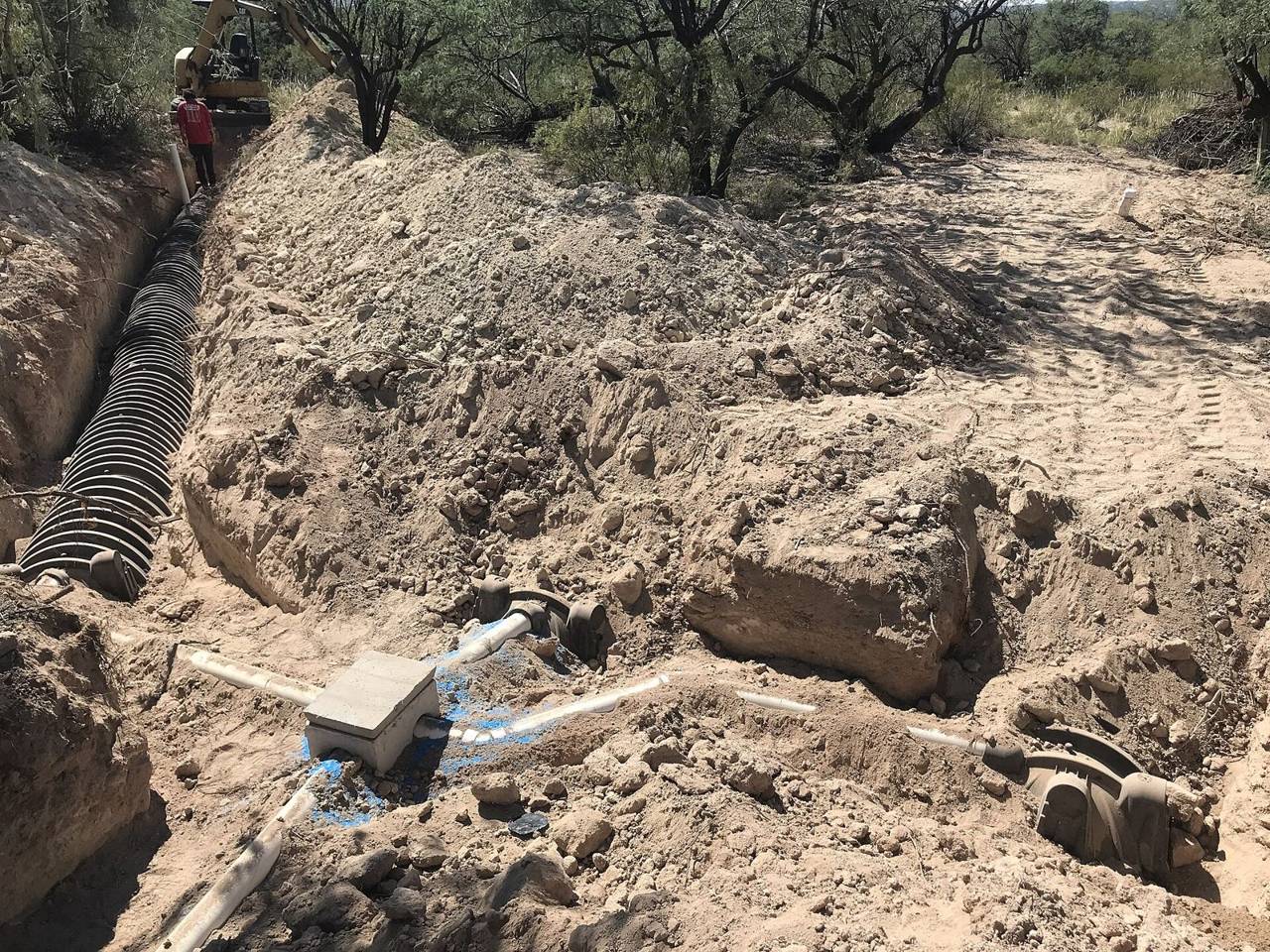
Replacement is a bigger decision in Buda than elsewhere because of the sewer question. If the city has a line nearby, connecting can retire the field entirely. If not, the design depends on your soil. Clay lots often need raised beds, drip lines or an aerobic system with spray. Limestone lots favor shallow drip distribution. Your designer will submit to Hays County, and we can help you prepare. When a new field is the answer, the design should fit your parcel and your future plans. Smaller edge lots may not have space for a trench field at all, which is why aerobic systems with drip or spray are common around Buda. If sewer service is within reach, consider it seriously. Whichever way you go, get a written design and an itemized price, and ask the county about current permit steps.
What to know in Buda
Clay percolation
Clay soil absorbs water slowly and can look dry on top while staying saturated below. A field design for clay is larger or uses distribution methods that spread water thinly. Soil testing guides that choice. Ask your designer how the new field will handle a very wet year. Clay soils test the design most when storms hit.
Replacement area on a shrinking lot
Many Buda-area parcels have been subdivided. A smaller lot has less room for a new field, plus setbacks from wells, property lines and creeks. Check the available space before deciding on an approach. Do not park or drive over the field area, even briefly. Compaction in clay lasts for years.
Sewer extension as an alternative
A failed field sometimes becomes the trigger to ask about city service. If a line is near, a connection might cost less than a new field. If not, ask the city whether service is planned for your area. Planting a deep-rooted tree near the field is a common cause of damage. Keep trees well away from lines.
Signs you may need drain field repair & replacement
- Standing water or effluent surfacing near spray heads or trenches
- Alarm sounding on a pump or aerobic system repeatedly
- Gurgling pipes after laundry or long showers
- Soggy, spongy or squishy ground over the field, even in dry weather
How drain field repair & replacement works
In most cases, replacing a drain field is not a simple swap. Texas on-site sewage rules, found in 30 TAC Chapter 285, expect the work to match site conditions, and a new or substantially changed disposal area is generally handled through the local authorized agent. In most of Hays County that is Hays County Development Services. Travis County, the City of Austin, Blanco County and Burnet County each have their own arrangements. The usual steps involve a site and soil evaluation by a qualified professional, a designed plan, a permit, installation and an inspection. Small repairs may be treated differently from replacements, so always check with the county before digging. Asking early saves time, because the county can tell you exactly what paperwork your project needs.
A drain field lasts longer when it is treated well. Spread laundry across the week, fix leaking toilets, keep vehicles and heavy equipment off the field, and plant only grass over it. Keep roof drains and pool backwash away from the disposal area. Have the tank pumped on schedule and keep any aerobic system under its required maintenance contract. These habits matter more in the Hill Country than in deeper soils, because there is less ground to absorb mistakes. If you notice wet spots, odors or slow drains, call early. A repair caught at the first sign is almost always smaller, cheaper and less disruptive than a full replacement. A little attention each month is far easier than a yard torn up for new trenches.
What to expect on a Buda visit
- 01
Talk through the history
We start by asking what you have noticed and when. We want to know about wet spots, odors, slow drains, recent heavy rain, extra guests, new appliances and the last time the tank was pumped. Any permit records, system drawings or maintenance reports you have help a great deal. This conversation often points to the cause before we ever pick up a probe or a shovel.
- 02
Check the tank and equipment
Next we open the tank and look at water level, baffles, filters, pumps, alarms and any aerator. Problems here often show up in the field as symptoms. If the tank is full or the effluent is carrying solids, we explain that clearly. Pumping may be needed before any real diagnosis of the field can be made, and we will tell you so.
- 03
Evaluate the disposal area
We walk the field and look for standing water, soft ground, odors, uneven grass and damaged parts. Depending on the system, we check the distribution box, trench lines, spray heads, drip lines, filters and valves. We also note slopes, drainage paths, trees and anything built over the area. The goal is to decide whether the field is failing, stressed or simply broken.
- 04
Explain the options in writing
You receive a plain explanation of what we found, what caused it and what your choices are, from minor repair to full replacement. We describe what each option involves, what it is likely to cost in general terms and how long you can expect it to last. If a permit or soil evaluation is needed, we say so up front.
- 05
Handle permits and design
For replacements or major changes, a licensed professional prepares the site evaluation and plan, and the application goes to the local permitting authority. We keep you informed about each step. For smaller repairs, we confirm with the county whether a permit is required before work begins, because rules and local practice can differ.
- 06
Complete the work and verify
We repair or replace the field to the approved plan, restore the area as well as the site allows, and schedule any required inspection. Afterward, we show you what changed and what to watch. You get care tips for the new field so it has the best chance of lasting.
Our approach in Buda
- We locate and open your tank, aerobic unit and dispersal area, including buried lids common on older Buda properties
- We explain what we find in plain language, with photos where they help
- Repairs and installs are planned around Hays County permitting requirements
- You get written options before any repair work begins
- Aerobic visits are recorded for your maintenance contract
Septic conditions around Buda
Buda has grown fast, but not every part of it grew the same way. Dense neighborhoods and new subdivisions closer to I-35 were built with sewer service, while larger rural tracts, older subdivisions and acreage on the edges were built around septic. Driving the back roads outside town, you find horse properties, small farms, and custom homes with long driveways. Those lots often have a conventional tank and field if the soil allows, or an aerobic system if it does not. Clay lots frequently need drain fields that are longer or placed carefully to work. Because the area keeps changing, a house that once sat in the country may now be next to a new development while still running an older septic system. Knowing which side of that line you are on is the first step.
Drain Field Repair & Replacement questions from Buda homeowners
How long does a drain field last near Buda?
A well-kept field can last decades, but clay soil, heavy water use and missed pump-outs shorten that. There is no fixed number. What matters is whether the soil can still absorb water. Wet ground, odors and slow drains tell you when it cannot. Gurgling in the house plumbing is another sign that effluent has no place to go. Do not ignore it.
Why is my yard wet even though it has not rained?
Standing water over the field in dry weather suggests effluent is surfacing. Other causes include a leaking irrigation line or a broken water pipe. We check the water meter and the tank to tell the difference. If it is sewage, limit water use and call quickly. A smell near the tank lid in warm weather can mean a venting problem, not just a bad field. We sort that out on site.
Do I need a permit to replace my drain field?
Outside city limits, replacement generally needs a permit through Hays County Development Services, with a site evaluation and design. Inside Buda, the city has its own process. We recommend calling before ordering materials or digging. A written design helps if the county has questions, and it helps when you sell the property.
What does drain field replacement cost?
Costs vary widely. Minor repairs can run from several hundred to a few thousand dollars, while full replacement commonly reaches five figures, especially when soil is rocky or an advanced system is required. Design, evaluation and permit fees are extra. These are general market ranges, not a quote, and your site decides the real number. Your actual cost depends on the diagnosis, so treat any number before an inspection with caution.
Can I keep using the system while the field is being repaired?
Sometimes, but not always. If effluent is surfacing or backing up, continued use can make the problem worse and create a health hazard. We may recommend cutting back on water use, avoiding laundry and long showers, or having the tank pumped to buy time. We will tell you what is safe for your situation. Ask about this early, because the safest plan depends on what is happening in the field.
Why did my drain field fail so soon?
Early failure usually traces to one of a few causes: a tank that was not pumped, too much water use for the field size, soil that was marginal for the design, compaction from vehicles, root damage or poor installation. Finding the cause matters, because a replacement built the same way can fail the same way. Water use habits in the home are worth reviewing as part of any replacement plan.
More about drain field repair & replacement → · All septic services in Buda →
Need drain field repair & replacement in Buda?
Call or send a request. We will ask a few questions about your system and the property, then schedule a visit.