Dripping Springs & the Texas Hill Country
Drain Field Repair & Replacement
A failing drain field leaves wastewater with nowhere to go, and in thin Hill Country soil that can happen faster than you expect. We find out why the field is struggling, explain your repair and replacement options in plain language, and help you through the permit steps that come with bigger fixes.
The drain field is the last stop for wastewater on a septic property. It is also called the leach field, the absorption field or the disposal area. The tank only separates solids from liquid. What leaves the tank still carries bacteria, nutrients and organic matter, and the field is where soil, air and living organisms finish the job. In a conventional system, that means perforated pipes set in gravel trenches. In many Hill Country yards it means something different, such as spray heads, drip lines or a bed fed by a pump. Drain field repair near Dripping Springs can involve any of these, because each type fails in its own way and each needs its own fix. Knowing which kind you have is the first step toward an honest answer about what it needs.
Drain fields rarely fail overnight. Most of them decline slowly while the homeowner sees nothing at all. A sticky layer of biological material, sometimes called a biomat, forms where effluent meets soil. A little of it is healthy and helps treat the water. Too much of it, caused by solids escaping a neglected tank, constant overloading or soil that was marginal from the start, seals the soil and slows absorption. Roots, crushed pipes, broken sprinkler heads and clogged drip emitters cause other failures. Because the causes differ, we start with diagnosis instead of a sales pitch for a new field. A cheap fix is only cheap if it solves the right problem. Learning the cause also tells you how long a repair is likely to hold.
Many problems that look like a dead drain field turn out to be something upstream. A tank that has not been pumped in years can send a flood of solids to the field and clog it. A broken outlet baffle, a failed effluent filter, a stuck pump float or an aerobic unit that is not treating properly can do the same. That is why we check the tank, the pump or aerator, the distribution box and the field together. If the real fault is a part that can be replaced, you may avoid digging up the yard. If the field itself has failed, you will at least know the cause, which helps keep the replacement from failing the same way. That full-system view is the best protection against paying for the same repair twice.
Repair options depend on what we find. Sometimes the answer is simple: fixing a broken pipe, replacing a cracked distribution box, clearing a blocked line, or replacing sprinkler heads and drip components. Other times a field can rest. Diverting flow to a second section, if the design has one, gives the first section time to recover. When a field is truly worn out, replacement is the honest answer. That may mean new trenches, a larger bed, or a switch to a different type of system. We explain the options in order from least to most invasive, with the tradeoffs of each, so you can make the call with a clear picture. Whatever you choose, we want you to understand why, not just agree to a price.
In most cases, replacing a drain field is not a simple swap. Texas on-site sewage rules, found in 30 TAC Chapter 285, expect the work to match site conditions, and a new or substantially changed disposal area is generally handled through the local authorized agent. In most of Hays County that is Hays County Development Services. Travis County, the City of Austin, Blanco County and Burnet County each have their own arrangements. The usual steps involve a site and soil evaluation by a qualified professional, a designed plan, a permit, installation and an inspection. Small repairs may be treated differently from replacements, so always check with the county before digging. Asking early saves time, because the county can tell you exactly what paperwork your project needs.
A drain field lasts longer when it is treated well. Spread laundry across the week, fix leaking toilets, keep vehicles and heavy equipment off the field, and plant only grass over it. Keep roof drains and pool backwash away from the disposal area. Have the tank pumped on schedule and keep any aerobic system under its required maintenance contract. These habits matter more in the Hill Country than in deeper soils, because there is less ground to absorb mistakes. If you notice wet spots, odors or slow drains, call early. A repair caught at the first sign is almost always smaller, cheaper and less disruptive than a full replacement. A little attention each month is far easier than a yard torn up for new trenches.
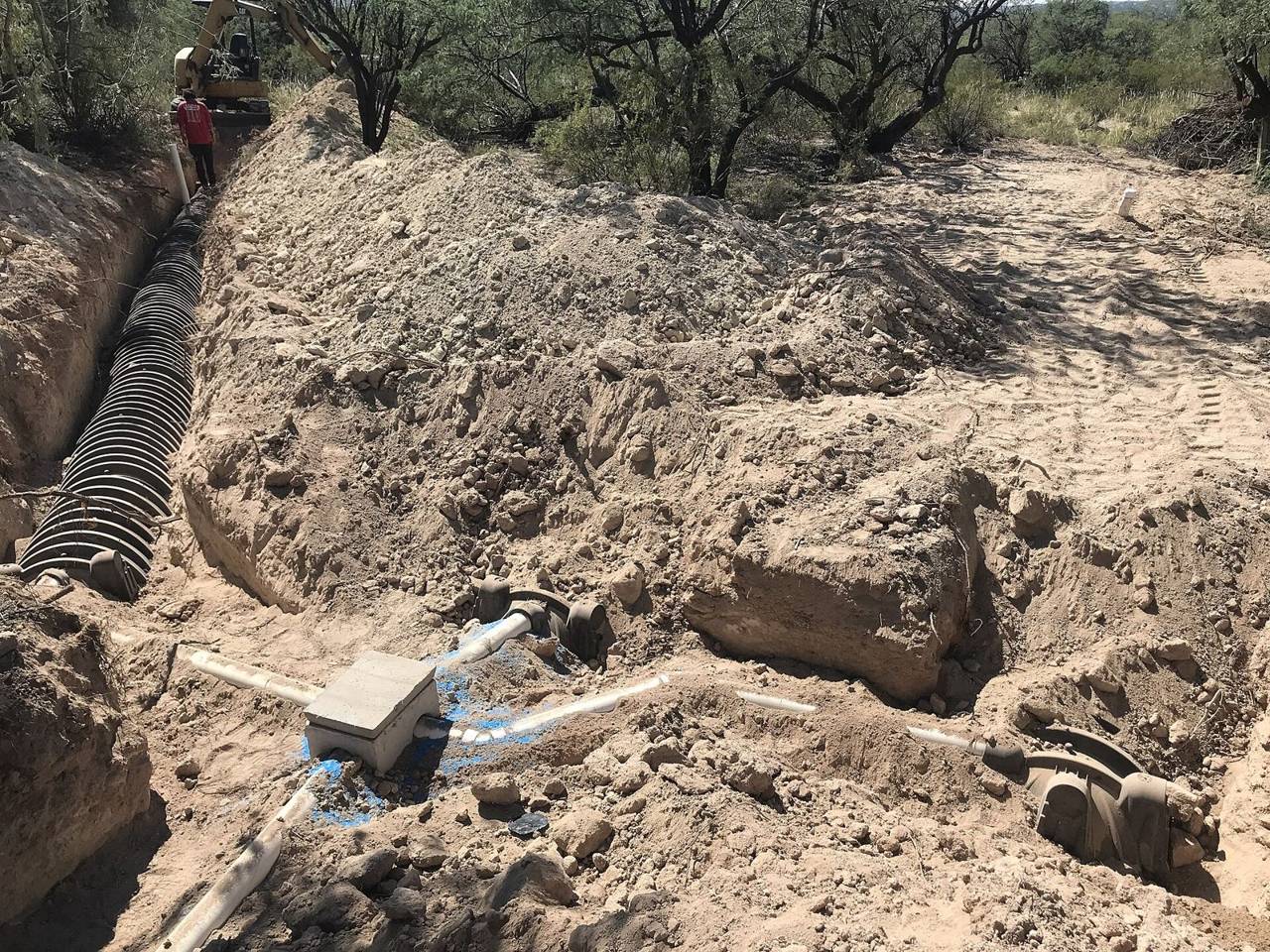
Signs you may need drain field repair & replacement
- Soggy, spongy or squishy ground over the field, even in dry weather
- Sewage odors in the yard, near the tank or near the spray area
- Toilets and drains that run slowly or back up into the house
- Unusually bright green, fast-growing grass over the field
- Standing water or effluent surfacing near spray heads or trenches
- Alarm sounding on a pump or aerobic system repeatedly
- Gurgling pipes after laundry or long showers
Drain Field Repair & Replacement on Hill Country properties
Much of the western Hill Country sits on thin soil over limestone, sometimes with only a few inches of dirt above rock. Trenches that work in deep soil do not work here. Designers often choose spray, drip, low pressure dosing or raised bed systems that spread effluent over more area or use the upper soil layers. Your site evaluation will show what the ground can handle.
Rain can swing sharply in this region. After a long dry spell, a fast storm can saturate shallow soil and push a weak drain field over the edge. Along drainages feeding Onion Creek, Barton Creek and the Pedernales and Blanco rivers, runoff and flooding can wash out spray areas or soak trench lines. Good grading and keeping roof runoff away from the field are real protection.
Parts of Hays and Travis counties lie over the Edwards Aquifer recharge or contributing zones, where water can move quickly through fractured limestone. Because of that, permitting authorities pay close attention to how a disposal area is designed and where it sits. A failing field in these areas is more than a nuisance, so it is worth fixing promptly and correctly.
Many Hill Country homes sit on acreage with wells, so setbacks matter. State rules set minimum separation distances between disposal areas and features such as wells, water lines, creeks, property lines and buildings, and local programs can be stricter. That can limit where a replacement field fits, especially on older lots. We check the location of your well and drainage before suggesting a layout.
Cedar, live oak and mesquite roots are strong and go looking for water. They can invade trench lines, distribution boxes and drip tubing, especially in dry summers. Keep trees and large shrubs away from the disposal area, and tell us if roots are a concern. Where roots have already caused damage, repair often includes protecting the field against future intrusion.
Our drain field repair & replacement process
- 01
Talk through the history
We start by asking what you have noticed and when. We want to know about wet spots, odors, slow drains, recent heavy rain, extra guests, new appliances and the last time the tank was pumped. Any permit records, system drawings or maintenance reports you have help a great deal. This conversation often points to the cause before we ever pick up a probe or a shovel.
- 02
Check the tank and equipment
Next we open the tank and look at water level, baffles, filters, pumps, alarms and any aerator. Problems here often show up in the field as symptoms. If the tank is full or the effluent is carrying solids, we explain that clearly. Pumping may be needed before any real diagnosis of the field can be made, and we will tell you so.
- 03
Evaluate the disposal area
We walk the field and look for standing water, soft ground, odors, uneven grass and damaged parts. Depending on the system, we check the distribution box, trench lines, spray heads, drip lines, filters and valves. We also note slopes, drainage paths, trees and anything built over the area. The goal is to decide whether the field is failing, stressed or simply broken.
- 04
Explain the options in writing
You receive a plain explanation of what we found, what caused it and what your choices are, from minor repair to full replacement. We describe what each option involves, what it is likely to cost in general terms and how long you can expect it to last. If a permit or soil evaluation is needed, we say so up front.
- 05
Handle permits and design
For replacements or major changes, a licensed professional prepares the site evaluation and plan, and the application goes to the local permitting authority. We keep you informed about each step. For smaller repairs, we confirm with the county whether a permit is required before work begins, because rules and local practice can differ.
- 06
Complete the work and verify
We repair or replace the field to the approved plan, restore the area as well as the site allows, and schedule any required inspection. Afterward, we show you what changed and what to watch. You get care tips for the new field so it has the best chance of lasting.
What affects the cost of drain field repair & replacement
Type of fix needed
A broken pipe, clogged line or damaged sprinkler head is a very different job from a full replacement. Minor repairs commonly run from several hundred to a few thousand dollars, while replacing an entire field often runs well into five figures. The cause of the failure sets the range, which is why we diagnose before we quote.
System type and size
Conventional trenches, spray fields, drip systems, low pressure dosing beds and mounds all cost different amounts to build. Size matters too. The field is sized to the home's design flow, usually based on bedroom count, so a larger house with more bedrooms generally needs a larger disposal area and more material.
Soil, rock and slope
Excavating in limestone, caliche or rocky soil takes more time and equipment than digging in loam. Steep lots may need careful grading and erosion control. Clay pockets can slow absorption and push the design toward a different type of system. Difficult ground is one of the biggest reasons Hill Country project prices vary from lot to lot.
Site access and landscaping
Mature oaks, cedar, fences, driveways, patios and pools all affect how easily we can reach the field. Limited access can mean hand work or smaller equipment, which adds labor. Setbacks from wells, creeks, property lines and buildings also limit where a new field can go, sometimes forcing a longer pipe run.
Design, evaluation and permit fees
Replacements usually involve a site evaluation, a designed plan and permit fees set by the county. These costs are separate from the construction work and differ by location. Ask your county for the current fee schedule. Skipping them is not an option, because unpermitted work can cause problems during a sale or inspection.
Drain Field Repair & Replacement FAQs
How do I know if my drain field has failed?
The most common signs are soggy ground, sewage odors, standing water, slow drains and backups inside the house. Unusually lush grass over one area is another clue. These signs can also come from a full tank, a failed pump or a plumbing blockage, so a proper inspection is the only way to know. Call us before you assume the worst. If you notice any of these signs, avoid heavy water use until someone has looked at the system.
Can a drain field be repaired, or does it always need replacement?
Many problems can be repaired. Broken pipes, cracked boxes, clogged lines, damaged sprinkler heads and blocked drip filters are common fixes. A field with severely sealed soil or collapsed lines may need replacement. We look at the cause first, then explain whether repair is realistic or whether replacement is the better long-term choice for your property. Our job is to give you a straight answer, even when the answer is a modest repair.
How long should a drain field last?
There is no single number. With good care, a field can last for decades, but results vary with soil, design, household water use and maintenance. Pumping the tank on schedule, spreading out water use and protecting the field from vehicles and roots make the biggest difference. Systems on thin Hill Country soil have less margin for mistakes. Age alone is not a reliable guide, so the condition of the field matters more than the calendar.
Do I need a permit to replace a drain field?
In most cases, yes. Replacing or substantially changing a disposal area is usually handled through the local permitting authority, which in much of Hays County is Hays County Development Services. A site evaluation and designed plan are normally part of the process. Small repairs may be treated differently, so check with the county before work starts. The county can confirm what applies to your address, and we can help you gather the information it asks for.
What does drain field replacement cost?
Costs vary widely. Minor repairs can run from several hundred to a few thousand dollars, while full replacement commonly reaches five figures, especially when soil is rocky or an advanced system is required. Design, evaluation and permit fees are extra. These are general market ranges, not a quote, and your site decides the real number. Your actual cost depends on the diagnosis, so treat any number before an inspection with caution.
Can I keep using the system while the field is being repaired?
Sometimes, but not always. If effluent is surfacing or backing up, continued use can make the problem worse and create a health hazard. We may recommend cutting back on water use, avoiding laundry and long showers, or having the tank pumped to buy time. We will tell you what is safe for your situation. Ask about this early, because the safest plan depends on what is happening in the field.
Why did my drain field fail so soon?
Early failure usually traces to one of a few causes: a tank that was not pumped, too much water use for the field size, soil that was marginal for the design, compaction from vehicles, root damage or poor installation. Finding the cause matters, because a replacement built the same way can fail the same way. Water use habits in the home are worth reviewing as part of any replacement plan.
Will a new field fix problems with my aerobic system?
Only if the field is the problem. Aerobic units depend on working aerators, pumps, filters and timers, and the spray or drip field depends on them in turn. If the unit is not treating the water properly, a new field may fail too. We check the full system and your maintenance contract records first. That is why a full inspection comes before any decision about spending money on the field.
Drain Field Repair & Replacement near you
- Drain Field Repair & Replacement in Dripping Springs
- Drain Field Repair & Replacement in Driftwood
- Drain Field Repair & Replacement in Wimberley
- Drain Field Repair & Replacement in Henly
- Drain Field Repair & Replacement in Buda
- Drain Field Repair & Replacement in Kyle
- Drain Field Repair & Replacement in San Marcos
- Drain Field Repair & Replacement in Bee Cave
- Drain Field Repair & Replacement in Lakeway
- Drain Field Repair & Replacement in Southwest Austin
- Drain Field Repair & Replacement in Spicewood
- Drain Field Repair & Replacement in Johnson City
Need septic service in the Hill Country?
Call or send a request. We will ask a few questions about your system and the property, then schedule a visit.