San Marcos · Hays County
Aerobic Septic Repair in San Marcos, TX
When an aerobic system fails near San Marcos, the cause is often a worn aerator, a clogged spray head, a dead float switch or a chlorine feeder that has run dry. Heat and long dry stretches make these parts work harder. We trace the alarm to the real fault, repair or replace the failed part, and confirm the system cycles correctly before we leave, so a small problem does not turn into a field problem.
Aerobic Septic Repair for San Marcos homes
When an aerobic system fails near San Marcos, the cause is usually mechanical. Air pumps wear out, diaphragms crack, float switches stick, and spray heads clog with mineral scale from our hard, limestone-rich water. The alarm panel is the first clue. A light or horn means something has gone wrong, whether it is a pump that will not start or a tank that has risen above its normal level. Aerobic septic repair in San Marcos starts with working out which of those is the real problem. Hard water scale is especially common in this part of the Hill Country, and it cakes diffusers and nozzles slowly. By the time you notice a symptom, the part may have been struggling for a long time, so a seemingly small noise or odor deserves a call.
We diagnose in a set order. First we check power at the panel and breaker. Then we listen to the air pump and feel for airflow, inspect the aeration and clarifier chambers, and test the pump tank floats. A pump that hums but moves no air usually needs a new diaphragm or a replacement unit. A tank that stays full with the pump running may point to a clogged discharge line or a failed effluent pump. Lightning is also a real cause in the Hill Country, since a close strike can kill a control board even when everything looks fine. The pump tank deserves its own mention. In many San Marcos area systems the effluent pump moves treated water to the spray field, and when it fails the tank fills and the alarm sounds. Replacing a pump usually means lifting it on its rail through the riser, which is easier when access is already at grade.
Some repairs are quick, like a swapped float or a cleaned spray head. Others need a parts order. We explain what failed, whether a part is repairable, and whether the unit is near the end of its useful life. Most ATU components wear out over years of regular use. If a repair is going to be followed by another within months, we say so plainly, so you can weigh a repair against a larger replacement. If your unit has failed more than once in a year, we look at the cause behind the pattern, such as overloaded water use, a leaking fixture sending constant flow, or a power issue like voltage drops on a long rural line.
What to know in San Marcos
Mineral scale in spray heads
Water in this part of Hays County carries dissolved minerals that crust over spray nozzles. A clogged head can pool effluent in one spot while the rest of the yard stays dry. Cleaning or replacing the heads is routine and often fixes what looks like a larger failure. A dry rock-hard crust on a spray head often means it has been clogged for weeks.
Storm and flood damage
Big rains along the Blanco River can flood low panels and bury compressors in silt. If water reached your electrical parts, do not restart the system. Wet equipment can fail again or become a shock hazard, and an inspection comes first. Panels mounted low to the ground are the most vulnerable. Raising them is often a modest job.
Know when replacement makes more sense
A tank with cracked walls or a field that no longer absorbs is not a parts problem. Hays County permits may be required for larger repairs, and the county can tell you what applies. We will walk you through that line before any work starts. Ask before replacing a whole unit whether the existing tank can be reused, since that changes cost considerably.
Signs you may need aerobic septic repair
- Slow drains or backups inside the house
- Red alarm light or buzzer that keeps returning
- Air pump that has gone quiet or sounds strained
- Black, foamy or foul-smelling water in the aeration chamber
How aerobic septic repair works
Aerobic septic repair covers the many parts that make an aerobic treatment unit work. Unlike a basic gravity system, an aerobic unit depends on electricity, air, timers, pumps and a disinfection step. That is why it treats wastewater to a higher standard, and it is also why it has more parts that can wear out. Common repairs include air pump diaphragms, diffusers and air lines, float switches, effluent pumps, control panel components and spray heads. When an alarm goes off or the system stops spraying, a methodical approach finds the cause faster than guessing. Aerobic septic repair in Dripping Springs and the surrounding Hill Country should start with a diagnosis, not a part swap, so you only pay for what the system needs.
The most common call is an alarm. Most systems have a red light and a buzzer that trigger when the water in the pump tank gets too high or the air supply drops. The cause may be a failed air pump, a tripped breaker, a bad float, a clogged effluent filter, a worn pump or a plugged spray line. Silence the alarm, note the time and the weather, and check the breaker. If the alarm returns, call for service and do not ignore it. Water has nowhere to go when the pump tank is full, and wastewater can back up in the system or, in the worst case, into the house. Cutting back on water use while you wait helps.
What to expect on a San Marcos visit
- 01
Listen to the symptoms
We start by asking what you have noticed. When did the alarm start? Is the pump running? Are there smells, wet spots or backups? Your answers narrow the possible causes before we touch the system, and they help us avoid unnecessary work and unnecessary parts. Photos or notes you took help.
- 02
Check power and controls
We check the breaker, the control panel, the timer and the float switches. Many alarms come from a simple electrical issue. We confirm that power is reaching the air pump and the effluent pump, and that the alarm itself works the way it should. We also check for loose wiring.
- 03
Test the air pump and tanks
We listen to the air pump, check airflow at the diffuser and look at each chamber. Dark water, foam, heavy odor or poor airflow help us tell whether the problem is mechanical or biological. We also check the water level in the pump tank. We record readings for your file.
- 04
Inspect the pump and spray system
We test the effluent pump, the filter and the lines to the spray heads or drip field. We run the system and watch how the water is delivered. Clogs, leaks, cracked heads and weak pressure show up quickly when the system is running. Pressure at each head is compared. We note the pressure.
- 05
Explain options and get your approval
We tell you what failed, what we recommend and what it would cost, in writing when needed. Where there is a choice, such as rebuild or replace, we explain the pros and cons. We only start work after you approve the plan we have discussed. Written estimates are available on request.
- 06
Repair, test and document
We make the repair with parts that match your system, run it through a full cycle and confirm that the alarm is clear. We note the work for your records and let your maintenance provider know, so the repair shows up correctly in your reports. You get a short summary of the repair.
Our approach in San Marcos
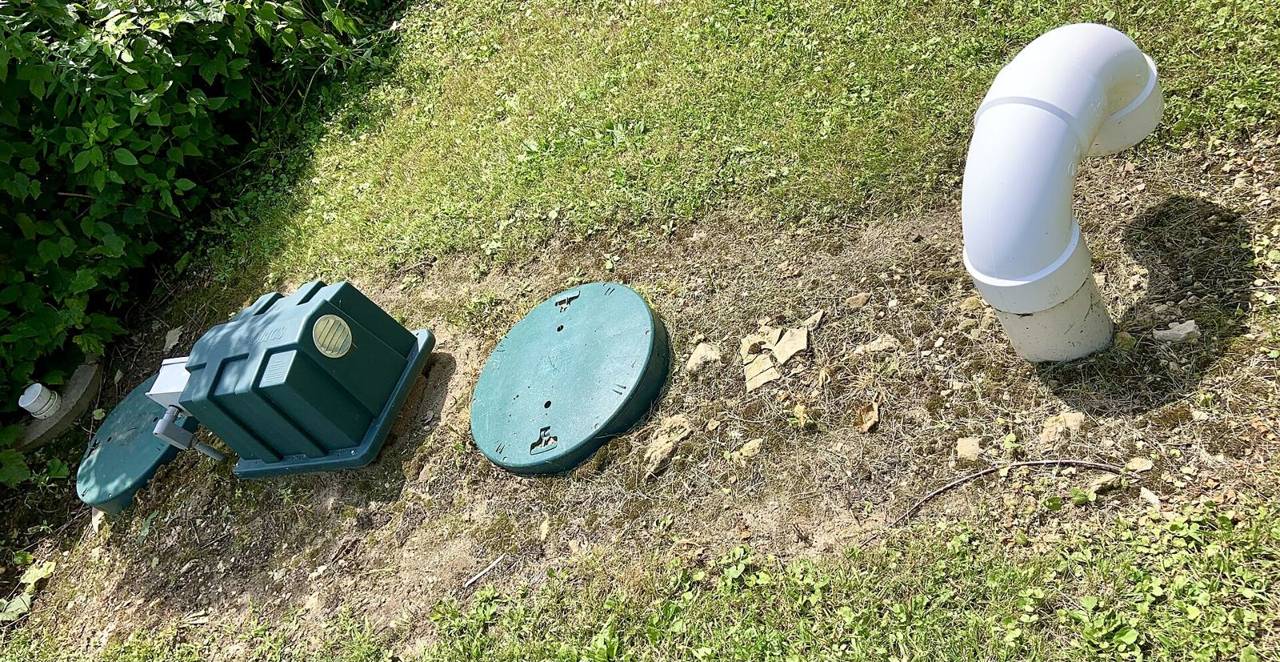
- We locate and open your tank, aerobic unit and dispersal area, including buried lids common on older San Marcos properties
- We explain what we find in plain language, with photos where they help
- Repairs and installs are planned around Hays County permitting requirements
- You get written options before any repair work begins
- Aerobic visits are recorded for your maintenance contract
Septic conditions around San Marcos
Septic permitting for unincorporated land around San Marcos is handled by Hays County Development Services, the local authorized agent working under TCEQ rules in 30 TAC Chapter 285. The county currently runs its permit applications through an online portal, and new aerobic systems require an initial two-year maintenance contract with a licensed provider. Homes inside the San Marcos city limits that are not on sewer should check with the city and the county to confirm who reviews their paperwork. Much of the land west of I-35 lies over the Edwards Aquifer recharge zone, which adds Edwards Aquifer Authority rules on top of county requirements. Hays County has recently debated large developments over the recharge zone partly because of the number of septic systems and wells they would need. If your property is near the escarpment, ask the county early whether any extra review applies before you plan a repair or replacement.
Aerobic Septic Repair questions from San Marcos homeowners
What should I do when my aerobic alarm goes off?
Silence the horn if your panel allows it, but do not ignore the light. Cut back on water use, such as laundry and long showers, until someone looks at it. Note which light is on and whether the pump is running. Then call us. An alarm usually means a pump, float, or high-water issue that needs attention. Do not open the aerator housing yourself. Moving parts and electrical connections are inside.
Can an aerobic system be repaired, or does it need replacing?
Most failures are repairable. Air pumps, floats, timers, and spray heads are all replaceable parts. A cracked tank, collapsed field, or a unit that has been neglected for years may be a different story. We can tell you which category you are in after a proper inspection and a test of the equipment. Repairs that change the system layout may need county review, so ask before agreeing to any redesign.
Does a lightning strike damage a septic aerobic unit?
It can. A nearby strike can burn out the control panel, the air pump, or the pump-tank controls even without visible damage. If the system stopped working after a storm, check the breaker first. If it is on and the unit is still dead, call for service. Surge protection on the circuit can lower the risk. Surge protectors rated for pumps and compressors are inexpensive compared with a new control board.
Why are my spray heads not working evenly?
Clogged nozzles, cracked heads, low pressure or a failing pump are the usual causes. Debris and grass clippings can also block them. Uneven coverage can leave wet spots and dry spots, and the county may require the spray pattern to match the approved design. A technician can clean, adjust or replace the heads as needed. Regular cleaning and a yearly check of spray heads can prevent many problems.
Should I repair or replace an old aerobic system?
It depends on the age, the condition of the tanks and the cost of repairs. If one part has failed and the rest is sound, repair is usually the better choice. If the tanks are cracked, parts are hard to find or repairs keep recurring, replacement may make more sense. We will explain both options so you can compare. Age alone does not decide it, because a well-kept older unit can outlast a neglected newer one.
What should I do first when my aerobic alarm goes off?
Silence the alarm if your panel has a button for it, then check the breaker. Note the time, any recent storms and how the system sounds. Cut back on water use, such as laundry and long showers, until it is checked. If the alarm comes back, call for service. Do not ignore it, since the pump tank can fill up and back up.
More about aerobic septic repair → · All septic services in San Marcos →
Need aerobic septic repair in San Marcos?
Call or send a request. We will ask a few questions about your system and the property, then schedule a visit.