Kyle · Hays County
Aerobic Septic Repair in Kyle, TX
Aerobic repairs near Kyle often come from worn pumps, failed floats, clogged spray heads or storm damage to the control panel. Wet clay can also make a spray field look like a failure when it is really a soil limit. We test the system to identify the actual problem and explain the fix before starting. If the alarm has been ignored for a while, the tank's bacteria may need time to recover.
Aerobic Septic Repair for Kyle homes
A failing aerobic unit in the Kyle area often announces itself with the alarm, a soggy spray zone or a bad smell from the aeration tank. Because many of these systems sit in clay, small problems look big. A pump that runs a little too long can leave a yard wet for days since the ground cannot absorb the water. We start by finding out which part is failing, then explain whether it is a quick swap or something larger. Heat is a factor in this part of the state. Compressors that run in direct sun or in a closed box on a 105 degree afternoon work harder and wear faster. When a unit dies in August, the cause is often overheating combined with a dirty filter. Shading the unit, clearing the vents and replacing the filter on schedule prolong the life of the next compressor.
The usual suspects include a worn air compressor diaphragm, a stuck float switch, a clogged filter or spray head, a failed transfer pump and a dead control panel. We test them in sequence. Air problems usually show as a dark, sour tank. Pump problems show as high water and an alarm. Panel problems show as a system that does nothing at all. Each of these has a different cost, and finding the real cause prevents unnecessary parts. Control panels and floats come next. Ants love electrical boxes, moisture creeps into splices, and floats foul with grease and lint. A float that sticks can turn off the pump and let the tank fill, or run the pump dry and burn it out. Cleaning, testing and re-setting floats is a routine part of any repair visit, and we replace those that no longer move freely.
Kyle's growth adds a twist. Some ATUs were installed in a hurry, on parcels where houses went up quickly, and small installation errors show up later. A float set too high, an air line pinched in backfill or a head placed over poor soil may only cause trouble after a wet spring. If that sounds like your situation, keep your install paperwork, and ask us to document what we find. That record helps if you need to approach the installer. Once the unit is running, we watch a full cycle. We confirm air in the aeration chamber, flow to the pump tank and even spray from every head. Repair is not complete until the water ends up where it should. If your yard stays wet after a repair, call us. A second look often finds a clogged head or an unbalanced zone.
What to know in Kyle
Which parts fail first
Compressor diaphragms and filters wear out first, followed by floats and pumps. Carrying spares for common parts speeds repairs. We replace parts that have failed and mention others that are close, so you can plan costs. Keep spare chlorine tablets of the correct type on hand. Do not substitute other products.
Standing water in the spray zone
If the spray area stays wet for days, shut the system down at the breaker only if advised, limit water use and call. Ongoing saturation harms turf and can send water toward a neighbor or a creek. If your home has a generator, ask whether the ATU can run on it. Some owners choose a transfer switch for outages.
Permits for bigger fixes
Replacing a pump or compressor is routine. Changing tank, field or head layout may need Hays County approval if you are outside city limits. Check first so that rework is not required. Document damage from storms with dated photos. They help with any insurance claim.
Signs you may need aerobic septic repair
- Breaker that trips again and again
- Slow drains or backups inside the house
- Red alarm light or buzzer that keeps returning
- Air pump that has gone quiet or sounds strained
How aerobic septic repair works
Some failures are bigger than a single part. A tank with a cracked wall, a broken baffle, severe corrosion or a failed spray field may need major repair or even replacement of the system. We try to tell you early if that is the situation, and we explain why. A repair that costs less than a replacement is not always the best choice if the unit is near the end of its life, and a replacement is not needed if one part will solve the problem. Honest diagnosis, clear options and written estimates help you decide what makes sense for your home, your budget and your long-term plans. If the numbers favor replacement, we can talk about timing, permits and what the county will want to see first.
Aerobic septic repair covers the many parts that make an aerobic treatment unit work. Unlike a basic gravity system, an aerobic unit depends on electricity, air, timers, pumps and a disinfection step. That is why it treats wastewater to a higher standard, and it is also why it has more parts that can wear out. Common repairs include air pump diaphragms, diffusers and air lines, float switches, effluent pumps, control panel components and spray heads. When an alarm goes off or the system stops spraying, a methodical approach finds the cause faster than guessing. Aerobic septic repair in Dripping Springs and the surrounding Hill Country should start with a diagnosis, not a part swap, so you only pay for what the system needs.
What to expect on a Kyle visit
- 01
Listen to the symptoms
We start by asking what you have noticed. When did the alarm start? Is the pump running? Are there smells, wet spots or backups? Your answers narrow the possible causes before we touch the system, and they help us avoid unnecessary work and unnecessary parts. Photos or notes you took help.
- 02
Check power and controls
We check the breaker, the control panel, the timer and the float switches. Many alarms come from a simple electrical issue. We confirm that power is reaching the air pump and the effluent pump, and that the alarm itself works the way it should. We also check for loose wiring.
- 03
Test the air pump and tanks
We listen to the air pump, check airflow at the diffuser and look at each chamber. Dark water, foam, heavy odor or poor airflow help us tell whether the problem is mechanical or biological. We also check the water level in the pump tank. We record readings for your file.
- 04
Inspect the pump and spray system
We test the effluent pump, the filter and the lines to the spray heads or drip field. We run the system and watch how the water is delivered. Clogs, leaks, cracked heads and weak pressure show up quickly when the system is running. Pressure at each head is compared. We note the pressure.
- 05
Explain options and get your approval
We tell you what failed, what we recommend and what it would cost, in writing when needed. Where there is a choice, such as rebuild or replace, we explain the pros and cons. We only start work after you approve the plan we have discussed. Written estimates are available on request.
- 06
Repair, test and document
We make the repair with parts that match your system, run it through a full cycle and confirm that the alarm is clear. We note the work for your records and let your maintenance provider know, so the repair shows up correctly in your reports. You get a short summary of the repair.
Our approach in Kyle
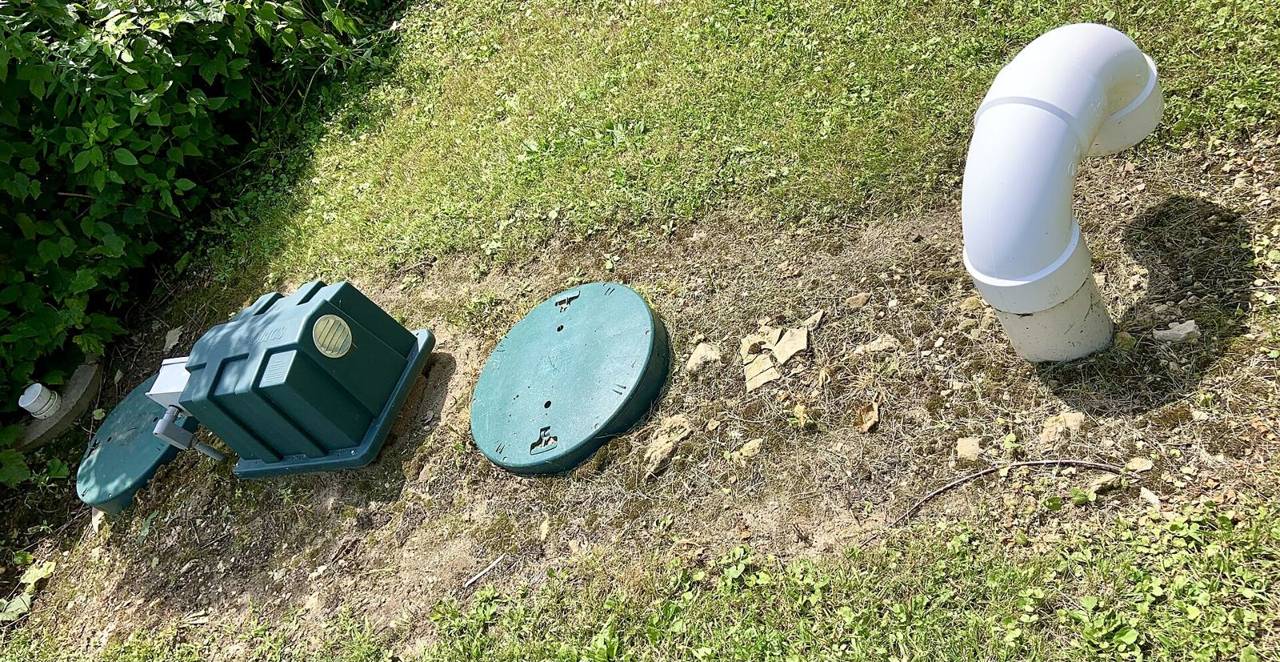
- We locate and open your tank, aerobic unit and dispersal area, including buried lids common on older Kyle properties
- We explain what we find in plain language, with photos where they help
- Repairs and installs are planned around Hays County permitting requirements
- You get written options before any repair work begins
- Aerobic visits are recorded for your maintenance contract
Septic conditions around Kyle
Knowing which category your address falls into is the most useful thing a Kyle homeowner can do. Check your utility bill for a sewer charge. If you have one, you are connected. If you do not, you most likely have a tank somewhere in the yard. Properties along FM 150 outside the city, on county roads and in unincorporated pockets near Kyle generally rely on septic or aerobic treatment. Be careful with annexation, too. A property that was rural a few years ago may now be inside city limits, though that does not automatically mean sewer service has reached it. If a line becomes available, the city may require or encourage connection, so ask. Until then, an existing septic system still needs regular pumping and care, and neglect on a small lot can affect neighbors quickly.
Aerobic Septic Repair questions from Kyle homeowners
Why is my aerobic tank dark and smelly?
A dark tank with a sewage smell usually means not enough air. The compressor may be failing, a line may be broken or a diffuser may be clogged. A healthy aeration tank looks brown and smells earthy. Please call if yours smells like raw sewage, because the treatment process has stalled. If the alarm is intermittent, note when it sounds, such as after laundry or at night. That pattern points to a float or pump timing issue.
Can I reset the system myself?
You can check that the breaker is on and silence the alarm, as the manual describes. Repeated resets without finding the cause just hide the issue. If the alarm returns, there is a real fault. Cut water use and call a licensed provider to diagnose it. Do not disconnect the alarm. It is a safety feature, and tampering can violate permit conditions.
How can I tell if repair is worth it?
If the tanks are sound and the failed part is a pump, float or compressor, repair is usually sensible. If tanks are cracked, the field is ruined or repairs keep piling up, replacement may be better value. We explain both paths with itemized costs so you can decide. Ask for old parts back if you want proof. Honest providers are glad to show them.
Do I need a permit to repair my aerobic system?
Replacing small parts like pumps, floats or spray heads usually does not need a permit. Major repairs, tank replacement or layout changes often do. Rules vary by county and city, so check with Hays County, Travis County or the City of Austin, depending on your address, before you start any major work on the system. Keep the permit and any repair records so you can show the county what was done.
Why are my spray heads not working evenly?
Clogged nozzles, cracked heads, low pressure or a failing pump are the usual causes. Debris and grass clippings can also block them. Uneven coverage can leave wet spots and dry spots, and the county may require the spray pattern to match the approved design. A technician can clean, adjust or replace the heads as needed. Regular cleaning and a yearly check of spray heads can prevent many problems.
Should I repair or replace an old aerobic system?
It depends on the age, the condition of the tanks and the cost of repairs. If one part has failed and the rest is sound, repair is usually the better choice. If the tanks are cracked, parts are hard to find or repairs keep recurring, replacement may make more sense. We will explain both options so you can compare. Age alone does not decide it, because a well-kept older unit can outlast a neglected newer one.
More about aerobic septic repair → · All septic services in Kyle →
Need aerobic septic repair in Kyle?
Call or send a request. We will ask a few questions about your system and the property, then schedule a visit.