Johnson City · Blanco County
Aerobic Septic Repair in Johnson City, TX
On rural Johnson City properties, aerobic problems often show up as a loud alarm, wet spray area, odor or a pump that never stops. Typical causes are clogged spray heads, worn aerators, bad floats and empty chlorine feeders. We find the actual fault, repair or replace what failed and confirm a full cycle before leaving. Repairing it early protects the spray area from damage.
Aerobic Septic Repair for Johnson City homes
When an aerobic unit near Johnson City fails, the sign is usually plain: a beeping alarm, a red panel light, wet ground around the tank or a smell that was not there last week. Most repairs trace back to a short list of parts. The air compressor, the effluent pump, a float switch, a clogged filter or a broken spray head accounts for the majority of the calls this kind of system generates. Sometimes the repair is not in the unit at all. A leaking fixture inside the house can run the tank full and trigger alarms while the system works fine. A toilet that runs all night can add hundreds of gallons. Before we replace parts, we check water use and household plumbing, because curing the leak may be the real fix and saves you from paying for work you did not need.
We diagnose before replacing anything. Is power reaching the panel? Is the blower running and moving air? Does the pump cycle on and off? Water that is clear and odor-free in the last chamber but never reaches the yard points to the pump, valve or line. Cloudy, gray water with a sour smell suggests the biology is starved for air, which sends us to the compressor, diffuser and air lines first. Spray head problems are common on rural fields. Small stones, insects and fine sediment can plug nozzles, and cattle or equipment can bend them. We clean or replace heads, check the pressure and test that each zone covers its intended area. A pattern that favors one side may point to a tilted head or a leak in the line, which is simple to correct once found.
Ground conditions around Johnson City make some repairs harder. Limestone near the surface can block trenching, so finding the exact location of a broken spray line saves hours. Roots from oaks and mesquite wander into shallow lines, and cattle can step on a head or riser. We repair only what has failed, test the full cycle, and give you a short list of what to watch for over the next several days. Once repairs are done, we ask owners to keep notes for a week. Did the alarm return, did the spray zones run on schedule, was there any odor? This feedback tells us whether the biology has recovered. If problems continue, we take another look before assuming the repair was incomplete, because sometimes the real cause is hiding behind the first.
What to know in Johnson City
Repair or replace the unit
A pump or blower is a normal wear item and worth repairing. A cracked tank, rusted internal parts or a unit that has needed frequent service may be near the end of its life. We compare repair costs with expected remaining life so you can make a practical choice. Ask us to separate parts and labor on the estimate.
Permit questions on larger work
Swapping a compressor rarely needs approval. Moving spray areas, replacing the tank or adding capacity usually does. Ask Blanco County before major changes, and keep a record of every repair, since the county may ask what was done to a permitted system. If your unit is under a manufacturer warranty or a provider guarantee, ask what is covered before work begins. Do not assume anything, and ask for terms in writing.
Protecting the panel
Lightning and surges damage control boards. A surge protector, a weatherproof enclosure and a dedicated circuit are modest upgrades that guard expensive parts. Label the breaker so anyone can find it quickly during an emergency. Keep the old panel or manual handy when something is replaced. Wiring changes should be documented so the next technician knows exactly what was done.
Signs you may need aerobic septic repair
- Standing water or sewage odor in the spray area
- Breaker that trips again and again
- Slow drains or backups inside the house
- Red alarm light or buzzer that keeps returning
How aerobic septic repair works
Some failures are bigger than a single part. A tank with a cracked wall, a broken baffle, severe corrosion or a failed spray field may need major repair or even replacement of the system. We try to tell you early if that is the situation, and we explain why. A repair that costs less than a replacement is not always the best choice if the unit is near the end of its life, and a replacement is not needed if one part will solve the problem. Honest diagnosis, clear options and written estimates help you decide what makes sense for your home, your budget and your long-term plans. If the numbers favor replacement, we can talk about timing, permits and what the county will want to see first.
Aerobic septic repair covers the many parts that make an aerobic treatment unit work. Unlike a basic gravity system, an aerobic unit depends on electricity, air, timers, pumps and a disinfection step. That is why it treats wastewater to a higher standard, and it is also why it has more parts that can wear out. Common repairs include air pump diaphragms, diffusers and air lines, float switches, effluent pumps, control panel components and spray heads. When an alarm goes off or the system stops spraying, a methodical approach finds the cause faster than guessing. Aerobic septic repair in Dripping Springs and the surrounding Hill Country should start with a diagnosis, not a part swap, so you only pay for what the system needs.
What to expect on a Johnson City visit
- 01
Listen to the symptoms
We start by asking what you have noticed. When did the alarm start? Is the pump running? Are there smells, wet spots or backups? Your answers narrow the possible causes before we touch the system, and they help us avoid unnecessary work and unnecessary parts. Photos or notes you took help.
- 02
Check power and controls
We check the breaker, the control panel, the timer and the float switches. Many alarms come from a simple electrical issue. We confirm that power is reaching the air pump and the effluent pump, and that the alarm itself works the way it should. We also check for loose wiring.
- 03
Test the air pump and tanks
We listen to the air pump, check airflow at the diffuser and look at each chamber. Dark water, foam, heavy odor or poor airflow help us tell whether the problem is mechanical or biological. We also check the water level in the pump tank. We record readings for your file.
- 04
Inspect the pump and spray system
We test the effluent pump, the filter and the lines to the spray heads or drip field. We run the system and watch how the water is delivered. Clogs, leaks, cracked heads and weak pressure show up quickly when the system is running. Pressure at each head is compared. We note the pressure.
- 05
Explain options and get your approval
We tell you what failed, what we recommend and what it would cost, in writing when needed. Where there is a choice, such as rebuild or replace, we explain the pros and cons. We only start work after you approve the plan we have discussed. Written estimates are available on request.
- 06
Repair, test and document
We make the repair with parts that match your system, run it through a full cycle and confirm that the alarm is clear. We note the work for your records and let your maintenance provider know, so the repair shows up correctly in your reports. You get a short summary of the repair.
Our approach in Johnson City
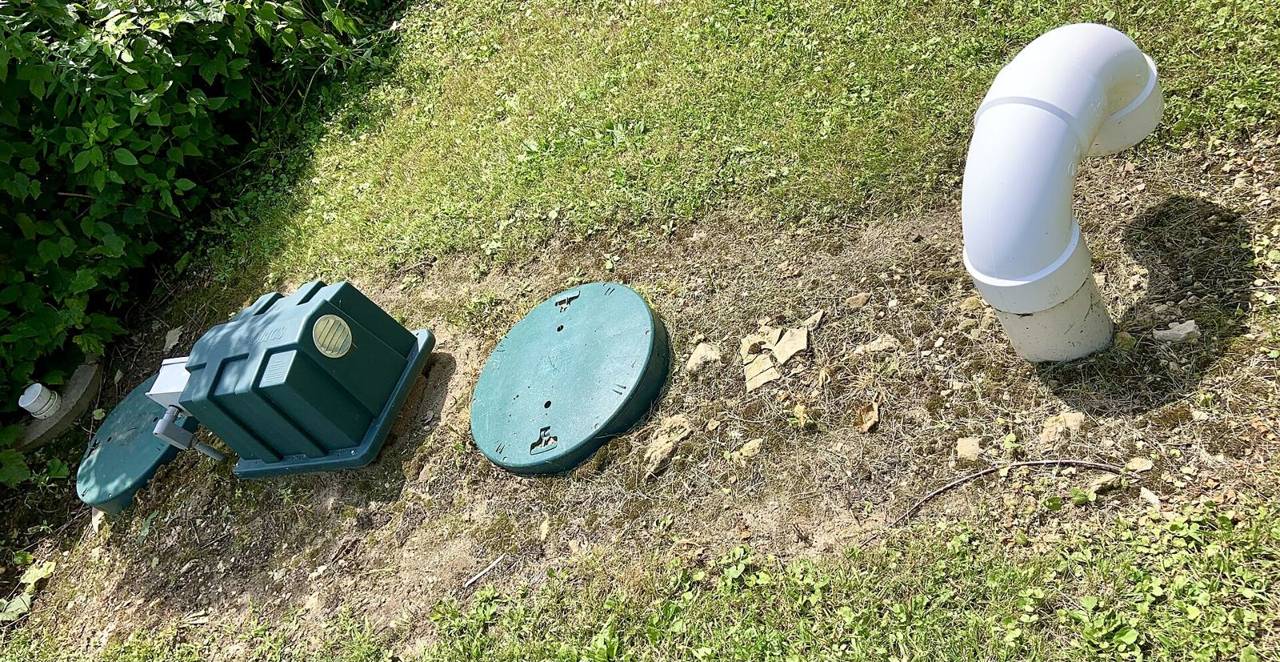
- We locate and open your tank, aerobic unit and dispersal area, including buried lids common on older Johnson City properties
- We explain what we find in plain language, with photos where they help
- Repairs and installs are planned around Blanco County permitting requirements
- You get written options before any repair work begins
- Aerobic visits are recorded for your maintenance contract
Septic conditions around Johnson City
Weather around Johnson City can be harsh on septic systems. Long dry spells shrink clay soils and can crack lines, loosen lids and expose pipes. Then a fast storm hits, and the Pedernales River and the smaller creeks around town rise quickly, flooding low-lying yards and saturating drain fields. Thin soil on slopes sheds water rapidly, but fields at the base of a slope may stay soggy long afterward. Spread out laundry and dishwasher loads during wet periods, and avoid pumping a tank when the ground is saturated. Watch for slow drains, odors, wet areas and alarms. Out here, help can be a long drive away, so a basic understanding of your system and a routine maintenance schedule are your best protection against surprise failures during a holiday weekend. Knowing where your tank and lids are, and writing it down, saves time in a real emergency.
Aerobic Septic Repair questions from Johnson City homeowners
Why does my aerobic system alarm go off at night?
Alarms trigger when the tank level rises, the air supply drops or a pump fails to run. Nighttime alarms often follow evening laundry or dishes when water use peaks. Silence the alarm, reduce water use and call. The cause may be simple, such as a stuck float, but it needs a check. Float switches can stick, and a tank may be full without any problem in the system. If it is truly high water, cut water use and call.
Can chlorine problems cause repairs?
Yes. Disinfection tablets can bridge, dissolve unevenly or run out, and clogged tablet feeders let untreated water reach the spray heads. Refilling and cleaning the feeder is a regular maintenance task, and ongoing problems point to a feeder or water quality issue that we trace and fix. Chlorine feeders can clog and wash out. If you see white residue or dry tablets, the feeder needs service. Do not add tablets that are not made for the unit, since the wrong product can harm components.
How long will an aerobic repair take?
Simple fixes such as a float, filter or head can be done in one visit. Pumps, compressors and control boards may need ordered parts. If your tank is filling while parts arrive, we can pump it and give you a plan for limiting water use until the repair is finished. Many repairs happen the same day if the part is on the truck. If not, expect a short wait. We aim to pump and stabilize the system while you wait for the part.
Is a repair covered by my maintenance contract?
It depends on the contract. Many contracts cover inspections, testing and reports, while parts and major repairs are billed separately. Look at the covered items list in your contract or ask your provider. We can help you read the contract if you are not sure what it includes and what it leaves out. Ask whether labor, travel and parts are billed together or separately.
Why does my aerobic tank smell?
A healthy aerobic unit has a mild, earthy smell at most. A strong rotten odor often means the bacteria are not getting enough air, the tank is overloaded or a part has failed. A weak air pump, a damaged diffuser or too much bleach or antibacterial cleaner are common causes. A technician can find the reason. If the smell is strong near the house, call quickly, since gases can enter plumbing.
Do I need a permit to repair my aerobic system?
Replacing small parts like pumps, floats or spray heads usually does not need a permit. Major repairs, tank replacement or layout changes often do. Rules vary by county and city, so check with Hays County, Travis County or the City of Austin, depending on your address, before you start any major work on the system. Keep the permit and any repair records so you can show the county what was done.
More about aerobic septic repair → · All septic services in Johnson City →
Need aerobic septic repair in Johnson City?
Call or send a request. We will ask a few questions about your system and the property, then schedule a visit.