Buda · Hays County
Aerobic Septic Repair in Buda, TX
Aerobic repairs near Buda commonly involve worn air pumps, tripped floats, clogged spray heads or panels damaged by storms. On clay ground, wet spray fields can also point to a system that is putting out more water than the soil can take. We trace the symptom to its actual cause and explain the options. A neglected system with an old alarm needs a closer check, because the tank's bacteria may need to recover after a long period of stress.
Aerobic Septic Repair for Buda homes
When an aerobic septic system near Buda starts alarming, the first question is whether the problem is air, water or power. Air problems come from a worn diaphragm in the blower or a blocked line. Water problems come from a failed float, a clogged filter or a stuck pump. Power problems come from a tripped breaker or a dead control panel. Sorting these out in order saves time and keeps us from replacing parts that were fine. Parts matter, but so does the order of diagnosis. We start at the panel, because a control board that has lost its settings can act like a dead pump. Then we move to the compressor, the floats, the pump and the spray heads. Working in that order tells us in minutes what a random approach might take hours to find, and it keeps you from paying for parts that were never the cause.
Properties on the edge of Buda often have a system that is only a few years old. That helps, but young systems fail too, usually from installation shortcuts or neglect during the first two years. A float set too high, an air line kinked during backfill or a spray head pointed the wrong way can all show up well after the builder has left. We trace the issue, show you the failed part and explain what caused it. Edge-of-Buda properties often have systems installed during the building boom of recent years. Fast schedules sometimes leave small mistakes behind, such as a float zip-tied at the wrong height, a splice buried in a wet box or a spray head set too low. These defects can run for a year or two before they show. We document what we find in plain terms so you can raise it with the installer if that applies.
Soil plays a part here. In clay, a spray field that is slightly oversaturated cannot recover quickly, so a small pump fault can leave the lawn soggy for a week. In limestone, a failed disinfection stage can send partly treated water over rock toward a creek bed. Both are reasons to repair promptly. If your ATU is alarming, reduce water use right away and have it checked. For older systems, wear is the story. Diaphragms harden, check valves stick, and plastic gets brittle in Central Texas sun. We replace what has failed and tell you which other parts are near the end of their service life, so repairs can be planned instead of arriving at midnight. Some owners choose to replace a pump and compressor together to avoid a second visit.
What to know in Buda
Warranty and builder issues
If your system is new, check whether the installer or manufacturer still covers parts or labor. We can describe what failed and why, which helps if you need to make a claim. Keep your install paperwork handy. Photograph the control panel and any error lights before we arrive. It helps us arrive with the right parts.
Overloaded small lots
A household with more people than the system was designed for strains the air supply and the spray area. Adding bedrooms or a guest suite without updating the permit is a common reason for repeat failures near the edge of Buda. Keep manuals and model numbers. Different brands use different parts, and some are hard to find once a model is retired.
Choosing repair or conversion
If city sewer is available at your property line, ask about the cost of connecting before you invest in major ATU repairs. A big repair on a system you may retire soon is worth a second look. If you see spray reaching the street or the ditch, switch off the pump at the breaker and call. Untreated or poorly treated water should not leave your property.
Signs you may need aerobic septic repair
- Standing water or sewage odor in the spray area
- Breaker that trips again and again
- Slow drains or backups inside the house
- Red alarm light or buzzer that keeps returning
How aerobic septic repair works
Disinfection and control problems are less visible but just as important. A chlorinator that jams, a tablet feeder that fails or a timer set wrong can put poorly treated water onto the ground. Control panels also fail from heat, moisture, insects and lightning. Replacing a timer, relay or breaker is usually straightforward, but wiring should only be handled by someone qualified. If your system is under a maintenance contract, tell your licensed maintenance provider about any repair, since it may need to be noted in your reports. Larger repairs or changes to the system may need a permit, so check with the county before major work begins. Keeping a log of repairs, dates and parts gives the next technician a head start and helps if you ever sell.
Some failures are bigger than a single part. A tank with a cracked wall, a broken baffle, severe corrosion or a failed spray field may need major repair or even replacement of the system. We try to tell you early if that is the situation, and we explain why. A repair that costs less than a replacement is not always the best choice if the unit is near the end of its life, and a replacement is not needed if one part will solve the problem. Honest diagnosis, clear options and written estimates help you decide what makes sense for your home, your budget and your long-term plans. If the numbers favor replacement, we can talk about timing, permits and what the county will want to see first.
What to expect on a Buda visit
- 01
Listen to the symptoms
We start by asking what you have noticed. When did the alarm start? Is the pump running? Are there smells, wet spots or backups? Your answers narrow the possible causes before we touch the system, and they help us avoid unnecessary work and unnecessary parts. Photos or notes you took help.
- 02
Check power and controls
We check the breaker, the control panel, the timer and the float switches. Many alarms come from a simple electrical issue. We confirm that power is reaching the air pump and the effluent pump, and that the alarm itself works the way it should. We also check for loose wiring.
- 03
Test the air pump and tanks
We listen to the air pump, check airflow at the diffuser and look at each chamber. Dark water, foam, heavy odor or poor airflow help us tell whether the problem is mechanical or biological. We also check the water level in the pump tank. We record readings for your file.
- 04
Inspect the pump and spray system
We test the effluent pump, the filter and the lines to the spray heads or drip field. We run the system and watch how the water is delivered. Clogs, leaks, cracked heads and weak pressure show up quickly when the system is running. Pressure at each head is compared. We note the pressure.
- 05
Explain options and get your approval
We tell you what failed, what we recommend and what it would cost, in writing when needed. Where there is a choice, such as rebuild or replace, we explain the pros and cons. We only start work after you approve the plan we have discussed. Written estimates are available on request.
- 06
Repair, test and document
We make the repair with parts that match your system, run it through a full cycle and confirm that the alarm is clear. We note the work for your records and let your maintenance provider know, so the repair shows up correctly in your reports. You get a short summary of the repair.
Our approach in Buda
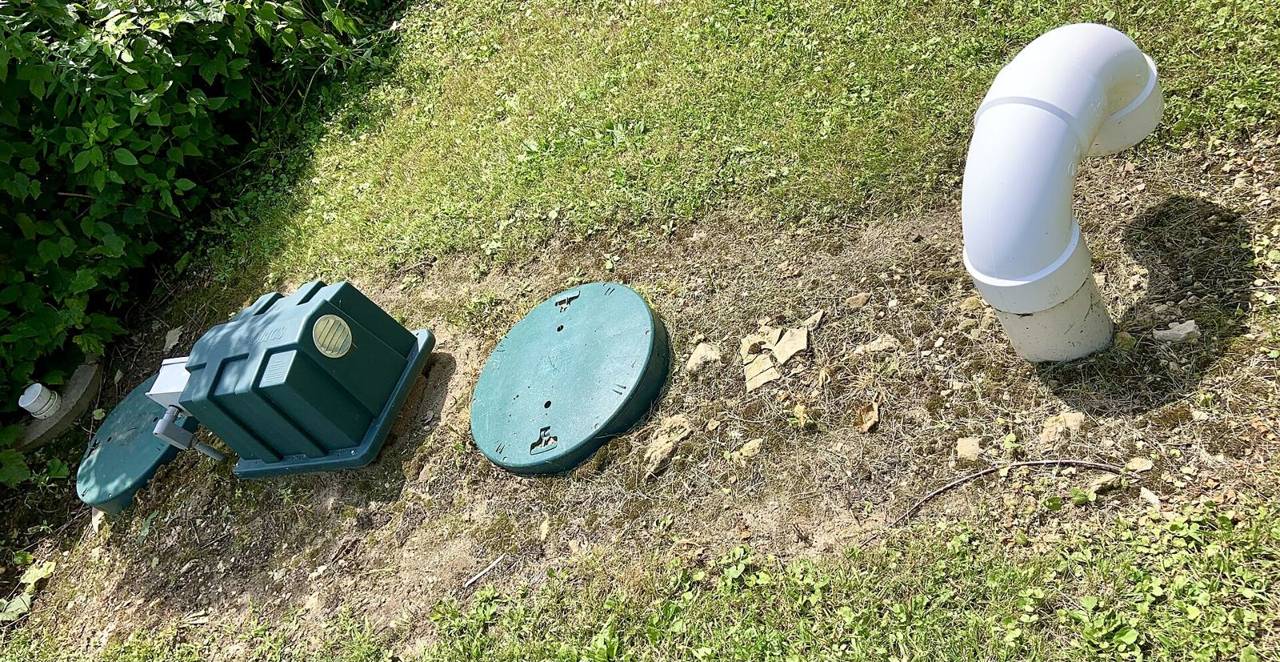
- We locate and open your tank, aerobic unit and dispersal area, including buried lids common on older Buda properties
- We explain what we find in plain language, with photos where they help
- Repairs and installs are planned around Hays County permitting requirements
- You get written options before any repair work begins
- Aerobic visits are recorded for your maintenance contract
Septic conditions around Buda
Buda has grown fast, but not every part of it grew the same way. Dense neighborhoods and new subdivisions closer to I-35 were built with sewer service, while larger rural tracts, older subdivisions and acreage on the edges were built around septic. Driving the back roads outside town, you find horse properties, small farms, and custom homes with long driveways. Those lots often have a conventional tank and field if the soil allows, or an aerobic system if it does not. Clay lots frequently need drain fields that are longer or placed carefully to work. Because the area keeps changing, a house that once sat in the country may now be next to a new development while still running an older septic system. Knowing which side of that line you are on is the first step.
Aerobic Septic Repair questions from Buda homeowners
Why does my aerobic system alarm after rain?
Rain can raise the water level in saturated clay soil, and a float may trip as the pump tank fills faster than it empties. It can also point to groundwater leaking into a lid or riser. We check seals, floats and pump timing to see which applies. Ask us to show you the failed part. Seeing the cracked diaphragm or burned contact makes the cost easier to accept.
How long can I run the system with a bad air pump?
Not long. Without air, the bacteria die off and the water leaving the tank is poorly treated. That water goes onto your yard. Use as little water as possible and call promptly. A replacement pump is usually a modest repair if caught early. Quiet hum and no air flow usually means a blocked or cracked line. Loud rattling usually means worn parts. Telling us which you hear helps with phone diagnosis.
Do aerobic repairs near Buda need county approval?
Like-for-like part swaps usually do not. Changes to the layout, tank or spray area typically do, through Hays County Development Services if you are outside the city. Inside city limits, ask the City of Buda. Call before any major change. Counties can ask about repair history during a permit transfer. Keep invoices from every repair.
Why does my aerobic tank smell?
A healthy aerobic unit has a mild, earthy smell at most. A strong rotten odor often means the bacteria are not getting enough air, the tank is overloaded or a part has failed. A weak air pump, a damaged diffuser or too much bleach or antibacterial cleaner are common causes. A technician can find the reason. If the smell is strong near the house, call quickly, since gases can enter plumbing.
Do I need a permit to repair my aerobic system?
Replacing small parts like pumps, floats or spray heads usually does not need a permit. Major repairs, tank replacement or layout changes often do. Rules vary by county and city, so check with Hays County, Travis County or the City of Austin, depending on your address, before you start any major work on the system. Keep the permit and any repair records so you can show the county what was done.
Why are my spray heads not working evenly?
Clogged nozzles, cracked heads, low pressure or a failing pump are the usual causes. Debris and grass clippings can also block them. Uneven coverage can leave wet spots and dry spots, and the county may require the spray pattern to match the approved design. A technician can clean, adjust or replace the heads as needed. Regular cleaning and a yearly check of spray heads can prevent many problems.
More about aerobic septic repair → · All septic services in Buda →
Need aerobic septic repair in Buda?
Call or send a request. We will ask a few questions about your system and the property, then schedule a visit.