Bee Cave · Travis County
Aerobic Septic Repair in Bee Cave, TX
An aerobic system that alarms, smells or leaves the yard wet is telling you something has failed. Around Bee Cave, common causes include clogged spray heads, a worn air pump, a stuck float and a chlorine feeder that is empty. We trace the fault, repair or replace the part, and run the system through a cycle to confirm it works before we leave your property.
Aerobic Septic Repair for Bee Cave homes
A failed aerobic unit in Bee Cave tends to announce itself through the alarm, a wet patch in the landscape, or a sour smell near the tank. These systems have many parts that can fail, from the air compressor and diffuser to the pump tank float, the timer, and the emitters at the far end. Aerobic septic repair in Bee Cave begins with finding which part is at fault. Guessing can lead to replacing healthy equipment while the real problem remains. Hill Country power can flicker during storms, and a compressor that restarts repeatedly under low voltage wears out faster. We note whether the circuit is dedicated and whether a surge protector is installed, since cheap protection can prevent an expensive part failure.
Our approach follows the path of the water. We confirm power at the panel and breaker, then check whether air is moving. A compressor that runs but delivers no air often has a failed diaphragm or a blocked line. Next we look at the aeration chamber and clarifier for sludge carryover, then at the pump tank, floats, and discharge line. On properties with long runs to a back lot or a lower slope, we also look for a pipe that has cracked or a valve that has stuck, since distance adds places for something to break. Alarm history helps too. If the alarm sounded last month and cleared on its own, a float or pump may be failing intermittently. Tell us everything you remember, even small details such as when the sound started.
Heat is a practical factor in Travis County summers. Compressors working in direct sun or inside a closed enclosure can overheat and fail early, and a little shade or ventilation can add life. Power surges from storms can also damage control boards. After a repair we explain what failed, what we replaced, and what we would watch. If the unit is aging and repairs are piling up, we tell you honestly, so you can plan a replacement rather than pay for repeated service calls. Some homes in Bee Cave have units installed during a building boom and now at the age where parts wear out together. In that case a staged plan, replacing the weakest parts first, may fit a budget better than waiting for a total failure.
What to know in Bee Cave
Distance between tank and disposal area
On larger Bee Cave lots, treated water may travel a long way uphill or across rock to reach the drip or spray area. Longer lines mean more joints, more valves, and more places to leak. Tracing a fault can take extra time, and a map of your layout speeds it up. Ask for an itemized estimate so you can compare repair cost to the cost of replacing the whole unit.
Rock and tree roots around lines
Shallow limestone forces lines to be laid in narrow trenches or covered with only a thin layer of soil, which exposes them to damage from digging and root growth. Call before any landscaping or fence work near the system, and ask us to mark the lines. Do not run a unit with a dead compressor for long. Without oxygen the tank turns septic and the bacteria that treat waste die off.
Parts and compliance
Replacement parts must be approved for your brand of unit. Using a generic part can void a warranty or violate the permit. Your provider can match parts to your model and keep the records that Travis County or LCRA may ask to see. Keep the manual and model number handy. They help us order the right part on the first try.
Signs you may need aerobic septic repair
- Red alarm light or buzzer that keeps returning
- Air pump that has gone quiet or sounds strained
- Black, foamy or foul-smelling water in the aeration chamber
- Spray heads not turning, cracked or spraying unevenly
How aerobic septic repair works
The most common call is an alarm. Most systems have a red light and a buzzer that trigger when the water in the pump tank gets too high or the air supply drops. The cause may be a failed air pump, a tripped breaker, a bad float, a clogged effluent filter, a worn pump or a plugged spray line. Silence the alarm, note the time and the weather, and check the breaker. If the alarm returns, call for service and do not ignore it. Water has nowhere to go when the pump tank is full, and wastewater can back up in the system or, in the worst case, into the house. Cutting back on water use while you wait helps.
Air pumps, also called compressors, are the heart of the system. They push air into the aeration chamber so bacteria can break down waste. Over time the rubber diaphragms wear, the filters clog and the valves fail. A pump that is still running but weak can look fine from the outside while the water in the chamber turns dark and smelly. Many pumps can be rebuilt with a diaphragm kit, while others are cheaper to replace outright. We look at the age of the unit, the cost of parts and the condition of the rest of the system, then give you a clear choice between repairing and replacing the pump. Catching a weak pump early is usually cheaper than waiting for it to fail completely and damage other parts.
What to expect on a Bee Cave visit
- 01
Listen to the symptoms
We start by asking what you have noticed. When did the alarm start? Is the pump running? Are there smells, wet spots or backups? Your answers narrow the possible causes before we touch the system, and they help us avoid unnecessary work and unnecessary parts. Photos or notes you took help.
- 02
Check power and controls
We check the breaker, the control panel, the timer and the float switches. Many alarms come from a simple electrical issue. We confirm that power is reaching the air pump and the effluent pump, and that the alarm itself works the way it should. We also check for loose wiring.
- 03
Test the air pump and tanks
We listen to the air pump, check airflow at the diffuser and look at each chamber. Dark water, foam, heavy odor or poor airflow help us tell whether the problem is mechanical or biological. We also check the water level in the pump tank. We record readings for your file.
- 04
Inspect the pump and spray system
We test the effluent pump, the filter and the lines to the spray heads or drip field. We run the system and watch how the water is delivered. Clogs, leaks, cracked heads and weak pressure show up quickly when the system is running. Pressure at each head is compared. We note the pressure.
- 05
Explain options and get your approval
We tell you what failed, what we recommend and what it would cost, in writing when needed. Where there is a choice, such as rebuild or replace, we explain the pros and cons. We only start work after you approve the plan we have discussed. Written estimates are available on request.
- 06
Repair, test and document
We make the repair with parts that match your system, run it through a full cycle and confirm that the alarm is clear. We note the work for your records and let your maintenance provider know, so the repair shows up correctly in your reports. You get a short summary of the repair.
Our approach in Bee Cave
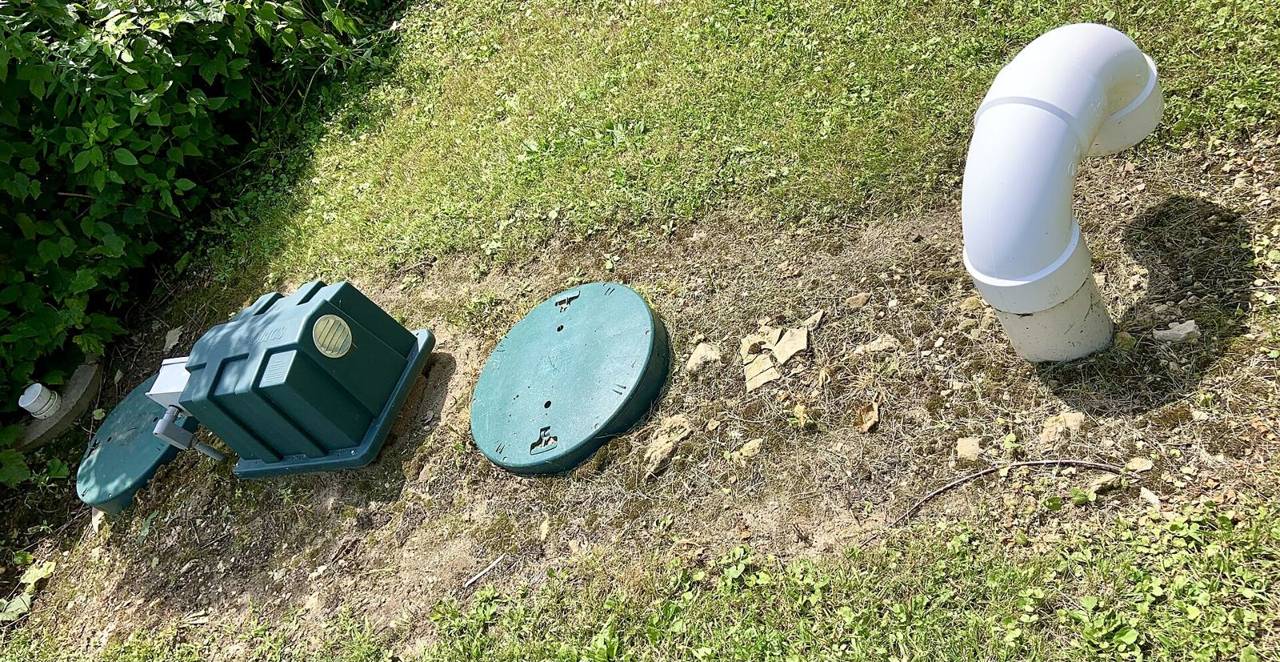
- We locate and open your tank, aerobic unit and dispersal area, including buried lids common on older Bee Cave properties
- We explain what we find in plain language, with photos where they help
- Repairs and installs are planned around Travis County permitting requirements
- You get written options before any repair work begins
- Aerobic visits are recorded for your maintenance contract
Septic conditions around Bee Cave
Weather in Bee Cave arrives in extremes. Summer droughts bake the thin soils, and the rocky ground can shift enough to loosen lids, crack buried lines and expose pipe edges. Then a hard storm can drop several inches in a few hours, and runoff races down slopes toward Barton Creek. Water that cannot soak into shallow soil sheets across the surface, and drain fields on lower parts of a slope can stay soggy for days. Pay attention to the signs after heavy rain: slow drains, gurgling pipes, a sewage smell near the tank or field, or lush green patches that appear in the middle of dry grass. Keep roof drains and sump discharge pointed away from your system. If an aerobic alarm sounds during or after a storm, do not ignore it, since power flickers and wet conditions can stop the pump or aerator.
Aerobic Septic Repair questions from Bee Cave homeowners
Why is my aerobic alarm on?
An alarm usually means a pump has failed, a float is stuck, or water in the tank is higher than it should be. It can also signal a loss of power to the compressor. Reduce water use and call us. Do not silence it permanently, since the warning exists to protect your landscape and your home. If a repair involves digging in a drip field, expect some soil disturbance and ask how it will be restored.
How much does aerobic septic repair cost in Bee Cave?
Costs vary widely. A swapped float or cleaned emitter may be modest, while a new compressor or pump costs more, and a full unit replacement runs far higher. These are general market ranges, not a price list. The cause, parts, access, and any county or LCRA paperwork shape the final cost. Warranty coverage on parts may require records of regular service. Ask your provider whether your records are complete.
Will a repair require a permit near Lake Travis?
Simple part swaps usually do not, but changes to the tank, layout, or disposal area can. Within 2,000 feet of Lake Travis, LCRA is the authority. Elsewhere in unincorporated Travis County, check with Travis County. Inside city limits, ask Bee Cave. Call before work starts, since unpermitted changes can create problems at resale. After repair, run a normal day of water use and watch for alarms. Report anything unusual right away.
Should I repair or replace an old aerobic system?
It depends on the age, the condition of the tanks and the cost of repairs. If one part has failed and the rest is sound, repair is usually the better choice. If the tanks are cracked, parts are hard to find or repairs keep recurring, replacement may make more sense. We will explain both options so you can compare. Age alone does not decide it, because a well-kept older unit can outlast a neglected newer one.
What should I do first when my aerobic alarm goes off?
Silence the alarm if your panel has a button for it, then check the breaker. Note the time, any recent storms and how the system sounds. Cut back on water use, such as laundry and long showers, until it is checked. If the alarm comes back, call for service. Do not ignore it, since the pump tank can fill up and back up.
How long does an aerobic air pump last?
It varies with the brand, the heat and how well the filter is kept clean. Many pumps work for several years before the diaphragms need to be replaced, and the whole unit may need replacing after longer use. Regular maintenance visits often catch a failing pump before it quits, which keeps the repair smaller and cheaper. A technician can test the pump and filter to see how much life remains.
More about aerobic septic repair → · All septic services in Bee Cave →
Need aerobic septic repair in Bee Cave?
Call or send a request. We will ask a few questions about your system and the property, then schedule a visit.