Dripping Springs & the Texas Hill Country
Aerobic Septic Repair
When an aerobic system alarm sounds or the spray field looks wrong, quick repair protects your yard and your permit. We diagnose the cause first, explain it in plain terms and fix what actually needs fixing.
Aerobic septic repair covers the many parts that make an aerobic treatment unit work. Unlike a basic gravity system, an aerobic unit depends on electricity, air, timers, pumps and a disinfection step. That is why it treats wastewater to a higher standard, and it is also why it has more parts that can wear out. Common repairs include air pump diaphragms, diffusers and air lines, float switches, effluent pumps, control panel components and spray heads. When an alarm goes off or the system stops spraying, a methodical approach finds the cause faster than guessing. Aerobic septic repair in Dripping Springs and the surrounding Hill Country should start with a diagnosis, not a part swap, so you only pay for what the system needs.
The most common call is an alarm. Most systems have a red light and a buzzer that trigger when the water in the pump tank gets too high or the air supply drops. The cause may be a failed air pump, a tripped breaker, a bad float, a clogged effluent filter, a worn pump or a plugged spray line. Silence the alarm, note the time and the weather, and check the breaker. If the alarm returns, call for service and do not ignore it. Water has nowhere to go when the pump tank is full, and wastewater can back up in the system or, in the worst case, into the house. Cutting back on water use while you wait helps.
Air pumps, also called compressors, are the heart of the system. They push air into the aeration chamber so bacteria can break down waste. Over time the rubber diaphragms wear, the filters clog and the valves fail. A pump that is still running but weak can look fine from the outside while the water in the chamber turns dark and smelly. Many pumps can be rebuilt with a diaphragm kit, while others are cheaper to replace outright. We look at the age of the unit, the cost of parts and the condition of the rest of the system, then give you a clear choice between repairing and replacing the pump. Catching a weak pump early is usually cheaper than waiting for it to fail completely and damage other parts.
Spray heads and drip lines are another frequent trouble spot. Heads clog with debris, crack in the sun, get hit by mowers or sink out of alignment. A broken head can spray in the wrong direction, pool water or leave dry patches. In drip systems, filters and emitters can plug up. Repairs are often simple, but the layout matters, because the county approved a certain spray pattern and distance from property lines, wells and buildings. We replace parts with the right type and adjust coverage to stay within the approved design. If the spray area has changed from what the plans show, we tell you so you can talk with your permitting office. Clear, even coverage also protects neighbors, pets and children from contact with treated water that should soak in on your lot.
Disinfection and control problems are less visible but just as important. A chlorinator that jams, a tablet feeder that fails or a timer set wrong can put poorly treated water onto the ground. Control panels also fail from heat, moisture, insects and lightning. Replacing a timer, relay or breaker is usually straightforward, but wiring should only be handled by someone qualified. If your system is under a maintenance contract, tell your licensed maintenance provider about any repair, since it may need to be noted in your reports. Larger repairs or changes to the system may need a permit, so check with the county before major work begins. Keeping a log of repairs, dates and parts gives the next technician a head start and helps if you ever sell.
Some failures are bigger than a single part. A tank with a cracked wall, a broken baffle, severe corrosion or a failed spray field may need major repair or even replacement of the system. We try to tell you early if that is the situation, and we explain why. A repair that costs less than a replacement is not always the best choice if the unit is near the end of its life, and a replacement is not needed if one part will solve the problem. Honest diagnosis, clear options and written estimates help you decide what makes sense for your home, your budget and your long-term plans. If the numbers favor replacement, we can talk about timing, permits and what the county will want to see first.
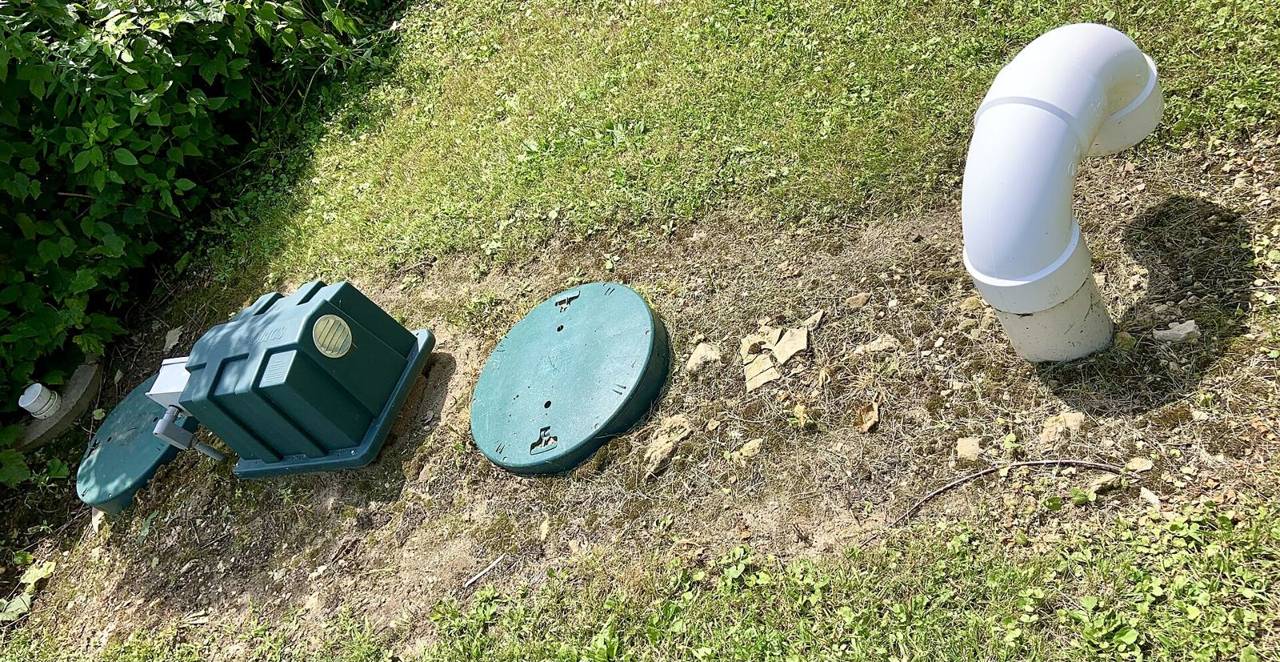
Signs you may need aerobic septic repair
- Red alarm light or buzzer that keeps returning
- Air pump that has gone quiet or sounds strained
- Black, foamy or foul-smelling water in the aeration chamber
- Spray heads not turning, cracked or spraying unevenly
- Standing water or sewage odor in the spray area
- Breaker that trips again and again
- Slow drains or backups inside the house
Aerobic Septic Repair on Hill Country properties
Rocky soil and shallow limestone are a big reason aerobic spray systems are common in the Hill Country. Digging to repair buried lines, tanks or conduits can be harder here than in softer soil. Good records of where lines run save time, cost and damage to your landscaping.
Summer heat is a major cause of control panel and air pump failures. Panels in direct sun can overheat, and pumps working hard in hot weather wear out faster. Shade, ventilation and keeping the area around the equipment clear of vegetation all help the equipment last longer.
Lightning storms and power surges are a regular part of Central Texas weather. A strike near your home can damage the control panel, timer or pump. Surge protection is worth asking about. After a storm or an outage, check the panel and the alarm before assuming that everything restarted correctly.
Deer, rabbits and rodents are common in Hill Country neighborhoods and can chew wires and air lines. Fire ants love control panels. If you see damage or a nest in the box, call for service rather than clearing it yourself, since live wires and stinging insects are a bad combination.
Many homes near Dripping Springs, Driftwood and Wimberley sit on large lots where spray fields lie on slopes. Runoff after heavy rain can carry treated water toward creeks and neighbors. Repairing leaks and adjusting heads helps keep spray where it belongs, close to the Edwards Aquifer recharge areas and local streams.
Our aerobic septic repair process
- 01
Listen to the symptoms
We start by asking what you have noticed. When did the alarm start? Is the pump running? Are there smells, wet spots or backups? Your answers narrow the possible causes before we touch the system, and they help us avoid unnecessary work and unnecessary parts. Photos or notes you took help.
- 02
Check power and controls
We check the breaker, the control panel, the timer and the float switches. Many alarms come from a simple electrical issue. We confirm that power is reaching the air pump and the effluent pump, and that the alarm itself works the way it should. We also check for loose wiring.
- 03
Test the air pump and tanks
We listen to the air pump, check airflow at the diffuser and look at each chamber. Dark water, foam, heavy odor or poor airflow help us tell whether the problem is mechanical or biological. We also check the water level in the pump tank. We record readings for your file.
- 04
Inspect the pump and spray system
We test the effluent pump, the filter and the lines to the spray heads or drip field. We run the system and watch how the water is delivered. Clogs, leaks, cracked heads and weak pressure show up quickly when the system is running. Pressure at each head is compared. We note the pressure.
- 05
Explain options and get your approval
We tell you what failed, what we recommend and what it would cost, in writing when needed. Where there is a choice, such as rebuild or replace, we explain the pros and cons. We only start work after you approve the plan we have discussed. Written estimates are available on request.
- 06
Repair, test and document
We make the repair with parts that match your system, run it through a full cycle and confirm that the alarm is clear. We note the work for your records and let your maintenance provider know, so the repair shows up correctly in your reports. You get a short summary of the repair.
What affects the cost of aerobic septic repair
Which part failed
A breaker, float switch or spray head is usually a small repair. An air pump, effluent pump or control panel costs more. Repair costs commonly range from under a couple hundred dollars to well over a thousand for larger components, depending on the part and the brand. We give you a written estimate before work.
Brand and age of the system
Parts for well-known brands are easy to find. Older or discontinued units may need special-order parts or a different approach. If the system is near the end of its life, the cost of repeated repairs may start to add up, and replacement may deserve a look. Ask about parts availability up front.
Labor and time on site
Finding an intermittent problem can take time, and wet or rocky ground can slow digging. Electrical diagnosis and pump replacement can take more than one trip if parts must be ordered. We aim to explain the time involved before the work starts. Clear access to the panel and tanks saves labor.
Related damage
A long-running fault can damage other parts. A failed air pump can let solids build up in the tank. A stuck pump can burn out a motor. Fixing the cause early often prevents a chain of costly repairs and saves money over the life of the system. A small fix today often prevents a large bill later.
Permits and county requirements
Simple part swaps usually do not need a permit. Larger repairs or changes to the system layout may require approval from the county. Permit fees and inspection steps vary by county, so check with your permitting office before any major work begins. Ask the county about fees before you commit.
Aerobic Septic Repair FAQs
What should I do first when my aerobic alarm goes off?
Silence the alarm if your panel has a button for it, then check the breaker. Note the time, any recent storms and how the system sounds. Cut back on water use, such as laundry and long showers, until it is checked. If the alarm comes back, call for service. Do not ignore it, since the pump tank can fill up and back up.
How long does an aerobic air pump last?
It varies with the brand, the heat and how well the filter is kept clean. Many pumps work for several years before the diaphragms need to be replaced, and the whole unit may need replacing after longer use. Regular maintenance visits often catch a failing pump before it quits, which keeps the repair smaller and cheaper. A technician can test the pump and filter to see how much life remains.
Can I fix an aerobic system myself?
Homeowners can silence alarms, reset a breaker and look over the system, but repairs involve electricity, wastewater and gases. Some work must be done by a qualified professional, and your maintenance contract may require your provider to handle service. When in doubt, call a pro before you open panels or tanks. Even small fixes can create safety or compliance issues if done incorrectly.
Is a repair covered by my maintenance contract?
It depends on the contract. Many contracts cover inspections, testing and reports, while parts and major repairs are billed separately. Look at the covered items list in your contract or ask your provider. We can help you read the contract if you are not sure what it includes and what it leaves out. Ask whether labor, travel and parts are billed together or separately.
Why does my aerobic tank smell?
A healthy aerobic unit has a mild, earthy smell at most. A strong rotten odor often means the bacteria are not getting enough air, the tank is overloaded or a part has failed. A weak air pump, a damaged diffuser or too much bleach or antibacterial cleaner are common causes. A technician can find the reason. If the smell is strong near the house, call quickly, since gases can enter plumbing.
Do I need a permit to repair my aerobic system?
Replacing small parts like pumps, floats or spray heads usually does not need a permit. Major repairs, tank replacement or layout changes often do. Rules vary by county and city, so check with Hays County, Travis County or the City of Austin, depending on your address, before you start any major work on the system. Keep the permit and any repair records so you can show the county what was done.
Why are my spray heads not working evenly?
Clogged nozzles, cracked heads, low pressure or a failing pump are the usual causes. Debris and grass clippings can also block them. Uneven coverage can leave wet spots and dry spots, and the county may require the spray pattern to match the approved design. A technician can clean, adjust or replace the heads as needed. Regular cleaning and a yearly check of spray heads can prevent many problems.
Should I repair or replace an old aerobic system?
It depends on the age, the condition of the tanks and the cost of repairs. If one part has failed and the rest is sound, repair is usually the better choice. If the tanks are cracked, parts are hard to find or repairs keep recurring, replacement may make more sense. We will explain both options so you can compare. Age alone does not decide it, because a well-kept older unit can outlast a neglected newer one.
Aerobic Septic Repair near you
- Aerobic Septic Repair in Dripping Springs
- Aerobic Septic Repair in Driftwood
- Aerobic Septic Repair in Wimberley
- Aerobic Septic Repair in Henly
- Aerobic Septic Repair in Buda
- Aerobic Septic Repair in Kyle
- Aerobic Septic Repair in San Marcos
- Aerobic Septic Repair in Bee Cave
- Aerobic Septic Repair in Lakeway
- Aerobic Septic Repair in Southwest Austin
- Aerobic Septic Repair in Spicewood
- Aerobic Septic Repair in Johnson City
Need septic service in the Hill Country?
Call or send a request. We will ask a few questions about your system and the property, then schedule a visit.