Driftwood · Hays County
Aerobic Septic Maintenance in Driftwood, TX
Aerobic systems are a standard choice on Driftwood acreage because shallow rock rules out many conventional fields. Routine service covers the aerator, the air pump, the alarm, the disinfection stage and the spray heads or drip lines. With a big property, the spray field can be a long way from the house, so a clogged head can go unnoticed for weeks. New aerobic systems in Hays County come with an initial two-year maintenance contract, and a licensed provider handles those visits.
Aerobic Septic Maintenance for Driftwood homes
Aerobic septic maintenance matters in Driftwood because so many properties have rock close to the surface. When the soil cannot hold a standard drain field, an aerobic treatment unit cleans the wastewater first and then sends it to spray heads or drip lines across the lawn or pasture edge. That equipment needs a licensed provider on a schedule. In Hays County, a new aerobic system comes with an initial two-year maintenance contract, and the county expects maintenance to continue afterward. Letting it lapse puts the system and your standing with the county at risk. Keep the maintenance binder in a dry place, ideally with the well records and the deed. Owners who inherit a property from family often find that the paperwork is the hardest part of taking over the system.
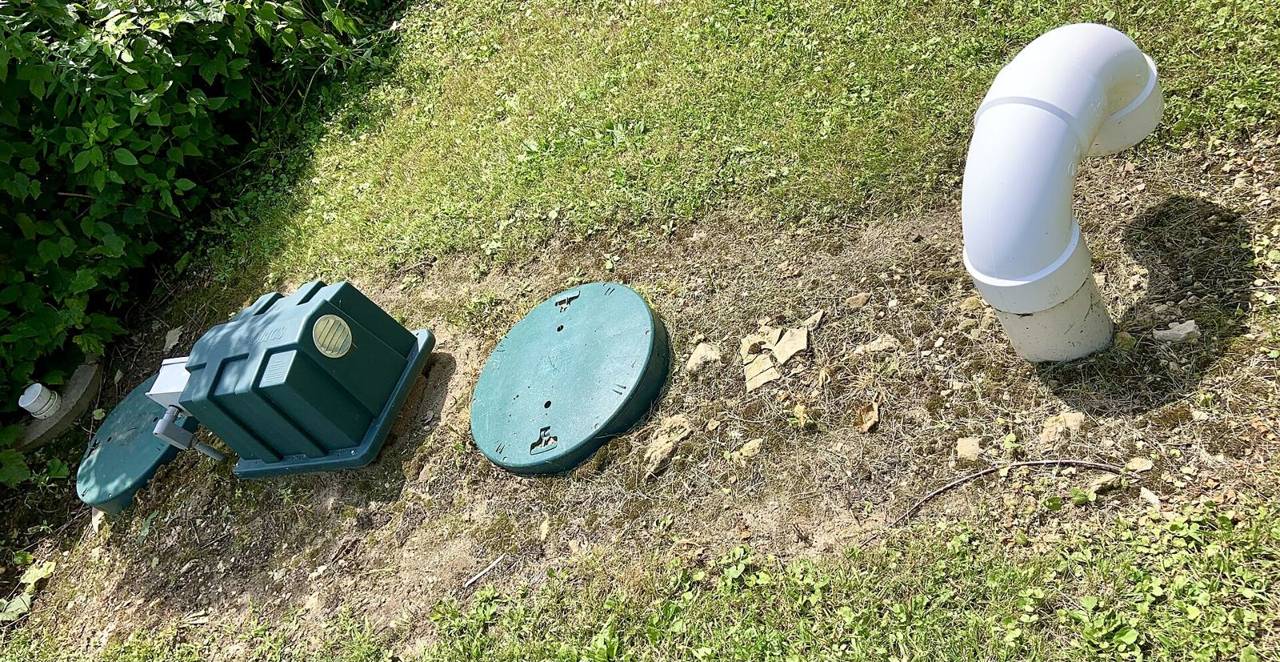
Out on acreage, the spray area often covers a larger, more open part of the property than a suburban lot would allow. That is good for treatment, but it also means heads can be hidden in tall grass or knocked sideways by a mower, a cow, or a deer. During a visit we walk the full area, run each zone, and check pressure at the heads. We replace nozzles that are clogged, cracked or pointing the wrong way, and we trim back growth that blocks spray patterns. A good walk through also catches wet spots that do not belong. If we find pooling at the edge of a zone or runoff toward a fence, we reduce run time or adjust heads before it becomes a complaint.
Inside the equipment we look at the compressor, the airlines and diffusers, the clarifier, the pump and the control panel. Because Driftwood sits in a lightning-prone stretch of Hill Country and power can drop for hours, we test how the panel behaves after an outage. TCEQ expects providers to report at least every four months. Keep your copies of those reports with your property papers, since they prove the system has been cared for if you ever sell. Between visits, you can help by keeping grass trimmed around heads and listening for the blower. A change in sound, or no sound, is worth a call before the next scheduled stop.
What to know in Driftwood
Spray areas on open acreage
Heads placed in pasture or lawn can be damaged by livestock, mowers and tractors. Flag the heads with small markers or stakes so equipment operators can see them. We check each zone at every visit, and we note any head that needs to be moved or protected. Ask us for flags to mark them.
Disinfection supplies
Spray systems typically use a disinfection step, often chlorine tablets, before water leaves the pump tank. Rural owners sometimes forget to restock between visits. We refill what is needed, show you the level indicator, and explain which products are safe so you never use the wrong one. Keep the original tablet label.
Long distances between visits
Driftwood is a drive from many service providers, so choose a maintenance contract with a clear schedule and a plan for emergencies. Ask how alarms are handled, what is included, and how reports are sent, so a small fault does not sit for weeks. Save the report emails.
Signs you may need aerobic septic maintenance
- Air pump that is silent, rattling or unusually loud
- Strong sewage or musty smell near the tanks or spray area
- Pooling or runoff from the spray heads
- Dead, matted or overly lush patches in the spray field
How aerobic septic maintenance works
State rules come from the Texas Commission on Environmental Quality, or TCEQ, under Chapter 285 of the Texas Administrative Code. The maintenance contract has to be with a licensed maintenance provider, and TCEQ describes that provider as an individual person. The contract must list what it covers and say how often routine maintenance, testing and reporting will happen. The provider must check each component on every visit and send a report to the permitting authority and to you at least once every four months. Systems with an electronic monitor can follow a longer reporting schedule. Your county may add its own steps, so the contract on your system is the document that controls what happens and when. Because rules and contract terms can change, keep your own copy and confirm details with your permitting office.
For a new aerobic system, the first contract has a set length. The state rule describes an initial two-year service policy that starts when the system is first used. Hays County requires an initial two-year contract for new aerobic systems, and its paperwork says the owner needs a new contract in place at least 30 days before service would end. After the first two years, a single-family homeowner can either keep a licensed provider or, for certain system types, do the maintenance personally. Some counties require homeowner training or do not allow owner maintenance at all. Check with your permitting authority before you decide to go it alone, since the wrong choice can lead to a notice of violation and extra cost.
What to expect on a Driftwood visit
- 01
Review your contract and system records
We start by looking at your permit, your as-built drawing and your current contract, if you have one. This tells us the system brand, the type of disinfection, the spray or drip layout and any county requirements. We also note when your last reports were filed. This homework saves time in the field.
- 02
Check the control panel and alarm
We test the alarm, check the breakers and look at the timer settings. A working alarm is your early warning when something fails. We also look for water damage, loose wires and insects inside the panel, which are common problems in Texas heat and humidity. We note anything that needs follow-up.
- 03
Inspect the tanks and air system
We open the lids and look at each chamber. We check the air pump, the diffuser and the airflow, and we note the water color and smell. These clues show whether the bacteria are healthy and whether solids are building up faster than they should. We record what we see for the report.
- 04
Test and service disinfection
We check the disinfection unit and replace tablets when needed. We test the treated water as the rules call for and watch for any sign that the unit is not working. Using the wrong chlorine product can damage equipment, so we use only what the manufacturer allows. Results go into your written report.
- 05
Walk the spray or drip field
We check each spray head or drip line for clogs, leaks and even coverage. We look for pooling, runoff and the distance from property lines, wells and structures. Adjusting heads and clearing debris keeps the system working as designed and protects your yard. We photograph problem spots when that helps.
- 06
Tag, report and recommend next steps
We mark the tag on the system with the date of the check, finish the written report and send it where it needs to go. We then tell you about any parts that are wearing out, when pumping is due and when the contract needs to be renewed. You keep a copy for your files.
Our approach in Driftwood
- We locate and open your tank, aerobic unit and dispersal area, including buried lids common on older Driftwood properties
- We explain what we find in plain language, with photos where they help
- Repairs and installs are planned around Hays County permitting requirements
- You get written options before any repair work begins
- Aerobic visits are recorded for your maintenance contract
Septic conditions around Driftwood
Driftwood is largely unincorporated, and centralized sewer lines are generally not available to the rural tracts that surround FM 150 and FM 1826. Property listings in the area regularly note that sewer is not available, which means septic or aerobic treatment is the plan for nearly every home. That is a simple answer compared with many nearby towns, but it comes with responsibility. There is no city crew to call when a system acts up, and a neglected tank can foul your yard, your well or a neighbor's. A few developments may be served by a shared or utility-operated system, so confirm with the seller or your homeowner's association if you are not sure. As a practical rule, if you do not pay a monthly sewer bill, you own a septic system and the upkeep that goes with it.
Aerobic Septic Maintenance questions from Driftwood homeowners
How many times a year will my aerobic system be serviced?
Many contracts schedule visits about three times a year, which lines up with the TCEQ expectation for reports at least once every four months. Your actual contract terms may differ. Ask your provider to spell out the schedule, what each visit covers and how emergency calls are billed. Ask us to describe each visit.
What happens if my contract lapses in Hays County?
The county can follow up with the owner, and an unserviced system can fail quietly until sewage shows up in the yard. Texas rules and Hays County both expect ongoing maintenance for aerobic systems. If you let a contract run out, call a provider and Development Services right away to get current. Prompt action avoids bigger trouble.
Is it safe to graze animals near the spray field?
Check your permit and the county rules before doing so, because treated effluent areas can have limits on use and public access. Livestock can also damage spray heads and compact the soil. Ask us about fencing the field or marking heads, and confirm the details with Hays County Development Services. Check permit terms before turning animals out.
How often does the maintenance provider have to visit?
Your contract states how often routine maintenance and testing will happen. TCEQ requires the provider to send a report to the permitting authority and the owner at least once every four months. Systems with an electronic monitor may follow a longer reporting schedule. Read your contract and ask your provider to confirm the schedule. Keep every report you receive, since they document that the system has been serviced on time.
What does a licensed maintenance provider have to be?
TCEQ licenses the provider as an individual person, not a company. The person must meet training and licensing standards set by the state. When you hire someone, ask for their license number and check it with TCEQ. A company may employ licensed providers, but the license belongs to the person who does the work. A written contract should also list the provider's contact information so you know who to call.
How long is the first maintenance contract on a new system?
State rules describe an initial two-year service policy that begins when the system is first used. Hays County requires an initial two-year contract for new aerobic systems and asks owners to have a new contract in place at least 30 days before the old one ends. Other counties may differ, so call your permitting office. Put the renewal date on your calendar so the contract never lapses.
More about aerobic septic maintenance → · All septic services in Driftwood →
Need aerobic septic maintenance in Driftwood?
Call or send a request. We will ask a few questions about your system and the property, then schedule a visit.